GRAVÜR DÜNYASI
Digital Engraving Library
| Artist | Charles Felix Marie Texier (1802-1871) |
| Engraver | Augustin François Lemaitre (1797-1870) |
| Date | 1863 |
| Technique | Copper Engraving |
| Category | Ottoman Empire And Turkey |
| Source | Asie Mineure, Depuis Les Temps Les Plus Anciens Jusqu’a La Bataille d’Ancyre en 1402 Ph. Le Bas Termine par M. Cheron |
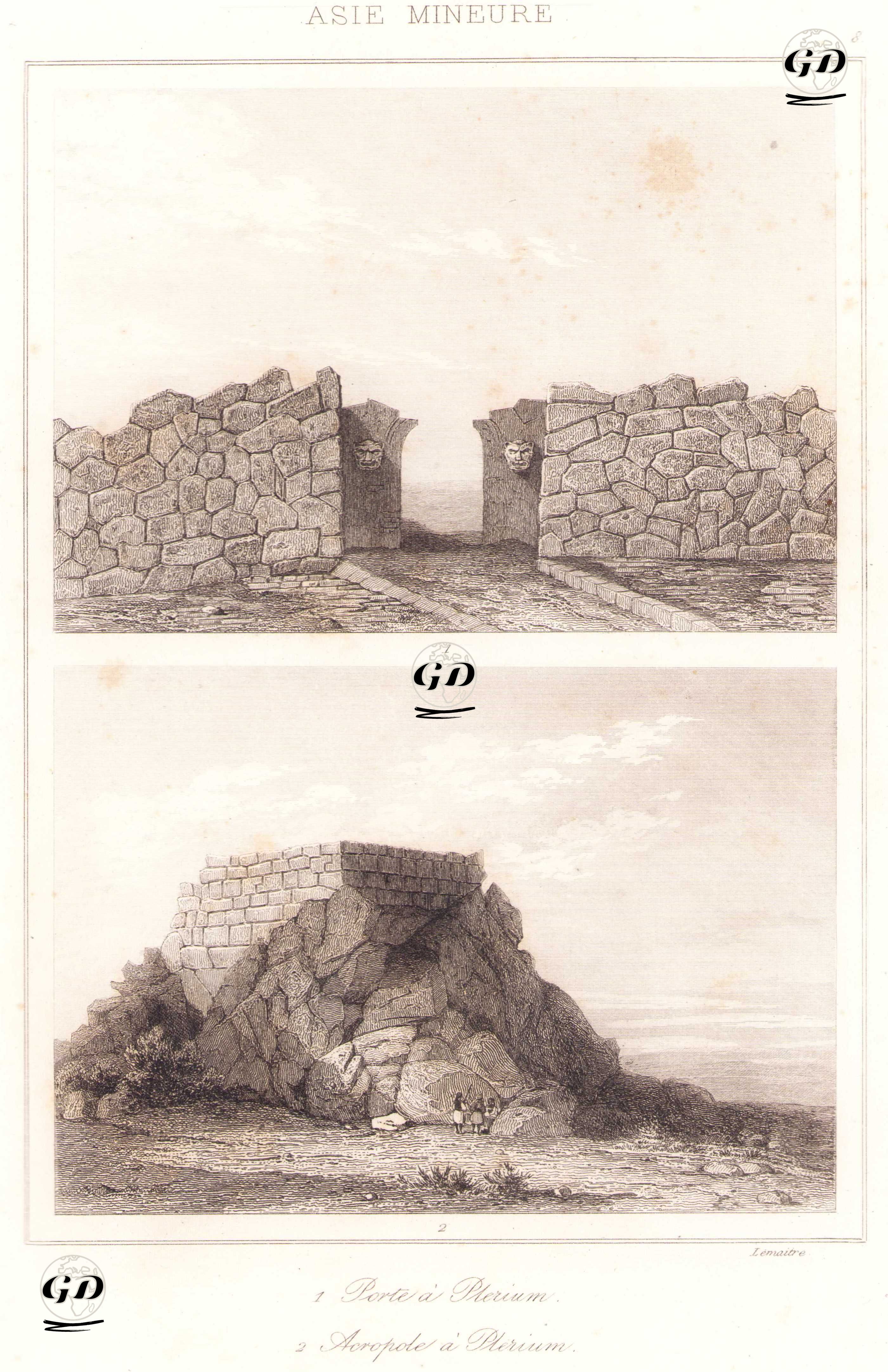
Hattusa, the capital of the Hittite kingdom that ruled over a large part of Anatolia between 1600-1200 BC, is located in the Boğazkale district, 80 kilometers southwest of Çorum. It was conquered by Hattushili I in 1650 BC and became the capital of the Hittite Kingdom. Hattusa was discovered in 1834 by the French architect and traveler Charles Texier. Hattusa was included in the UNESCO World Heritage List in 1986. Hattusa was built on a mountainous area of approximately 2 square kilometers. It has a settlement that can be defined as three different areas: the Lower City, the Upper City and the Büyükkale. Today, the ancient city of Hattusa hosts many monumental places such as Yerkapı, Kral Kapısı, Aslanlı Kapı and Yazılıkaya, in addition to the Büyükkale, which includes the administrative buildings and the palace. The Lion Gate, depicted in the engraving and estimated to have been built in the 14th century BC, is located in the walls at the southwestern entrance of the Hattusa Upper City. It was believed that the Lion Gate, which has two stone lions, protected the city from evil spirits. The Yenicekale rock mass with building remains in the Upper City is thought to be a Phrygian settlement dating back to the 7th century BC.