GRAVÜR DÜNYASI
Digital Engraving Library
| Artist | Charles Felix Marie Texier (1802-1871) |
| Engraver | Anne Clara Clement (Her maiden name-Lemaitre) (1826-1880) |
| Date | 1863 |
| Technique | Copper Engraving |
| Category | Ottoman Empire And Turkey |
| Source | Asie Mineure, Depuis Les Temps Les Plus Anciens Jusqu’a La Bataille d’Ancyre en 1402 Ph. Le Bas Termine par M. Cheron |
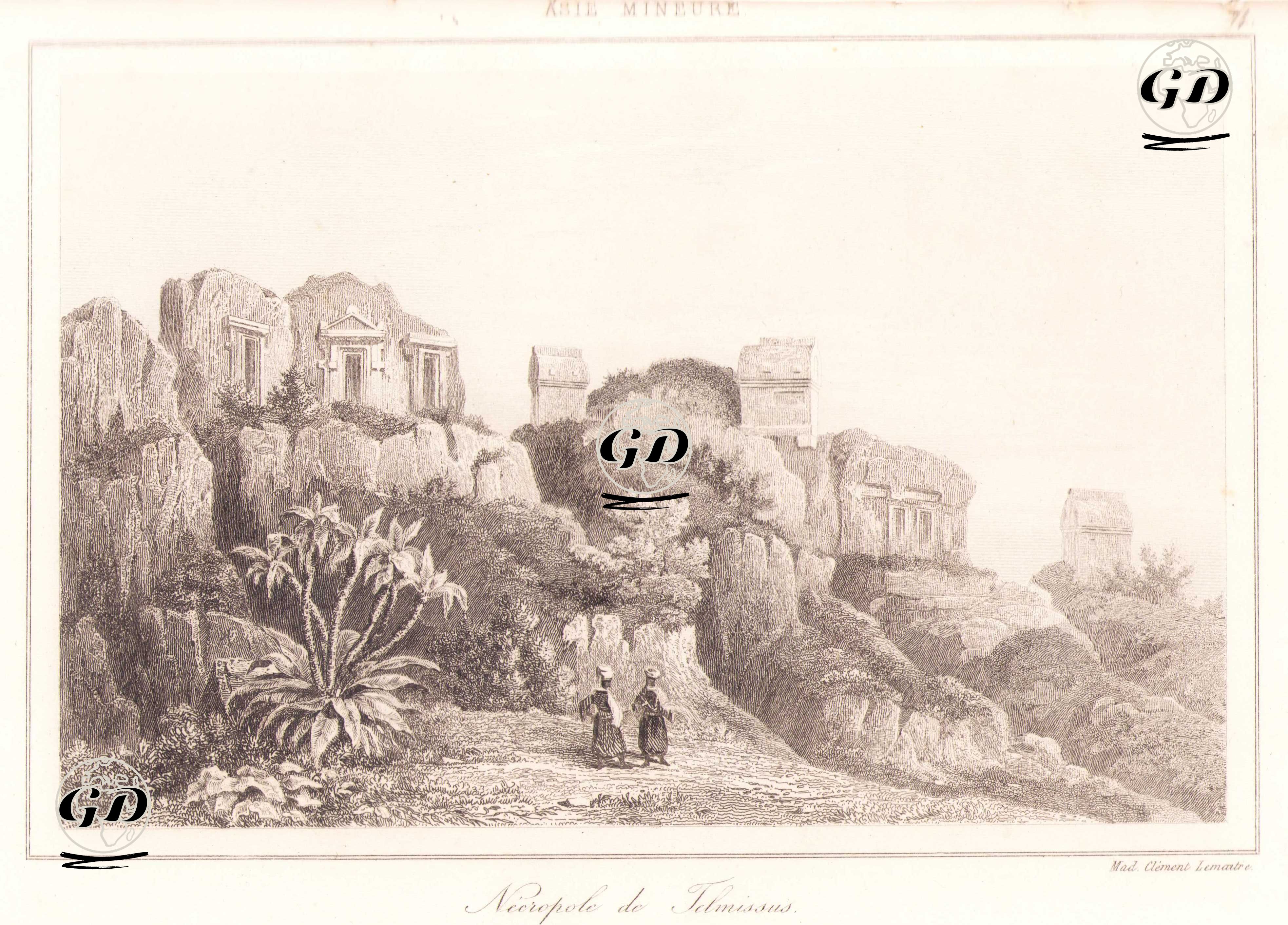
Fethiye City was founded in 3000 BC. Persians, Attica-Delos, Lycia, Caria, Macedonia and Seleucus, Egypt Lagos Dynasty, Pergamon Kingdom and Roman civilizations dominated the city. Fethiye (Telmessos), which was known as the "City of the Priests" due to the large number of priests here, was named as Meğri (Makri), which means "distant land", during the Roman Empire. It was dominated by Menteşeoğulları in 1284 and by the Ottoman Empire in 1424. The town was named Fethiye in 1934. Fethiye Bay is located on the coast of Fethiye. Throught History, Fethiye Bay is the known by the names of Glaucus (veya Glaukos), Telmessos ve Meğri (Makri). Sovalye (Knight) island, formerly known as Megri (Makri). The necropolis of the ancient city of Telmessos (the name of the son of the God Apollo) has remained in ruins with the remains of tombs carved into the rocks on the slopes of the hill overlooking the city. The farthest of the rock tombs is the one built for Amynthas in the 4th century BC.