GRAVÜR DÜNYASI
Digital Engraving Library
| Artist | William Henry Bartlett (1809-1854) |
| Engraver | E.Benjamin (Active 1834-1846) |
| Date | 1840 |
| Technique | Steel Engraving-Original Hand Colored |
| Category | Ottoman Empire And Turkey |
| Source | The Beauties Of The Bosphorus (London Published For Proprietors By Geo. Virtue 26 Ivy Lane) |
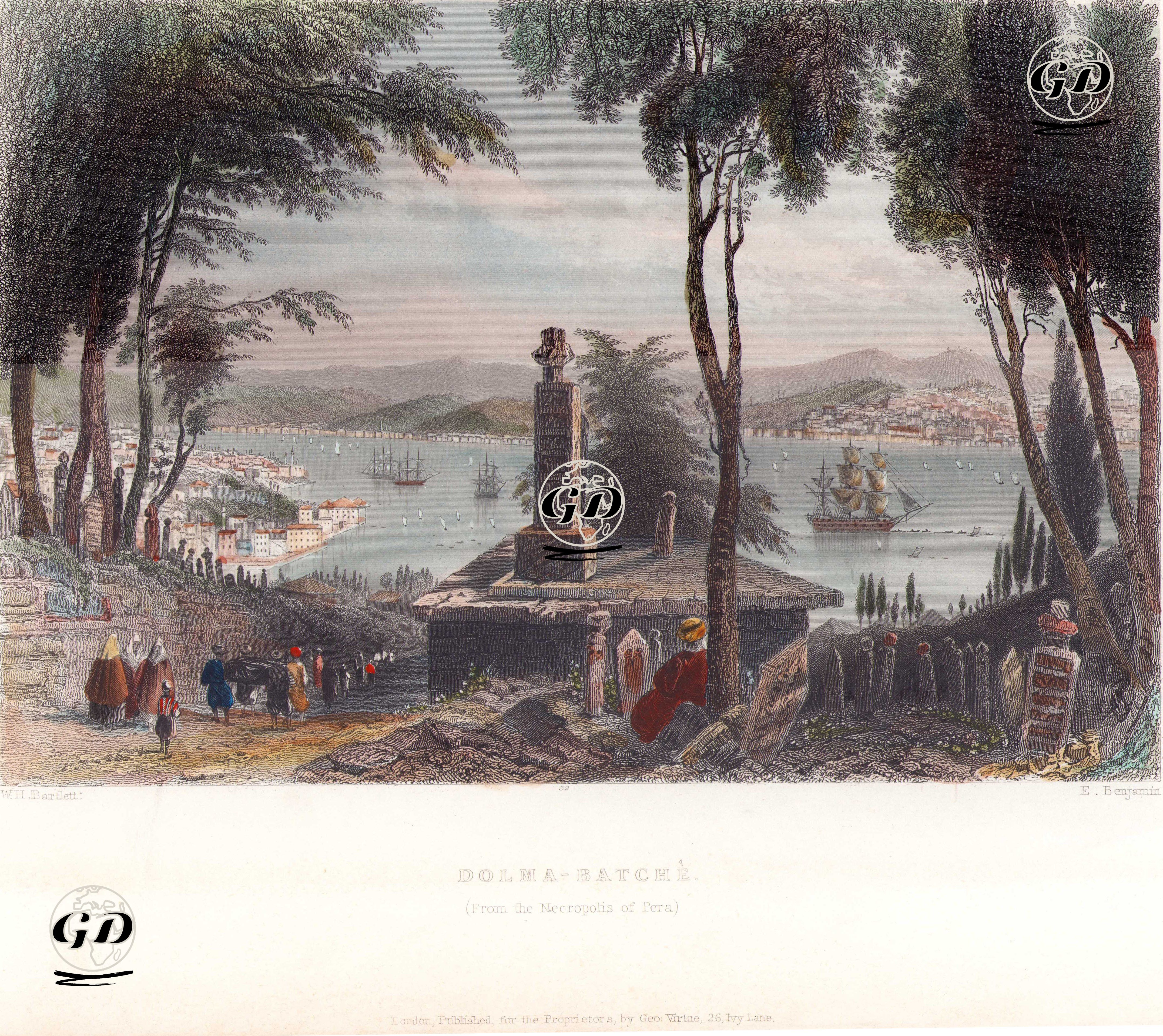
William H. Bartlett's engraving, "Dolmabahçe from Pera Cemetery," documents the 19th-century appearance and social atmosphere of the area where today's Dolmabahçe Palace is built. This area, where Dolmabahçe Palace stands today, was part of the Muslim cemetery known as the "Büyük Nebula" (Great Tomb) until the mid-19th century. This cemetery covered the slopes leading from today's Taksim Square, passing through the Gümüşsuyu and Fındıklı neighborhoods, and descending to the Bosphorus. However, this large cemetery, which was gradually opened to settlement from the mid-19th century onward, was eventually completely destroyed. The engraving, depicting a view from the Pera (Beyoğlu) Muslim Cemetery toward the Bosphorus, is remarkable for its details, reflecting both the natural landscape and everyday scenes of Ottoman life. The book "The Beauties of the Bosphorus," which includes the engraving, states that Dolmabahçe was famous for its pumpkin fields, and is therefore known as the "Valley of Pumpkins." It also notes that the area boasts orchards, pumpkin fields, and corn plantations, and that trees such as almonds, cypresses, apple trees, and grand plane trees complement both the cemetery's tranquility and the pastoral beauty of the Bosphorus view. The cemetery itself, which extends down to the slopes leading to the Bosphorus, has been described as a truly scenic spot. According to travellers, the coffeehouse at the cemetery's summit was a popular destination for both Muslims and non-Muslims during the summer months. Visitors would sit on wicker stools under the shady trees, enjoying coffee and smoking hookah, and take in one of the most beautiful views of the Bosphorus. Therefore, this engraving by Bartlett is one of the visual sources documenting not only the view of Dolmabahçe before it became a palace, but also the historical existence of the large Muslim cemetery that stretched from Taksim to the Bosphorus and has now completely disappeared.