GRAVÜR DÜNYASI
Digital Engraving Library
| Artist | William Henry Bartlett (1809-1854) |
| Engraver | Robert Sands (1792-1855) |
| Date | 1839 |
| Technique | Steel Engraving-Original Hand Colored |
| Category | Ottoman Empire And Turkey |
| Source | The Beauties Of The Bosphorus (London Published For Proprietors By Geo. Virtue 26 Ivy Lane, 1839) |
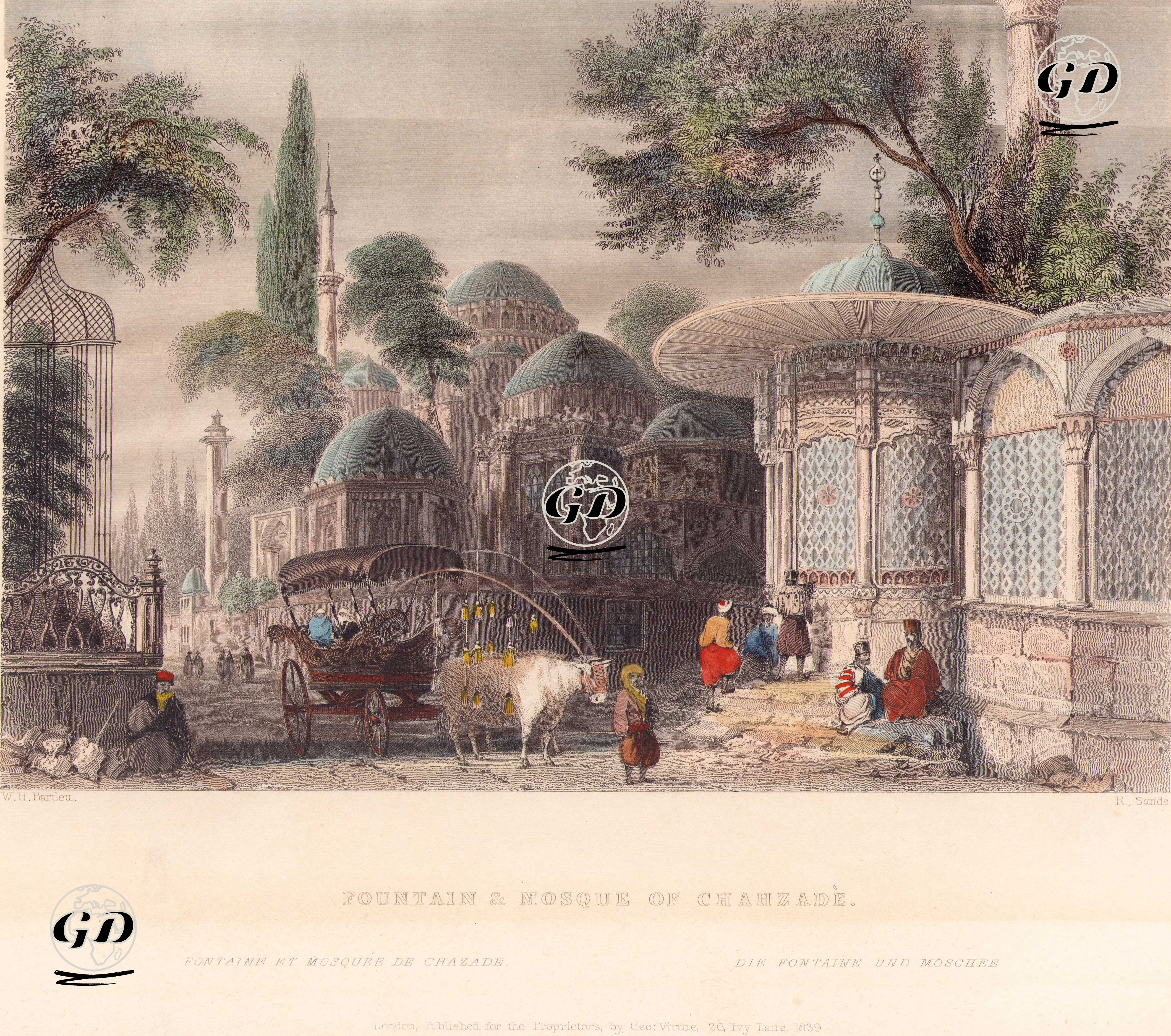
This engraving is one of the Orientalist visual documents that aimed to introduce the architectural splendor and daily life of Istanbul in the early 19th century to the Western world. The engraving depicts the Şehzade Mosque (Şehzadebaşı Mosque) and the Nevşehirli Damat İbrahim Pasha Fountain opposite it. Located in Istanbul's Fatih district, the mosque was commissioned by the architect Sinan between 1543 and 1548 by Suleiman the Magnificent in memory of his son, Şehzade Mehmed, who died at the age of 22 in 1543. Known as Sinan's "apprenticeship work" in Ottoman architecture, the Şehzade Mosque, with its balanced symmetry of central dome, is a significant milestone on the path to masterpieces such as the Süleymaniye Mosque and the Selimiye Mosque. The multi-domed and rhythmic silhouette seen in the engraving reflects the classical mosque typology that developed in Istanbul from the 16th century onward. The elegant fountain in the right foreground of the engraving was built in 1720 by Nevşehirli Damat İbrahim Pasha, one of the important statesmen of the Tulip Era. This Baroque-influenced structure, with its curving lines, reliefs, and rich decorative elements, demonstrates the aesthetics of the period. In the Ottoman urban fabric, fountains not only served charitable purposes but also stood out as elements of visual prestige and representation. Indeed, Western observers, through the detailed rendering of the fountains, conveyed with curiosity and admiration the importance Ottoman society placed on charitable institutions. The composition is not limited to architecture; it also reveals the liveliness of daily life. People sitting or drinking in front of the fountain, folk figures in their diverse attire, the ox cart in the foreground, and the surrounding activity reflect Istanbul's multicultural and vibrant social fabric. Therefore, these scenes transform the engraving from a mere architectural record into an ethnographic observational document.