GRAVÜR DÜNYASI
Digital Engraving Library
| Artist | James Sant (1820-1916) |
| Engraver | Francis Holl (1815-1884) |
| Date | 1862 |
| Technique | Steel Engraving |
| Category | Music And Dance |
| Source | The Art Journal |
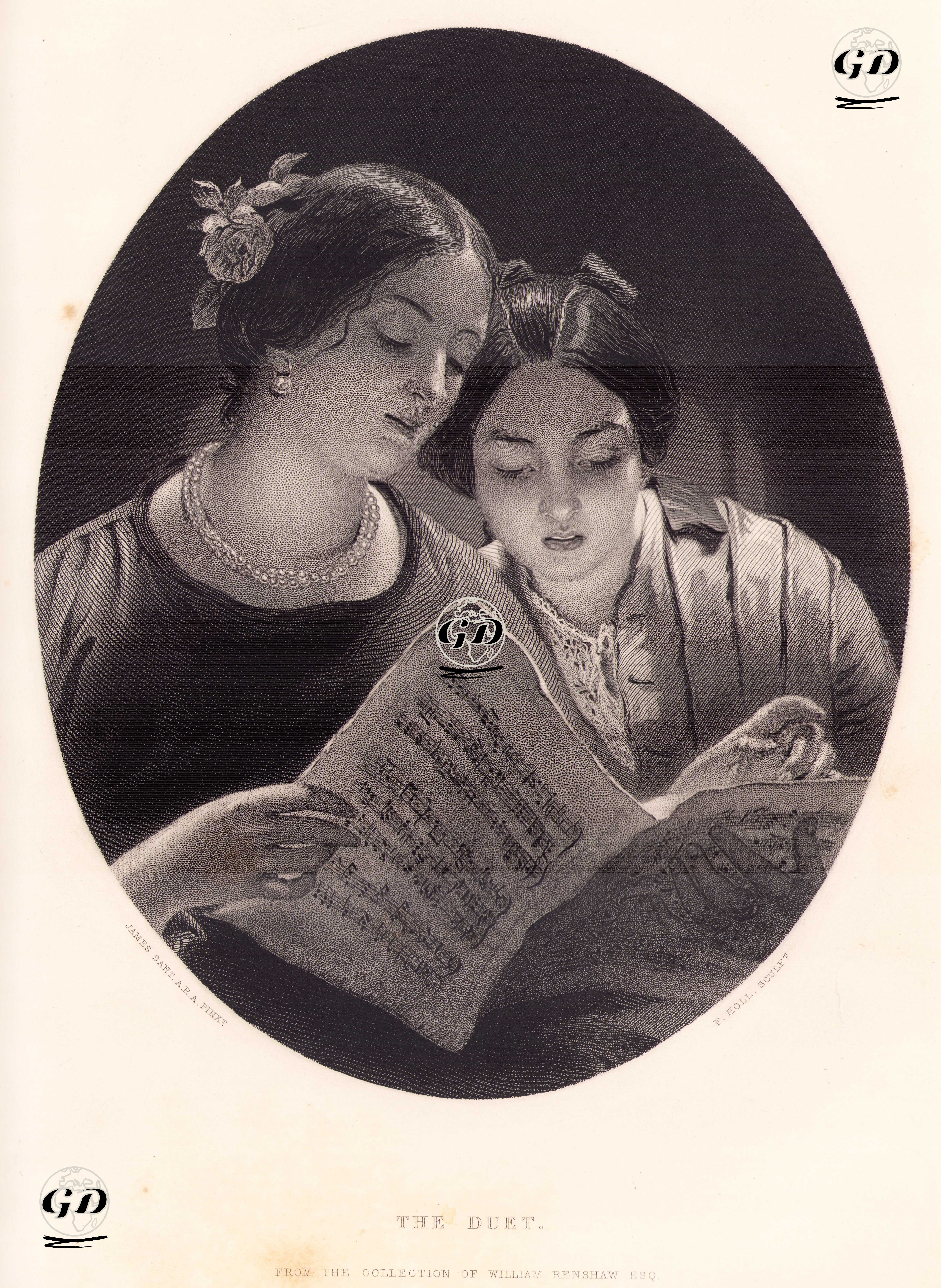
A typical example of 19th-century English art, the work poetically visualizes the cultural ideals shaped by music in Victorian middle-class English domestic life and the role of women within the family. The "Duet" is a symbolic scene that reflects not only a musical performance but also the ideals of sisterhood, friendship, and domestic harmony. In the composition, two young women sit side by side, examining a piece of music and singing together. The figures' facial expressions convey a calm and sincere concentration, while their gazes, focused on the notes, emphasize the emotional connection created by the music. A flower pinned to one of the women's heads enhances the scene's domestic elegance and natural feel. The transparency of the skin tones is enhanced by the skillful use of reflected light, giving the faces a pearly sheen. The focal point of the engraving is the sheet music they hold in their hands. This both places music at the center of the scene and emphasizes the integral role of musical education in 19th-century England as a social life. A striking aspect of this engraving is that the notes are placed in parentheses on the wrong side, meaning the outer sheet of music is printed upside down.