GRAVÜR DÜNYASI
Digital Engraving Library
| Artist | Charles Gleyre (1806-1874) |
| Engraver | M.Le Lemercier |
| Date | 1848 |
| Technique | Steel Engraving |
| Category | Masterpiece Painting |
| Source | The Art Journal |
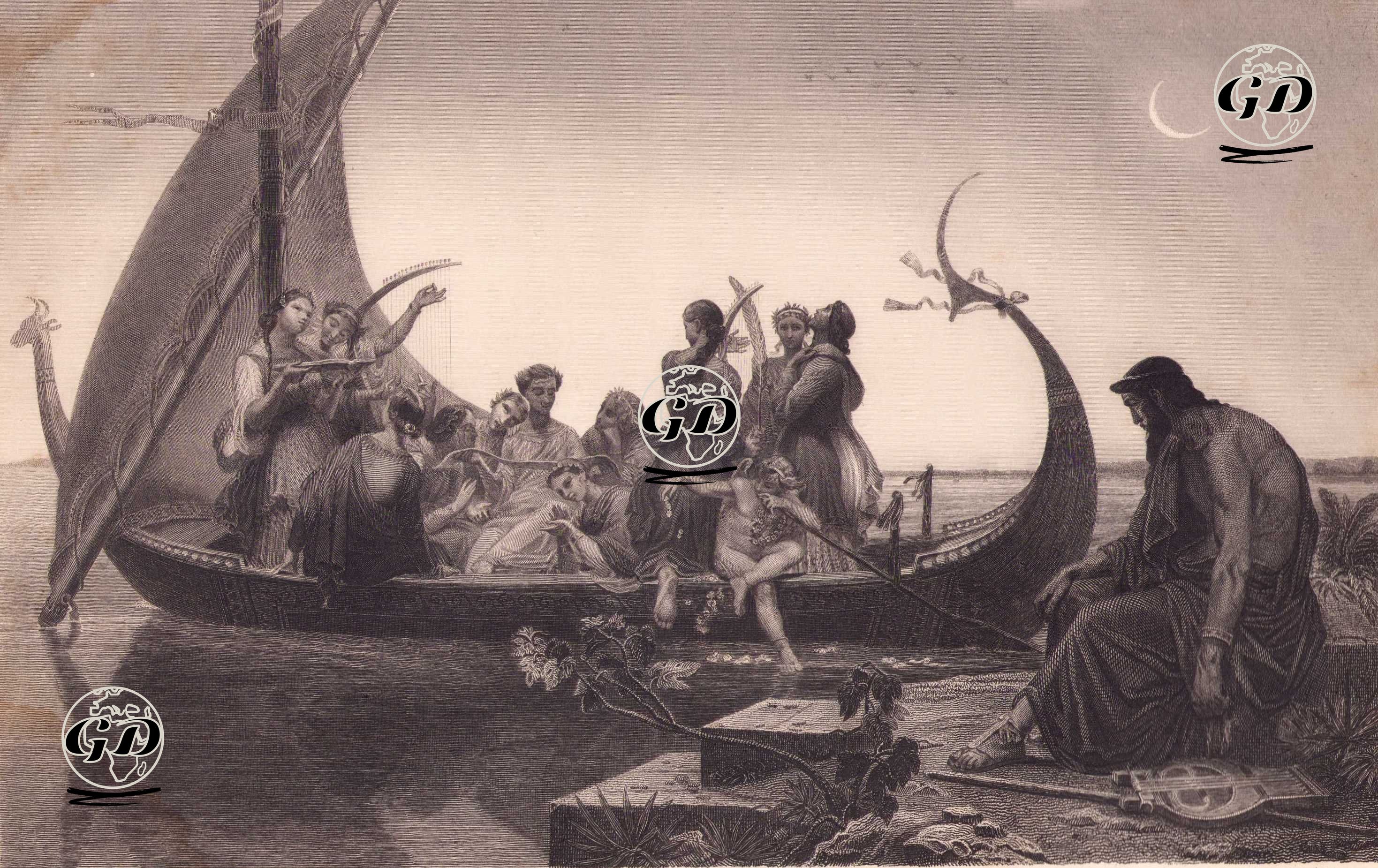
This engraving is based on the work "Le Soir, Les Illusions Perdues (Lost Illusions)" by French artist Charles Gleyre and was engraved by M. Le Mercier. This engraving was first exhibited at the Louvre in 1843, quickly attracting considerable attention and cementing the artist's reputation. The work offers a visual poem on a romantic and allegorical plane, depicting the transience of life, the fleeting nature of youth, and the illusory nature of worldly pleasures. The composition is conceived as a poetic scene set on the banks of the Nile. Young figures, singing and playing instruments, move along a rudderless boat, accompanied by music and joy. The rudderless boat symbolizes the directionlessness of human life and the inevitable flow of fate, thus symbolizing the journey of human life. Young musicians and cheerful figures represent pleasures and illusions, while a figure sitting on the edge of a boat scattering flowers onto the water represents the ephemerality of pleasures and beauty, while the flowers being swept away by the waves represent mortality. The crescent moon in the sky signifies the passing of time with the approaching evening and the uncertainty of the future. The elderly poet, seated on the shore to the right of the stage, does not share in the group's joy, and the melancholic expression on his face reflects his awareness of the transience of earthly pleasures. This figure also symbolizes the painter's inner world and the helplessness artists often feel in the face of time. Consequently, the engraving titled "Evening Hymn" is not only a pastoral landscape but also a philosophical allegory depicting the transience of life. It brings together the joyful dreams of youth and the melancholic awareness of old age in the same scene, translating the contrast between life and death, pleasure and sorrow, illusion and reality into visual language.