GRAVÜR DÜNYASI
Digital Engraving Library
| Date | 1875 |
| Technique | Steel Engraving |
| Category | Architecture And Design |
| Source | Bilder-Atlas: Ikonographische Encyklopädie der Wissenschaften und Künste ; ein Ergänzungswerk zu jedem Conversations-Lexikon ; 500 Taf. in Stahlstich, Holzschnitt u. Lithographie ; in 8 Bd.. 5 by bearb. von Karl Gustav Berneck … - Druck und Verlag von F. A. Brockhaus in Leipzig |
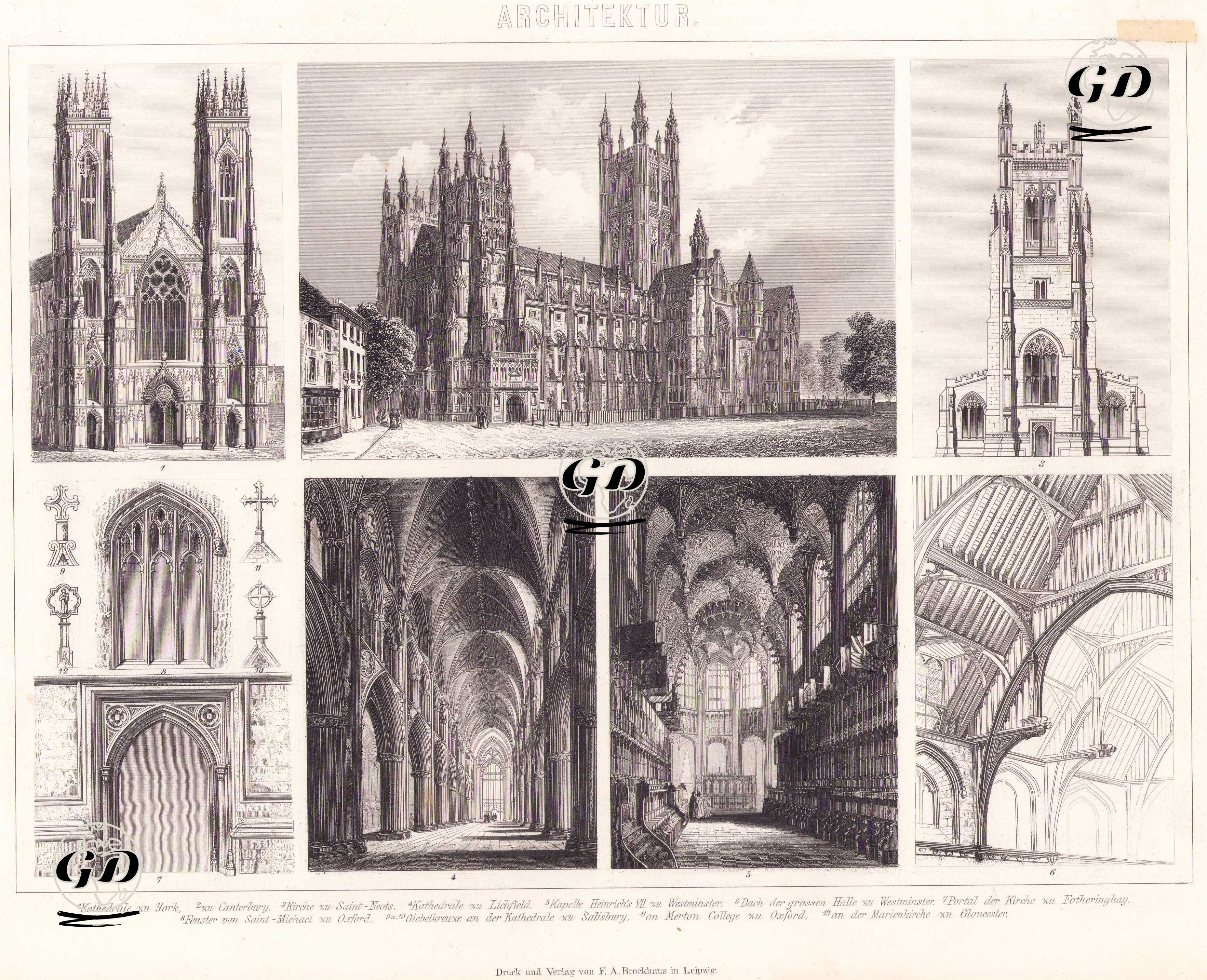
This engraving depicts examples representative of the institutionalized form of Gothic architecture in England between the 13th and 15th centuries. Buildings such as York Minster and Canterbury Cathedral, which hold a significant place in national memory, clearly demonstrate how English Gothic differed from continental (especially French) Gothic. This difference is evident in the wider wall surfaces, the emphasis on horizontality, the exposure of the timber roof system as a structural aesthetic element within the interior, and the extension of linear perspective to enhance the sense of depth. The rich fan vaulting of Henry VII's Chapel in Westminster is one of the most striking expressions of English Late Gothic (Perpendicular Style), and the vertical latticework of the windows constitutes the typical signature of this style. The pediment crosses seen in examples at Fotheringhay and Oxford convey both theological and ceremonial components of English medieval church iconography.