GRAVÜR DÜNYASI
Digital Engraving Library
| Date | 1875 |
| Technique | Steel Engraving |
| Category | Architecture And Design |
| Source | Bilder-Atlas: Ikonographische Encyklopädie der Wissenschaften und Künste ; ein Ergänzungswerk zu jedem Conversations-Lexikon ; 500 Taf. in Stahlstich, Holzschnitt u. Lithographie ; in 8 Bd.. 5 by bearb. von Karl Gustav Berneck … - Druck und Verlag von F. A. Brockhaus in Leipzig |
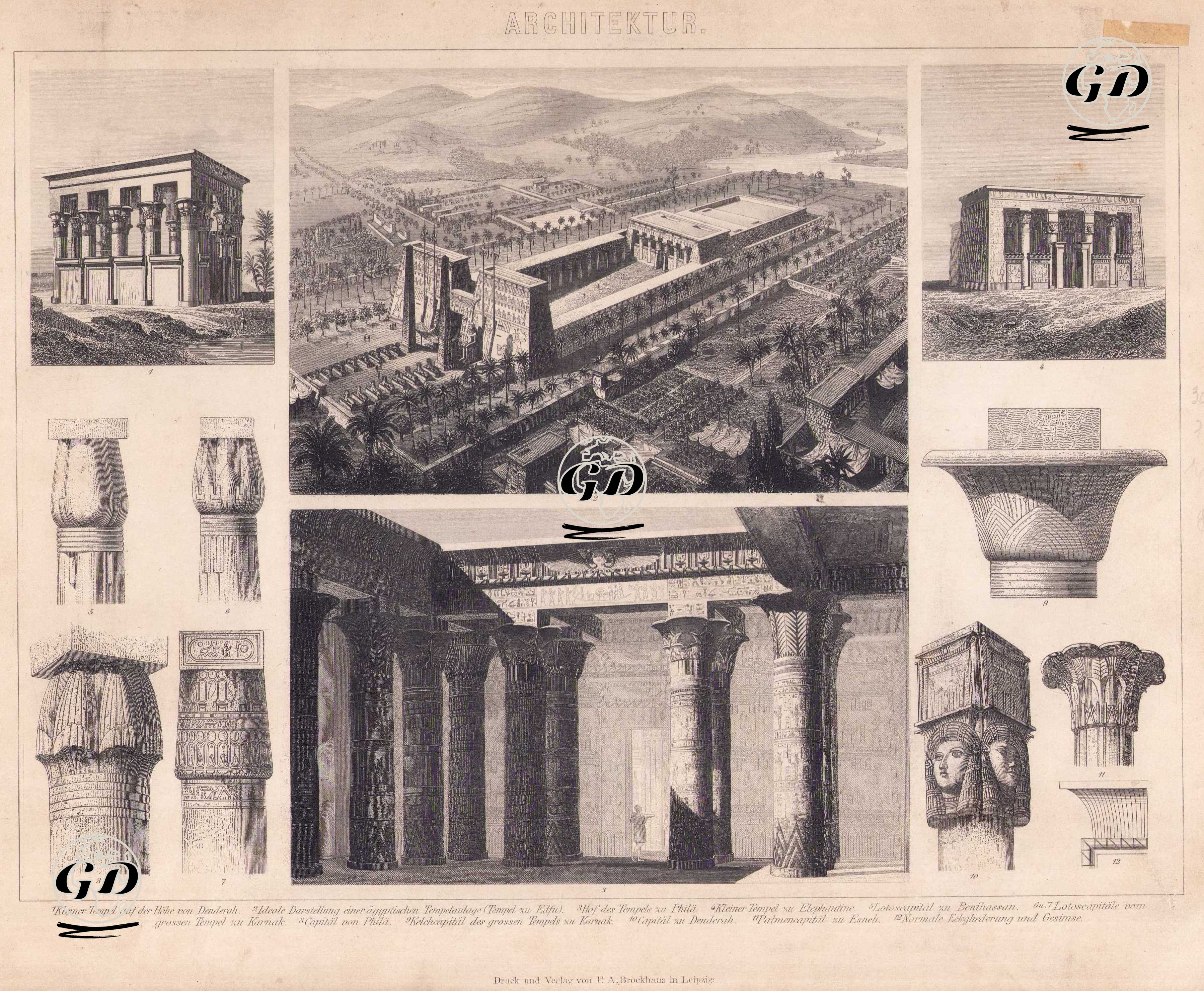
This engraving comparatively depicts the general plans, columnar forms, and façade arrangements of Egyptian temples at sacred centers along the Nile Valley, such as Thebes (Luxor–Karnak), the Temple of Isis (Philae), the Temple of Horus (Edfu), and the Temple of Hathor (Dendera). The large central perspective shows the Temple of Edfu (Temple of Horus). Built during the Ptolemaic period (237-57 BC), this temple is one of the best-preserved examples of ancient Egyptian temple architecture. The massive pylon gate at the entrance is notable for its reliefs depicting scenes of pharaohs making offerings to the gods. The linear layout of the temple plan, extending from the outer courtyard to the inner sanctum, represents a symbolic journey toward the sacred space in Egyptian religious architecture. The side elevation drawings above show the façades of Philae (Temple of Isis) and Dendera (Temple of Hathor). These structures bear the traces of both the Goddess cults and the belief world of the Ptolemaic period combined with Hellenistic influences. The column capitals at Dendera, featuring female heads, are the symbolic face of Hathor and represent the concepts of fertility, music, and love. The column details in the lower section categorize the vegetal capital types characteristic of Egyptian architecture: lotus, papyrus, palm, and composite. These forms are inspired by aquatic plants symbolizing the fertility of the Nile, visualizing the cyclical relationship between nature and the sacred. The hieroglyphic bands on the column shafts reveal that the architecture also served as a surface for text and prayer. The interior depiction in the lower center portrays the hypostyle hall at Karnak Temple. This space, with its massive forest of columns (134 columns), was one of the most impressive sacred spaces of the ancient world. As light filters through the massive stone masses, it reflects a theology of light and shadow, where architecture and cosmic order converge.