GRAVÜR DÜNYASI
Digital Engraving Library
| Date | 1875 |
| Technique | Steel Engraving |
| Category | Architecture And Design |
| Source | Bilder-Atlas: Ikonographische Encyklopädie der Wissenschaften und Künste ; ein Ergänzungswerk zu jedem Conversations-Lexikon ; 500 Taf. in Stahlstich, Holzschnitt u. Lithographie ; in 8 Bd.. 5 by bearb. von Karl Gustav Berneck … - Druck und Verlag von F. A. Brockhaus in Leipzig |
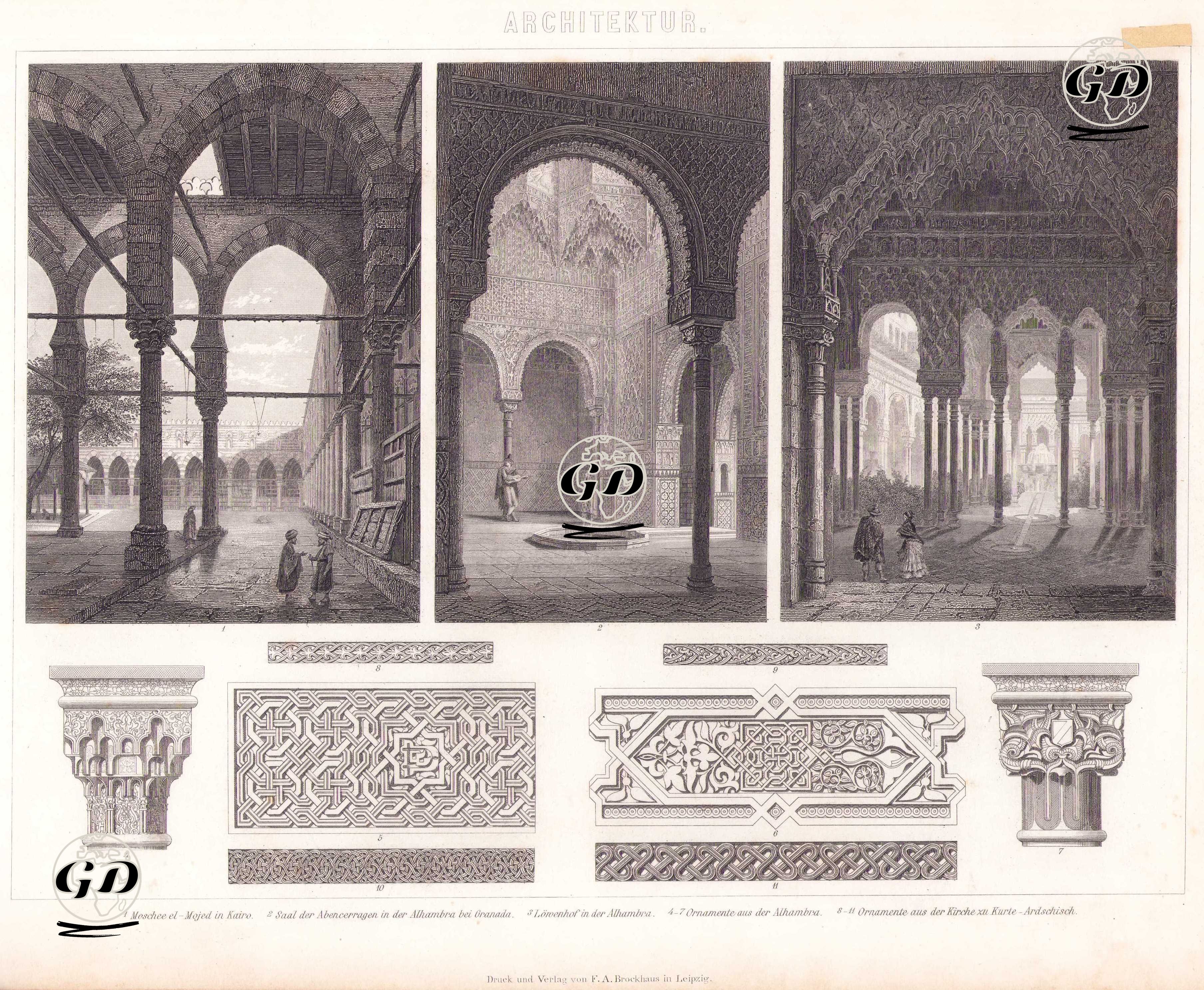
This engraving depicts the most important examples of the Moorish architectural style that developed in Andalusia. It depicts in detail both the geometric elegance of Islamic decorative art and the formal richness of the arch, column, and vault systems. The three main scenes in the upper section represent the architectural diversity of the Muslim Andalusian civilization in Spain (8th–15th centuries): The image on the left depicts the courtyard of the Great Mosque of Cordoba. With its horseshoe arches, palm-trunk columns, shady courtyard, and interior resembling a forest of columns, this structure is considered the pinnacle of Umayyad architecture in the West. The image in the middle shows one of the courtyards of the Alhambra Palace in Granada, probably the Patio de los Leones (Courtyard of the Lions). Slender columns, stalactite-shaped muqarnas decorations, and walls adorned with Arabic script bands reflect the elegant aesthetics of the Nasrid dynasty (13th-15th centuries). The image on the right is also from an interior of the Alhambra, likely the Hall of the Ambassadors (Salon de Embajadores). The drawings in the lower section depict the arabesque, Kufic, muqarnas, and interlace patterns prominent in Islamic art. The geometric compositions are based on repetitive rhythms symbolizing the idea of infinity. The column capitals seen in the engraving, derived from examples from both Cordoba and the Alhambra, present a perfect blend of vegetal decoration and structural function.