GRAVÜR DÜNYASI
Digital Engraving Library
| Date | 1875 |
| Technique | Steel Engraving |
| Category | Architecture And Design |
| Source | Bilder-Atlas: Ikonographische Encyklopädie der Wissenschaften und Künste ; ein Ergänzungswerk zu jedem Conversations-Lexikon ; 500 Taf. in Stahlstich, Holzschnitt u. Lithographie ; in 8 Bd.. 5 by bearb. von Karl Gustav Berneck … - Druck und Verlag von F. A. Brockhaus in Leipzig |
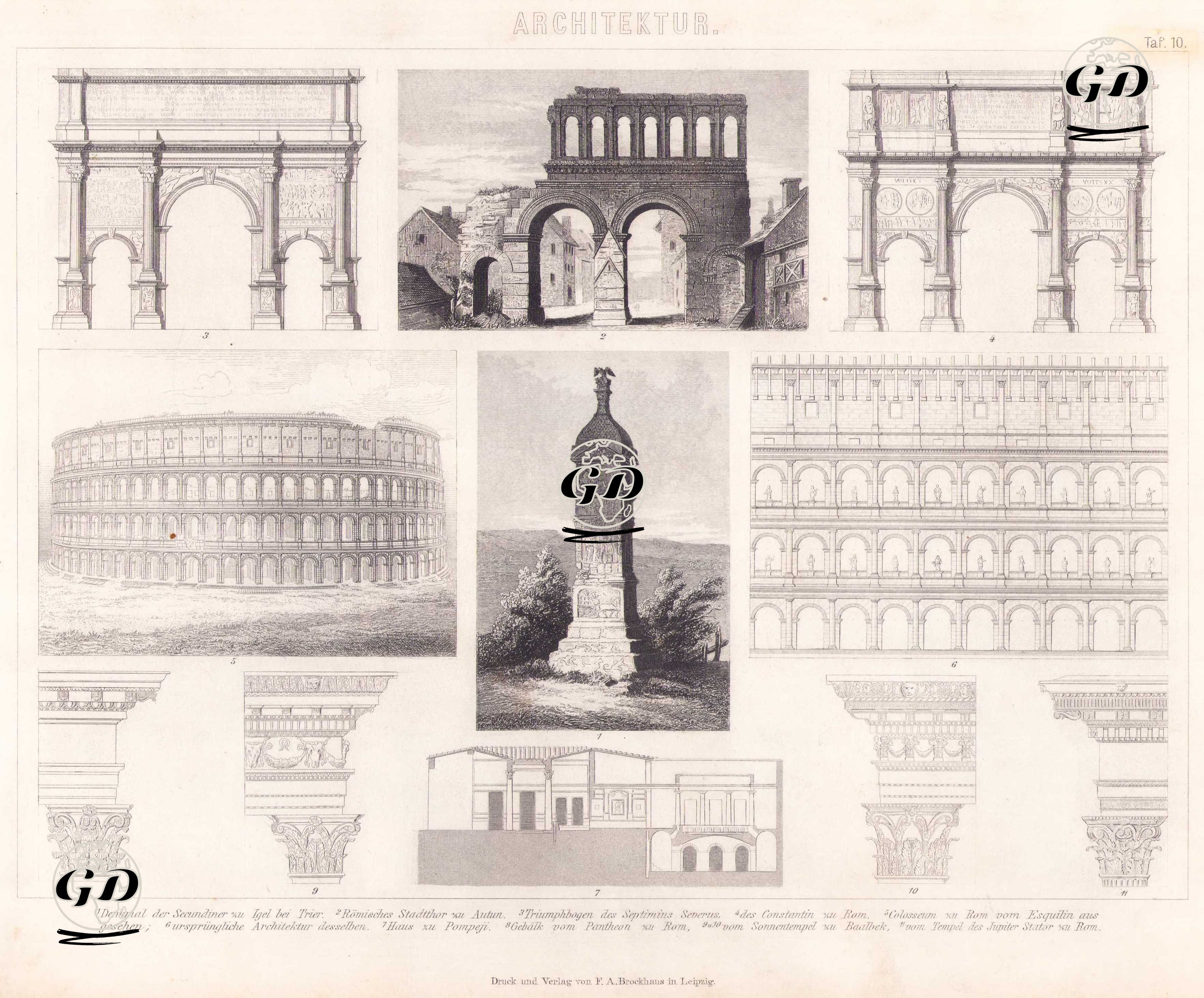
This engraving systematically depicts the most characteristic building types of ancient Roman architecture (triumphal arches, amphitheaters, columns, and façades)in plan, section, and elevation. The upper section displays elevation drawings of triumphal arches, such as the Arch of Titus and the Arch of Constantine in Rome. These structures are important architectural monuments that symbolize Roman military victories and demonstrate the monumental use of classical orders (especially composite capitals). The central scene depicts the Roman Arch in Verona in perspective. This image demonstrates the high level of stonemasonry and vaulting techniques achieved in antiquity. The large structure on the left side of the central section is the Colosseum (Flavian Amphitheater). One of Rome's most recognizable symbols, this structure is considered an unparalleled example of both engineering and social organization in the ancient world. The Colosseum's tiered arcades are an instructive example of classical architectural typology, demonstrating the sequential use of Doric, Ionic, and Corinthian orders. In the center right, a detailed elevation drawing of the façade layout of Roman architecture reflects the façade rhythm of multi-story public buildings (e.g., basilicas or insulae). The vertical monument in the center is a triumphal monument reminiscent of Trajan's Column, and its spiral reliefs suggest a visual expression of imperial ideology. The architectural detail drawings in the lower row provide instructive analyses of elements of Roman architecture such as Corinthian capitals, entablatures (moulding bands), and wall-facade ornamentation. Furthermore, a plan and elevation sketch of Pompeii domestic architecture provides a typical example of Roman-era interior layout.