GRAVÜR DÜNYASI
Digital Engraving Library
| Date | 1875 |
| Technique | Steel Engraving |
| Category | Architecture And Design |
| Source | Bilder-Atlas: Ikonographische Encyklopädie der Wissenschaften und Künste ; ein Ergänzungswerk zu jedem Conversations-Lexikon ; 500 Taf. in Stahlstich, Holzschnitt u. Lithographie ; in 8 Bd.. 5 by bearb. von Karl Gustav Berneck … - Druck und Verlag von F. A. Brockhaus in Leipzig |
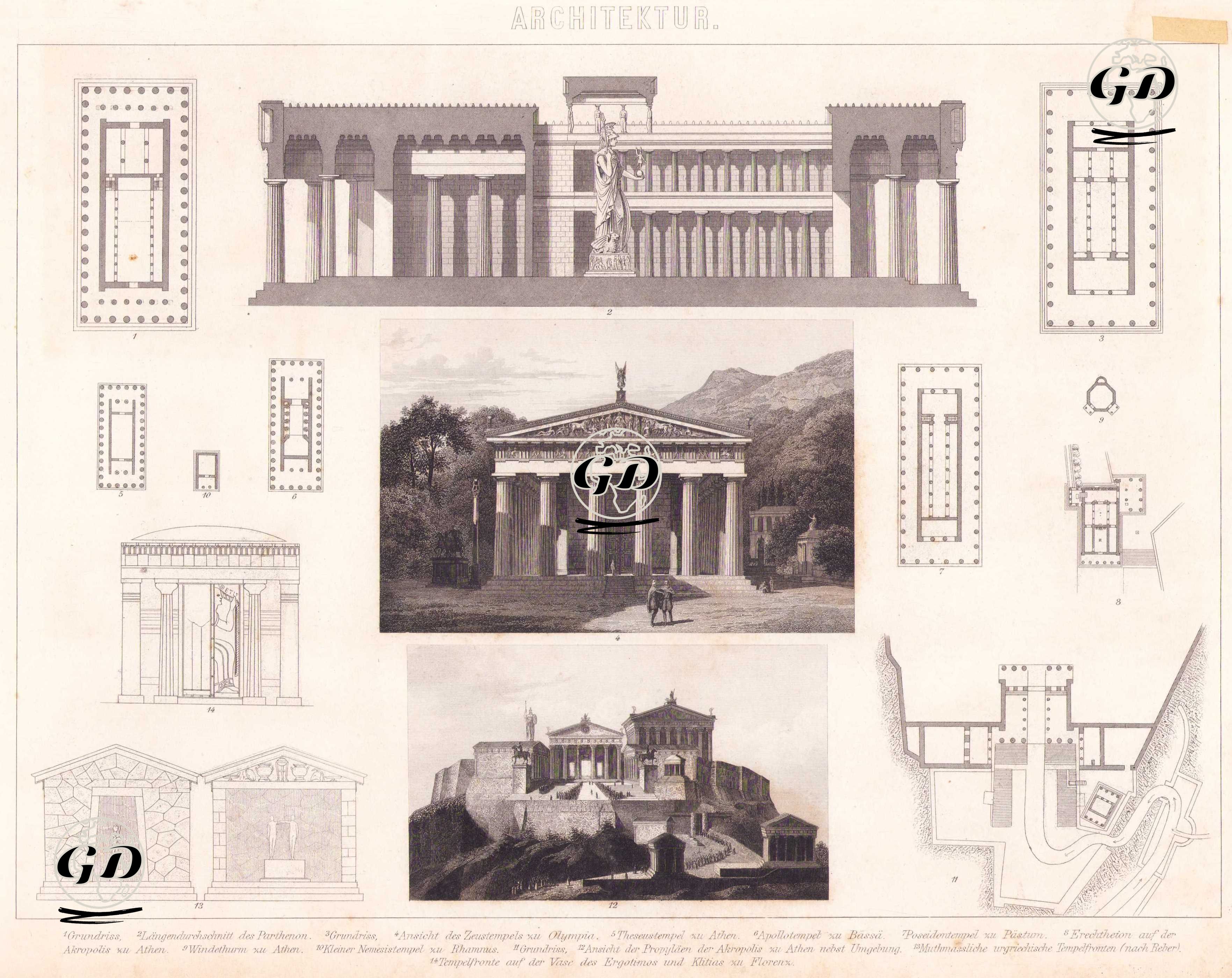
This engraving systematically depicts the fundamental principles of Classical Greek temple architecture (proportion, symmetry, columnar arrangement, and sacred space organization). The engraving brings together plan, section, and elevation drawings featuring the most outstanding examples of the Doric and Ionic orders of Greek architecture. The longitudinal section of the Parthenon, in the upper section, demonstrates the perfection of proportion and the harmony of the structural system of this structure, the pinnacle of classical Athenian art. The middle section depicts the Temple of Zeus at Olympia and the Temple of Theseus (Hephaestus) in Athens, both of which are among the purest examples of the Doric order. Furthermore, the Temple of Apollo at Bassae features innovative columnar shapes in its interior, heralding the transition to the early Corinthian order. The Temple of Poseidon at Paestum demonstrates the adoption of the Doric style in the Greek colonies of Southern Italy. The view of the Athenian Acropolis and the plan of the Erechtheion, in the lower right section, provide a unified picture of the sacred site's religious and topographical structure. The Tower of the Winds represents the astronomical and functional aspects of Greek engineering. The lower section features early Greek temple facades and architectural scenes from the famous Florentine vase by Ergotimos and Klitias. This is a significant example of how representations of classical architecture were reproduced in various disciplines of ancient art, such as ceramics.