GRAVÜR DÜNYASI
Digital Engraving Library
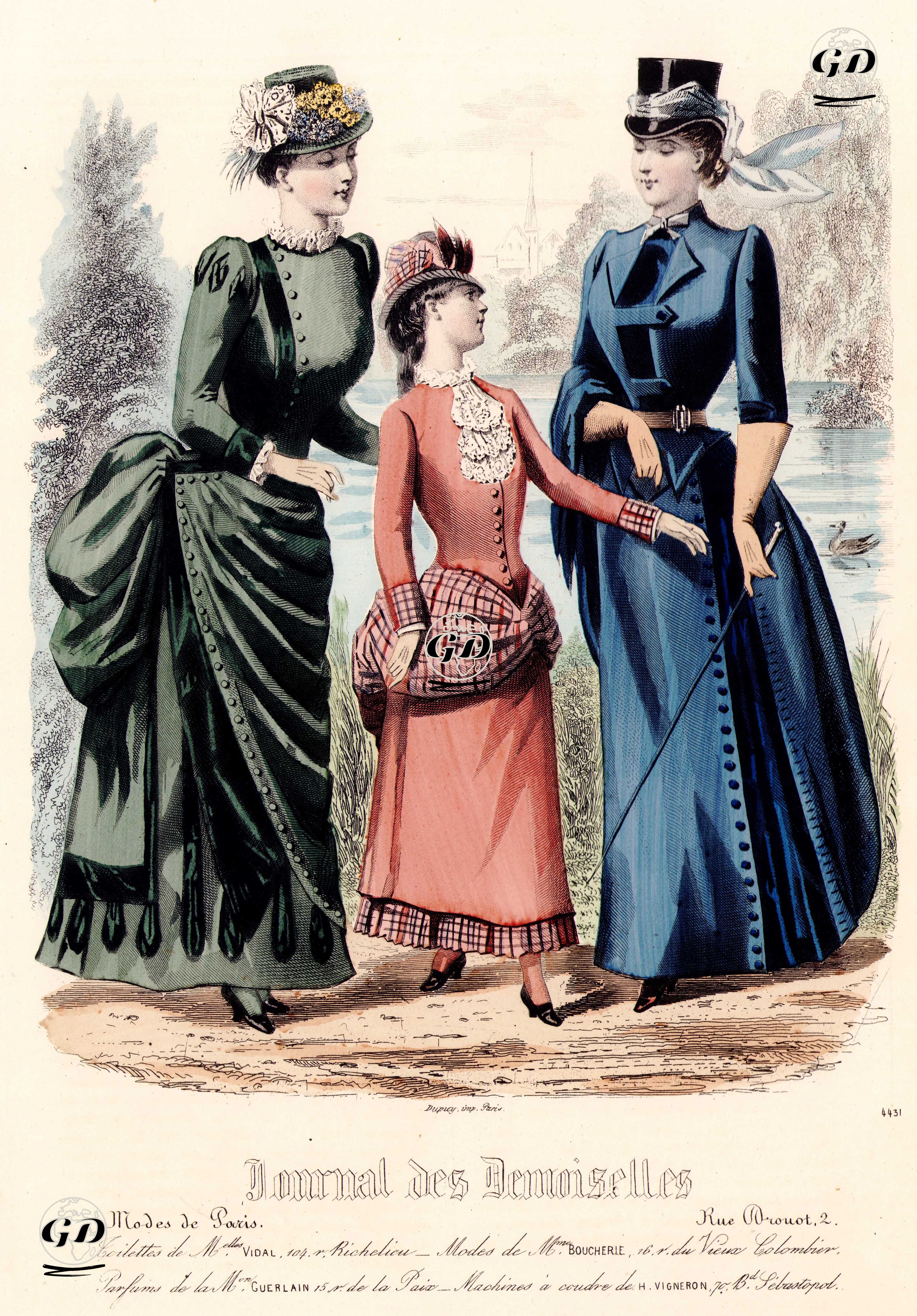
| Date | 1883 |
| Technique | Lithography-Original Hand Colored |
| Category | Fashion |
| Source | Journal des Demoiselles - Dupuay imp. Paris |
Journal des Demoiselles was one of the most renowned women’s magazines published in 19th-century France. Founded in Paris in 1833, it appealed primarily to young girls (demoiselles). While covering topics such as fashion, literature, music, morality, education, and social etiquette, the magazine also served as a cultural guide shaping the era's understanding of female identity and elegance. It was noted for its colorful fashion engravings, sewing patterns, and illustrations of European fashion. Published for nearly a century (1833-1922), the Journal des Demoiselles emphasized themes of female education, elegance, and moral refinement in French bourgeois society and, like other magazines of the period (La Mode Illustrée, Le Follet, Les Modes Parisiennes, etc.), played a pioneering role in the development of the women's press. This elegant fashion engraving was published in the Journal des Demoiselles in August 1883. The engraving depicts two adult women and a young girl. The composition portrays a moment of graceful stroll in nature, reflecting the "outdoor elegance" theme that became popular in 1880s fashion. The woman on the left wears a dark green walking dress. The wide bustle detail at the back of the dress is characteristic of the voluminous back silhouette fashion of the early 1880s. The row of buttons and velvet embellishments reflect the French haute couture aesthetic of the period. Her hat is complemented by small but detailed floral embellishments. The young girl in the center wears a checkered dress in shades of pink and red. This style is indicative of a more vibrant and colorful clothing style for younger age groups. The lace collar and cuff details emphasize the elegant youthful concept of the time. The woman on the right wears a dark blue, simple yet sophisticated day dress. The waistline, emphasized by a corset, and the long row of buttons symbolize the "straight lines - disciplined body" ideal of the period. The fact that she carries a cane-like accessory is a modern detail representing women's presence in the public sphere in the 1880s.