GRAVÜR DÜNYASI
Digital Engraving Library
| Artist | A.Chaillot |
| Engraver | Dufour & Fils |
| Date | 1882 |
| Technique | Lithography-Original Hand Colored |
| Category | Fashion |
| Source | Journal des Demoiselles - Lith. de Dufour & fils, des Petits-Hotels, 22, Paris |
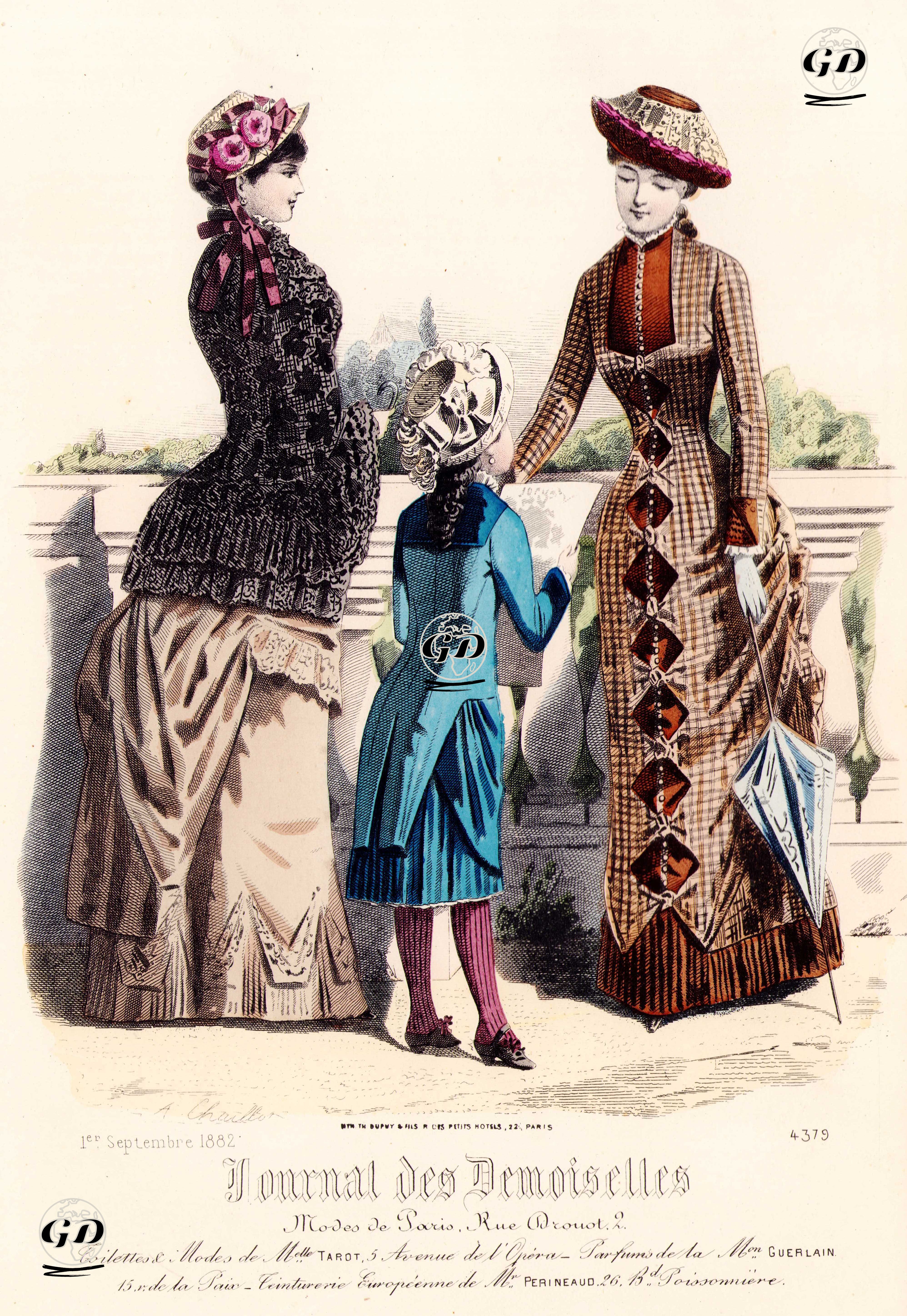
Journal des Demoiselles was one of the most renowned women’s magazines published in 19th-century France. Founded in Paris in 1833, it appealed primarily to young girls (demoiselles). While covering topics such as fashion, literature, music, morality, education, and social etiquette, the magazine also served as a cultural guide shaping the era's understanding of female identity and elegance. It was noted for its colorful fashion engravings, sewing patterns, and illustrations of European fashion. Published for nearly a century (1833-1922), the Journal des Demoiselles emphasized themes of female education, elegance, and moral refinement in French bourgeois society and, like other magazines of the period (La Mode Illustrée, Le Follet, Les Modes Parisiennes, etc.), played a pioneering role in the development of the women's press. This elegant fashion engraving was published in the Journal des Demoiselles in September 1882. This engraving reflects a typical example of late Victorian "bustle fashion." During this period, women's dresses were designed with bodices that made the body look slimmer and busts that created a bulge at the hips. The engraving depicts two adult women and a child. The woman on the left wears a dark, lace-trimmed visiting dress. The voluminous skirt is complemented by silk draping. The lace-detailed bodice and high collar reflect the elegance of the era. Her hat, adorned with pink ribbons and floral embellishments, is a striking example of "garden fashion" for the spring season. The woman on the right wears a brown, checkered day dress. The diamond-shaped button plaid pattern and the plaid fabric at the front of the dress represent the British daytime elegance frequently highlighted in 1880s fashion magazines. The umbrella she holds demonstrates how accessories in fashion had transformed from a functional item into a symbol of elegance. The child in the center is wearing a blue cloaked dress. The inclusion of child figures in such engravings shows that fashion extended not only to adults but also to children from upper-class families.