GRAVÜR DÜNYASI
Digital Engraving Library
| Artist | Edward John Poynter (1836-1919) |
| Engraver | Ferdinand Joubert (1810-1884) |
| Date | 1874 |
| Technique | Steel Engraving |
| Category | Mythology |
| Source | The Art Journal (London, Virtue & Co.) |
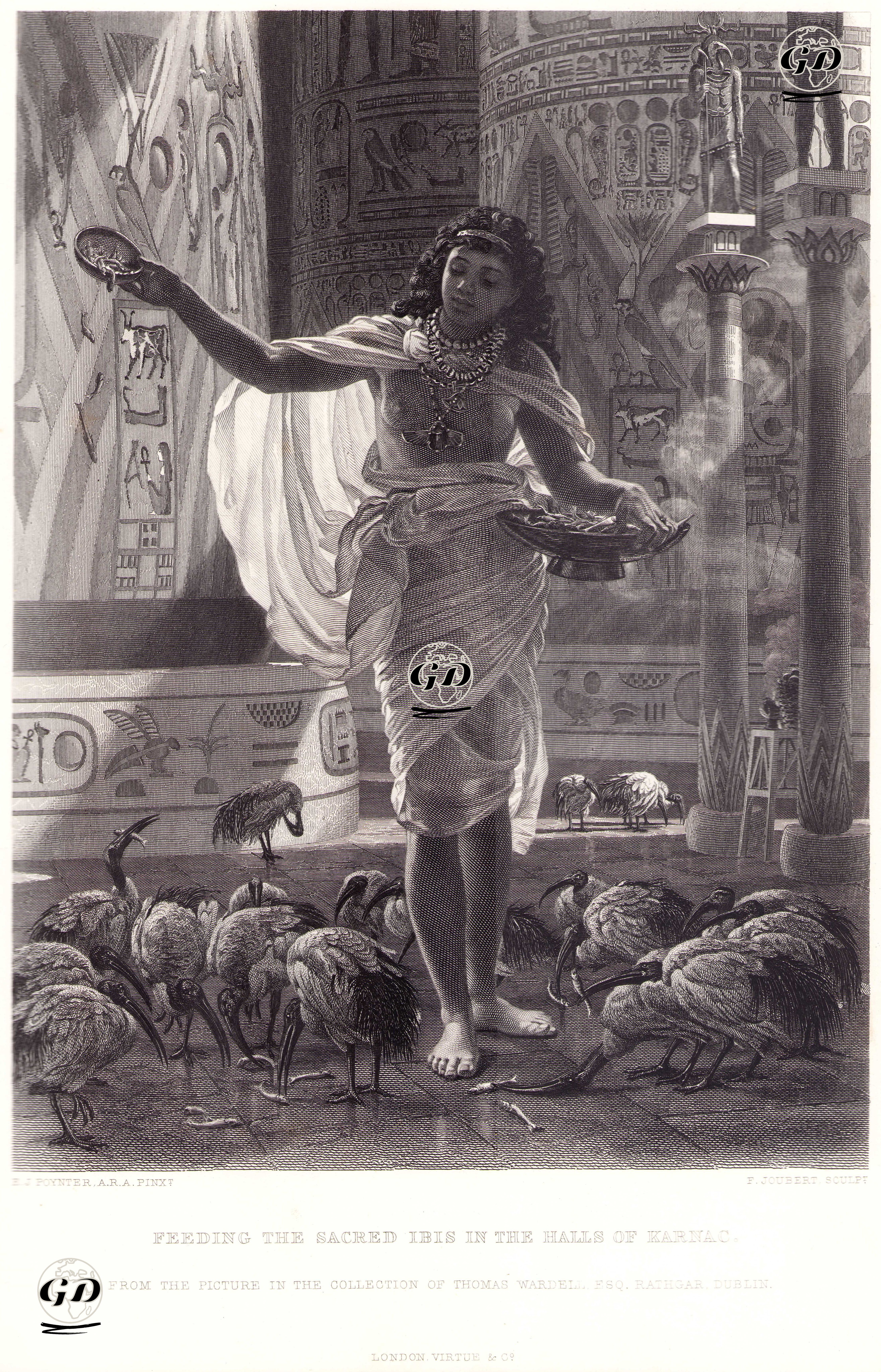
This painting by Edward John Poynter is based on a scene from Egyptian mythology. The work reflects the growing interest in Egyptian mythology in the 19th century. The sacred ibis, a temple bird, was used in Egyptian hieroglyphs as a symbol of Thoth, the ancient Egyptian god of wisdom, writing, science, and magic. The composition depicts a young priestess offering food to the sacred ibis in the monumental halls of Karnak Temple in Egypt. She carries a plate filled with small fish. In the engraving, the sacred ibis, with its head bowed and its wings curled beneath it, is shown in a state of mortality. This painting also symbolically reflects ancient Egyptian beliefs about nature, death, and rebirth. The simplicity of the composition, combined with the backdrop of Egyptian architecture, creates a powerful symbolic unity. The engraving's success is achieved primarily through the clarity of tones and the masterful use of light and shadow.