GRAVÜR DÜNYASI
Digital Engraving Library
| Artist | Thomas Stothard (1755-1834) |
| Engraver | Edward Richard Whitfield (1817-1870) |
| Date | 1853 |
| Technique | Steel Engraving |
| Category | Mythology |
| Source | The National Gallery Div 5 Comprising The Pictures Known As The Vernon Collection And A Selection From The Works Of Modern Sculptors |
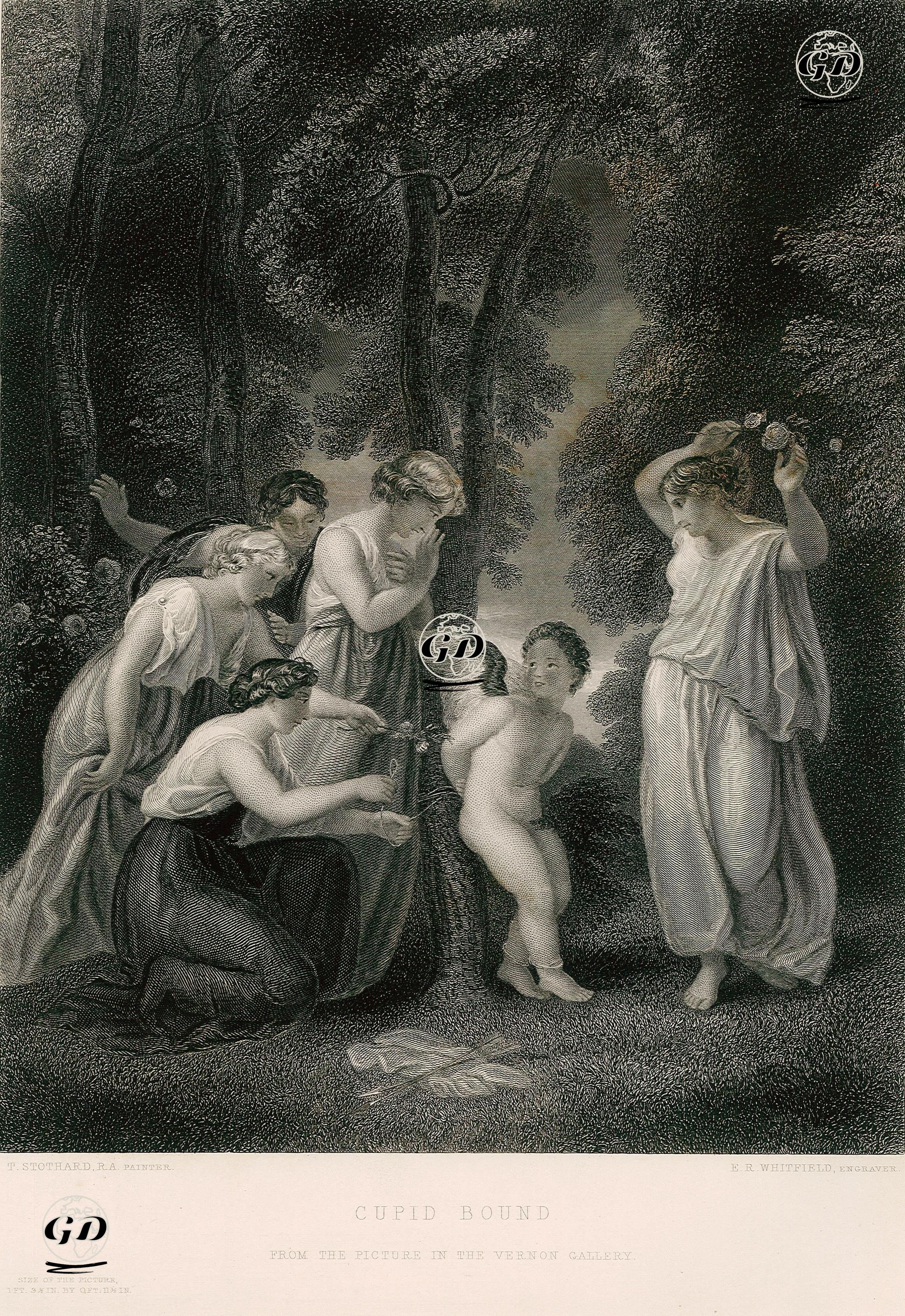
This engraving is based on Thomas Stothard's "Cupid with His Hands Tied to a Tree" and was engraved by Edward Richard Whitfield. The plot depicts a mythological scene characterized by its allegorical and humorous aspects. A group of young women have captured Cupid, the god of love, stripped him of his bow and arrows, and tied him to a tree. This act of playfulness is a revenge against Cupid's playful and sometimes annoying interference. The figures' faces express not fierce anger, but rather a wry amusement and a light humorous tone, making the scene not tragic but humorous and pastoral. The engraving's narrative offers a dual interpretation of the power of love. On the one hand, Cupid's neutralization symbolizes the temporary suppression of love's power and manipulation. However, on the other, his resigned expression conveys a consolation in the hope of a future opportunity for revenge. This sends an ironic message that love can never be completely controlled. Artist Thomas Stothard's elegant sense of linear composition is evident here as well. The figures' sinuous postures exhibit a harmony reminiscent of the aesthetics of ancient sculpture. The engraving's iconography conveys a message reminiscent of the vanitas tradition (the theme of impermanence). Human attempts to control love are futile. No matter how carefully Cupid's attachment is depicted, love is inherently free and unstoppable. This sentiment, combined with the scene's ironic atmosphere, portrays human helplessness in the face of love's power in a way that is both entertaining and thought-provoking.