GRAVÜR DÜNYASI
Digital Engraving Library
| Artist | Thomas Stothard (1755-1834) |
| Engraver | George C.Finden (1811-1885) |
| Date | 1853 |
| Technique | Steel Engraving |
| Category | Mythology |
| Source | The National Gallery Div 6 Comprising The Pictures Known As The Vernon Collection And A Selection From The Works Of Modern Sculptors (G.Virtue) |
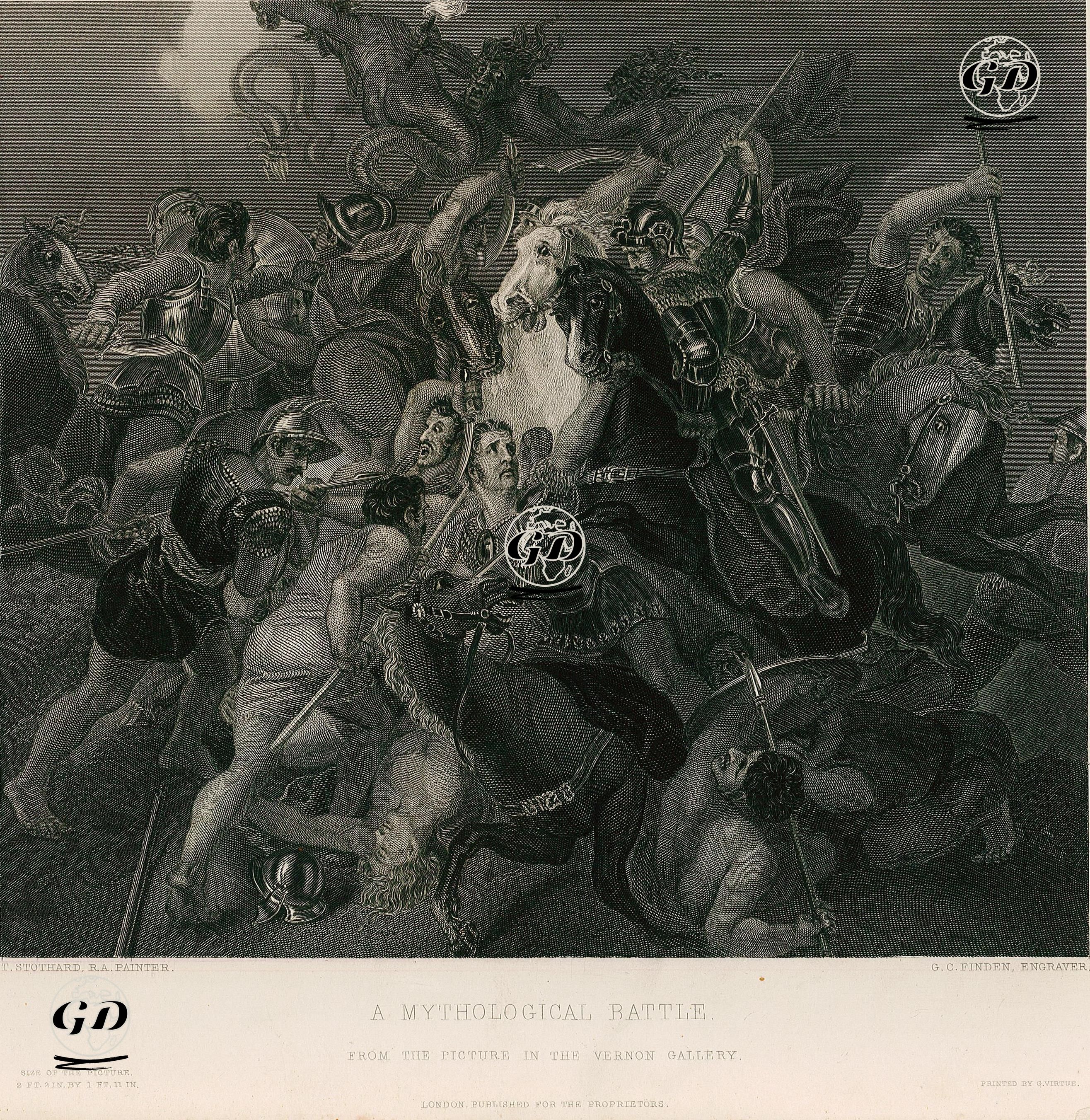
This engraving depicts an allegorical conflict, a product of the artist's imagination, rather than a historical battle. The simultaneous depiction of ancient Greek, Roman, and medieval knights in armor, side by side, is an example of historical anachronism. This demonstrates that the work represents a mythological battle, a "timeless, universal conflict," rather than an actual historical event. At the center of the scene, a striking figure on a white horse, fighting, evokes the heroes of ancient epics. However, surrounding him are warriors caught in chaos, falling bodies, and horsemen charging at each other. The expressions of fear, anger, and despair on the figures' faces strikingly illustrate the destructive nature of war. Above, strange and terrifying, imaginary creatures (grotesquely rendered) watch over the scene or intervene in the conflict, as if they were demons of war. This further enhances the mythological and allegorical nature of the composition. The engraving powerfully conveys the chaotic nature of war through its dramatic use of light and shadow. The white horse and the intense dark tones surrounding it, in particular, direct our gaze to the center of the composition. The horses' wild movements, the crisscrossing lines formed by the spears and swords, and the figures' striking facial expressions convey the tension between peace and chaos with visual intensity. As emphasized in the book in which the engraving was published, Thomas Stothard departed from his usual elegant and pastoral style in this work, opting for an arrangement more reminiscent of the epic battle scenes in Homer's Iliad. However, because the figures' armor and weapons are from different periods, the painting makes no claim to historical accuracy. This, in turn, transforms the work into a visual allegory of the "timeless war" theme of classical mythology.