GRAVÜR DÜNYASI
Digital Engraving Library
| Artist | “T” |
| Engraver | Vincent Brooks, Day & Son Lith. |
| Date | 1880 |
| Technique | Chromolithography |
| Category | Uncategorized |
| Source | Vincent Brooks Day & Son Lith. - Vanity Fair, London |
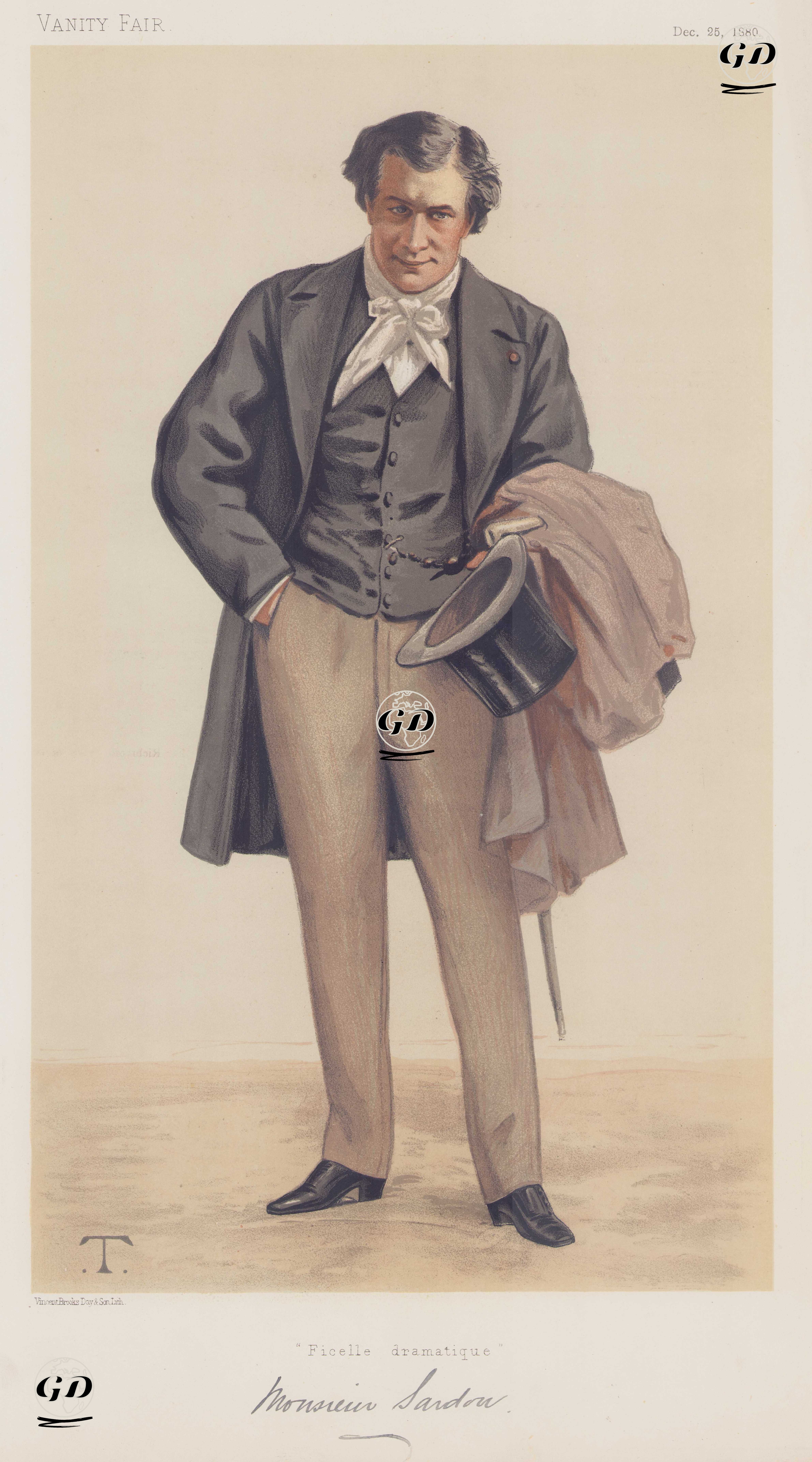
Vanity Fair was a weekly magazine published in England between 1868 and 1914, known for its high-quality lithographs depicting political, social, and aristocratic figures of the era in caricatural yet identifiable forms. The series aimed to "portray" public figures of the Victorian and Edwardian eras with an ironic eye, while also demonstrating the power structure of the period. Additionally, Vanity Fair portrait cartoons often have a humorous or playful subtitle beneath them. Rather than directly identifying the person or their title, these subtitles often reference the person's social circle or association through an allusion, a joke, a nickname, or a play on words. Two of the most famous artists to work for Vanity Fair were "Ape" (Carlo Pellegrini) and "Spy" (Leslie Ward). This Vanity Fair portrait depicts Victorien Sardou (1831-1908), one of the most influential playwrights of the 19th-century French stage. The title "Ficelle dramatique" beneath the portrait is an ironic reference to Sardou's mastery of theatrical art. This phrase is used to describe his dramatic plots, which manipulate plots with a mechanical yet captivating mastery. Sardou, along with Eugène Scribe, is considered one of the architects of the "well-written play" model on the 19th-century French stage. The dramatic structure in his plays is based on an engineeringly meticulous fictional mechanism rather than character psychology. What makes this portrait historically significant is that Sardou left his mark not only on theatrical stages but also on the world opera repertoire. Sardou's works were adapted for opera by leading composers of the period. Victorien Sardo's pose in the engraving (top hat in hand, cape on arm, relaxed yet confident demeanor) also reflects the typical iconography of the Parisian intellectual of the period.