GRAVÜR DÜNYASI
Digital Engraving Library
| Artist | “T” |
| Engraver | Vincent Brooks, Day & Son Lith. |
| Date | 1880 |
| Technique | Chromolithography |
| Category | Uncategorized |
| Source | Vincent Brooks Day & Son Lith. - Vanity Fair, London |
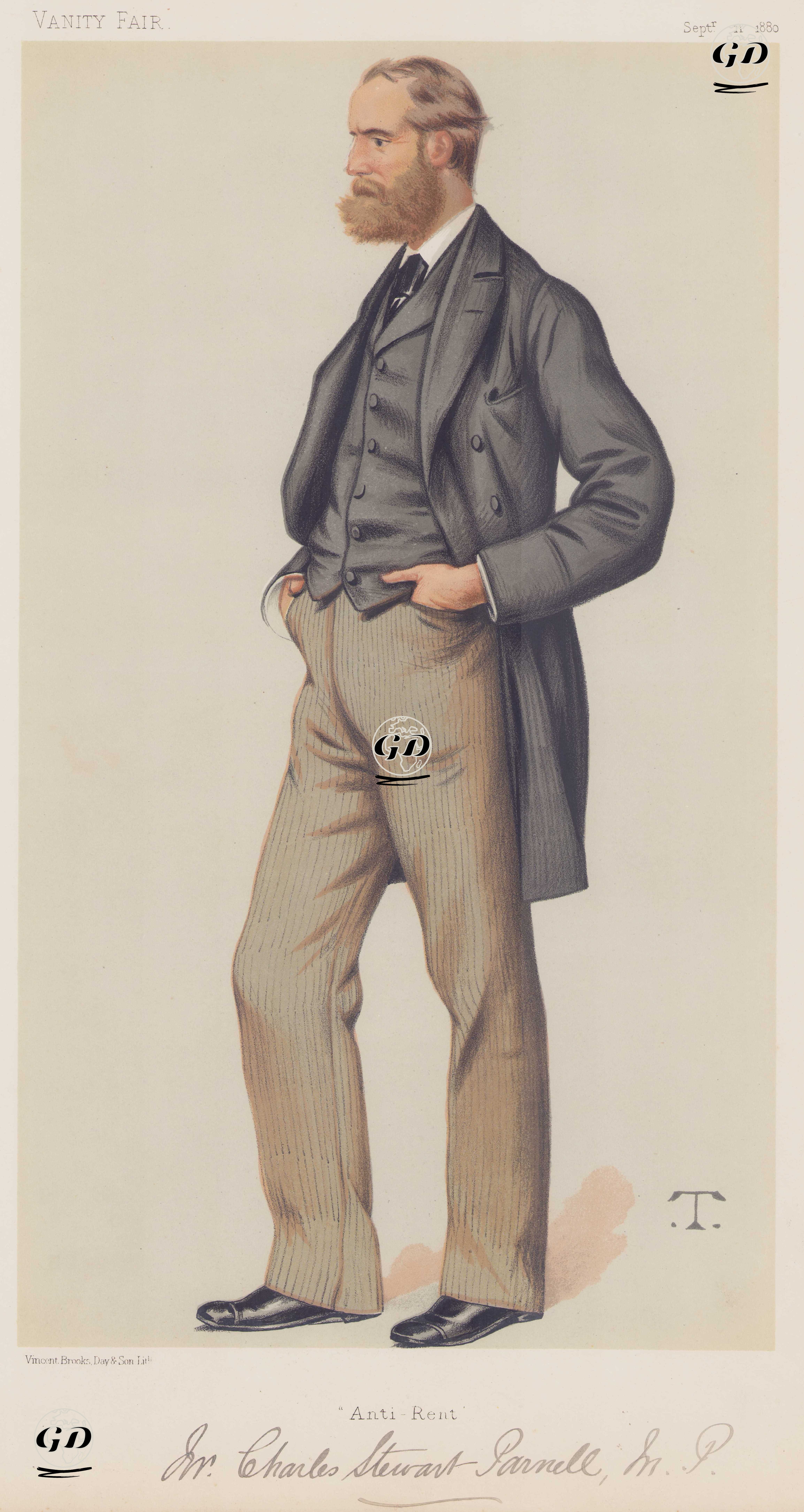
Vanity Fair was a weekly magazine published in England between 1868 and 1914, known for its high-quality lithographs depicting political, social, and aristocratic figures of the era in caricatural yet identifiable forms. The series aimed to "portray" public figures of the Victorian and Edwardian eras with an ironic eye, while also demonstrating the power structure of the period. Additionally, Vanity Fair portrait cartoons often have a humorous or playful subtitle beneath them. Rather than directly identifying the person or their title, these subtitles often reference the person's social circle or association through an allusion, a joke, a nickname, or a play on words. Two of the most famous artists to work for Vanity Fair were "Ape" (Carlo Pellegrini) and "Spy" (Leslie Ward). This Vanity Fair portrait depicts Charles Stewart Parnell (1846–1891), a transformative figure of Irish nationalism. The phrase "Anti-Rent" in the portrait is a direct reference to Parnell's campaign against high rents, which he led alongside the Irish National Land League, founded in 1879. This movement developed political strategies aimed at land justice, mass boycotts against the exorbitant rent policies implemented by the British landowning class in Ireland, anti-eviction solidarity, and mass boycotts. Through this political struggle, Parnell gained enough influence to shift the balance of power in Westminster in the 1880s. He served in the British Parliament from 1875 to 1891, and rose to the position of leader, holding the "balancing power" in the House of Commons during the Home Rule debates of 1885–1886. However, his political career was shaken by the emergence of a scandal regarding his private life in 1890, and he died shortly thereafter, at the age of 45.