GRAVÜR DÜNYASI
Digital Engraving Library
| Artist | S.Wale |
| Engraver | I.J.Call ??? |
| Date | 1770`s |
| Technique | Copper Engraving |
| Category | Uncategorized |
| Source | A New, Royal and Authentic System of Universal Geography |
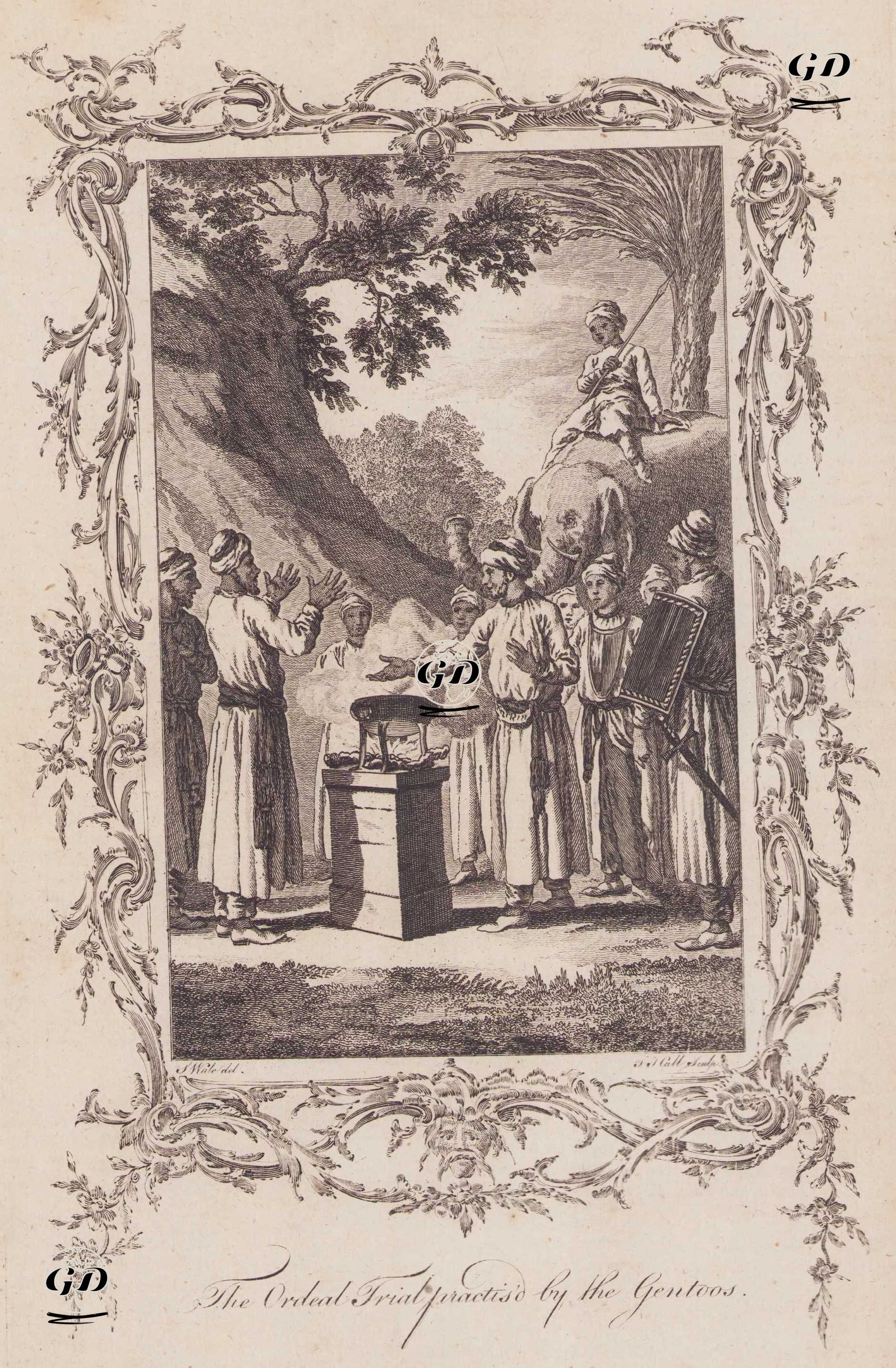
This engraving depicts the Ordeal Fruit Ritual, a judicial ritual practiced among Hindu communities in India known as "Gentoos." In this scene, a group of priests or sages are depicted gathered around an altar, their hands extended over the sacred vessel in the center. The Ordeal Fruit Ritual was known in ancient Indian societies as a method of trial by which justice was administered through divine means. The concept of "ordeal" (divine judgment or divine trial) is based on the determination of guilt or innocence by supernatural forces, and this practice was seen in India, as in many ancient cultures. In India, this custom, known as "trial by poison," was performed with poisonous fruits called "ordeal nuts" or "ordeal fruit." Those suspected of guilt were forced to drink a poisonous concoction prepared from this fruit, leaving the judgment of God to the judgment of God. If the person survived after drinking this drink, they were considered innocent; if they died, they were considered guilty. This belief was based on the decisive role of divine justice, rather than human judgment. Over time, this ritual was outlawed for both ethical and medical reasons, but the idea of "leaving to God's justice" has lived on symbolically in cultural memory. Today, the phrase "ordeal fruit" is used as both a historical ritual of justice and an anthropological term representing humanity's belief in supernatural judgment.