GRAVÜR DÜNYASI
Digital Engraving Library
| Artist | J. D. Woodward |
| Engraver | W. French |
| Date | 1850–1860 |
| Technique | Steel Engraving |
| Category | Uncategorized |
| Source | J. S. Virtue & Co., London |
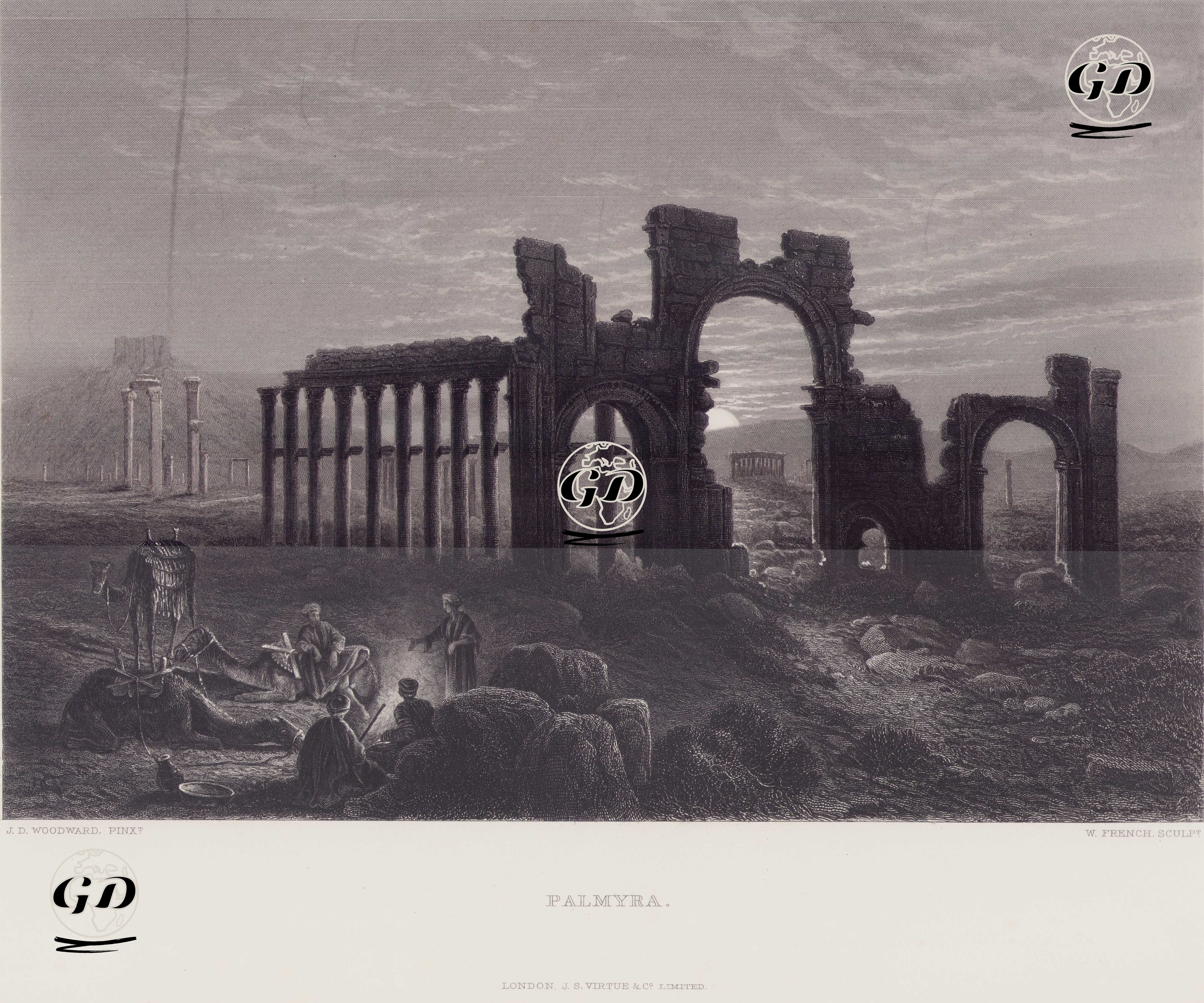
This engraving depicts the ruins of the ancient city of Palmyra, located in the desert of present-day Syria, in a dramatic chiaroscuro. In the foreground, a camel caravan and figures of travelers seated by a fire evoke the exotic atmosphere of the East, while the ruins of the Triumphal Arch, the Great Colonnaded Street, and the Temple of Bel in the background emphasize the architectural splendor of Palmyra during the Roman Empire. Palmyra (ancient Tadmor) was a magnificent city that flourished in antiquity at the crossroads of trade routes between East and West. Known as the "Pearl of the Desert" during the Roman period, Palmyra became a center of political and cultural power, particularly during the reign of Queen Zenobia (3rd century). The Temple of Bel, the Triumphal Arch, the Great Colonnaded Street, and the Theater seen in the engraving reflect a unique synthesis of Greco-Roman architecture and local Syrian elements. Palmyra, which was included on the UNESCO World Heritage List in 1980, is still considered one of the most important archaeological heritages of the ancient world, even though it suffered serious destruction during the conflicts in 2015.