GRAVÜR DÜNYASI
Digital Engraving Library
| Artist | J. Cramb (photographed by) |
| Engraver | E. Radclyffe |
| Date | 1850–1860 |
| Technique | Steel Engraving |
| Category | Uncategorized |
| Source | William Collins, Glasgow |
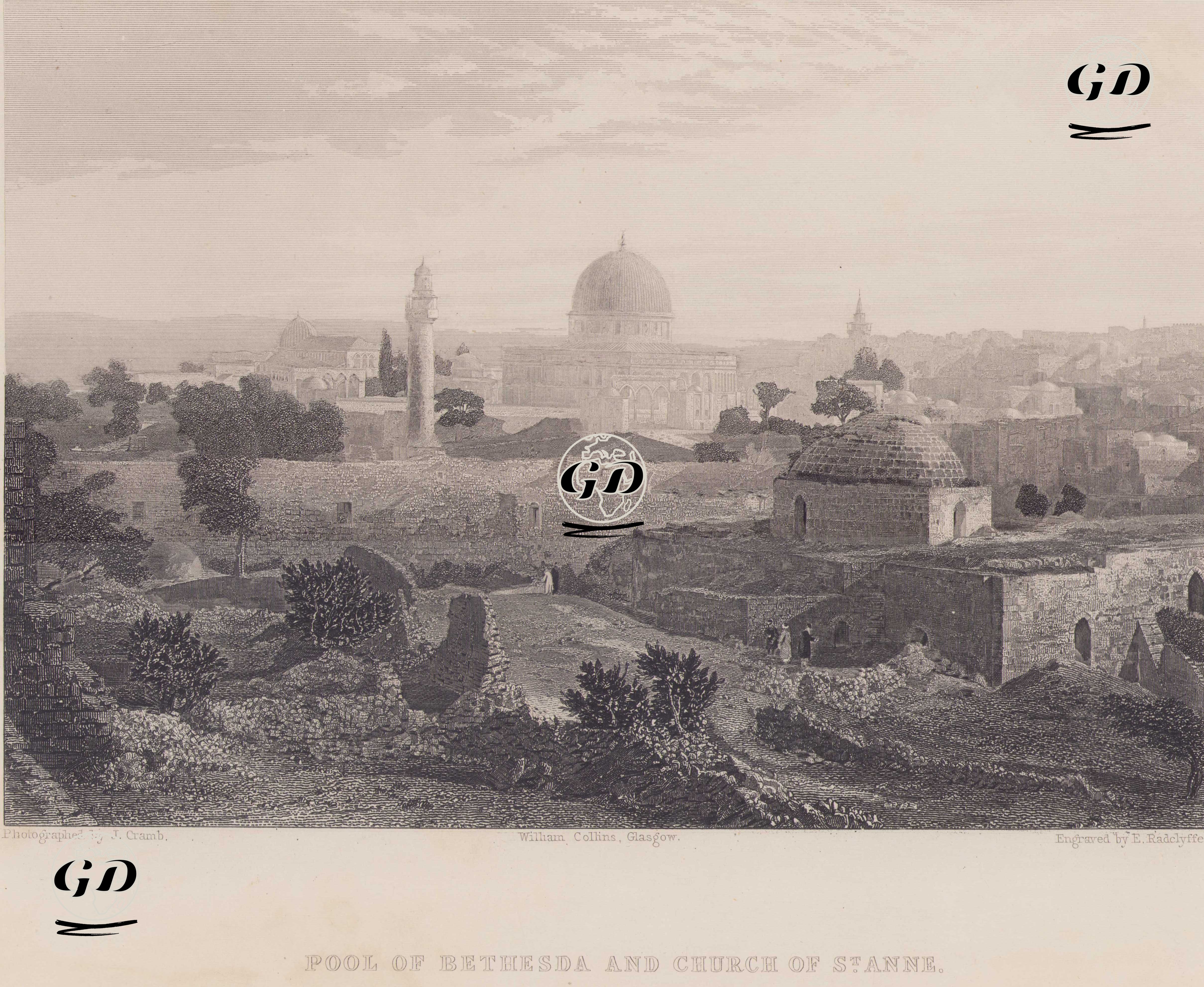
The engraving depicts the Church of St. Anna, located northeast of Jerusalem's Old City, and the nearby Pool of Bethesda. The Dome of the Rock (Kubbet al-Sakhra) is prominently featured in the right-hand background of the engraving, demonstrating topographic accuracy. The composition reflects the architectural texture of Jerusalem during the Ottoman period. The domed stone structures, city wall ruins, minarets, and courtyards are rendered in detail. The engraving visualizes not only a religious site but also the intertwined cultural and architectural heritage of a region considered sacred to Islam, Christianity, and Judaism. The Pool of Bethesda is a sacred site known for a miracle scene in the Bible. According to the Gospel of John, Jesus healed a man who had been ill there for 38 years. Archaeological excavations have shown that the pool was actually a health complex associated with healing waters during the Roman period. The ruins, open to visitors today, are seen as symbols of purification and healing in both Christian and Jewish traditions. St. Anne's Church, located next to the Pool of Bethesda, is a 12th-century Crusader church. Considered the birthplace of the Virgin Mary, this structure is one of the best-preserved examples of Romanesque architecture. Built in the 1140s, the church was later used as a madrasa during the Ottoman period and was restored and converted back into a church by the French in the 19th century.