GRAVÜR DÜNYASI
Digital Engraving Library
| Date | 1750`s-1790"s |
| Technique | Copper Engraving |
| Category | Uncategorized |
| Source | Muhtemelen “The History and Description of the Russian Empire” veya benzeri 19. yy seyahat albümü |
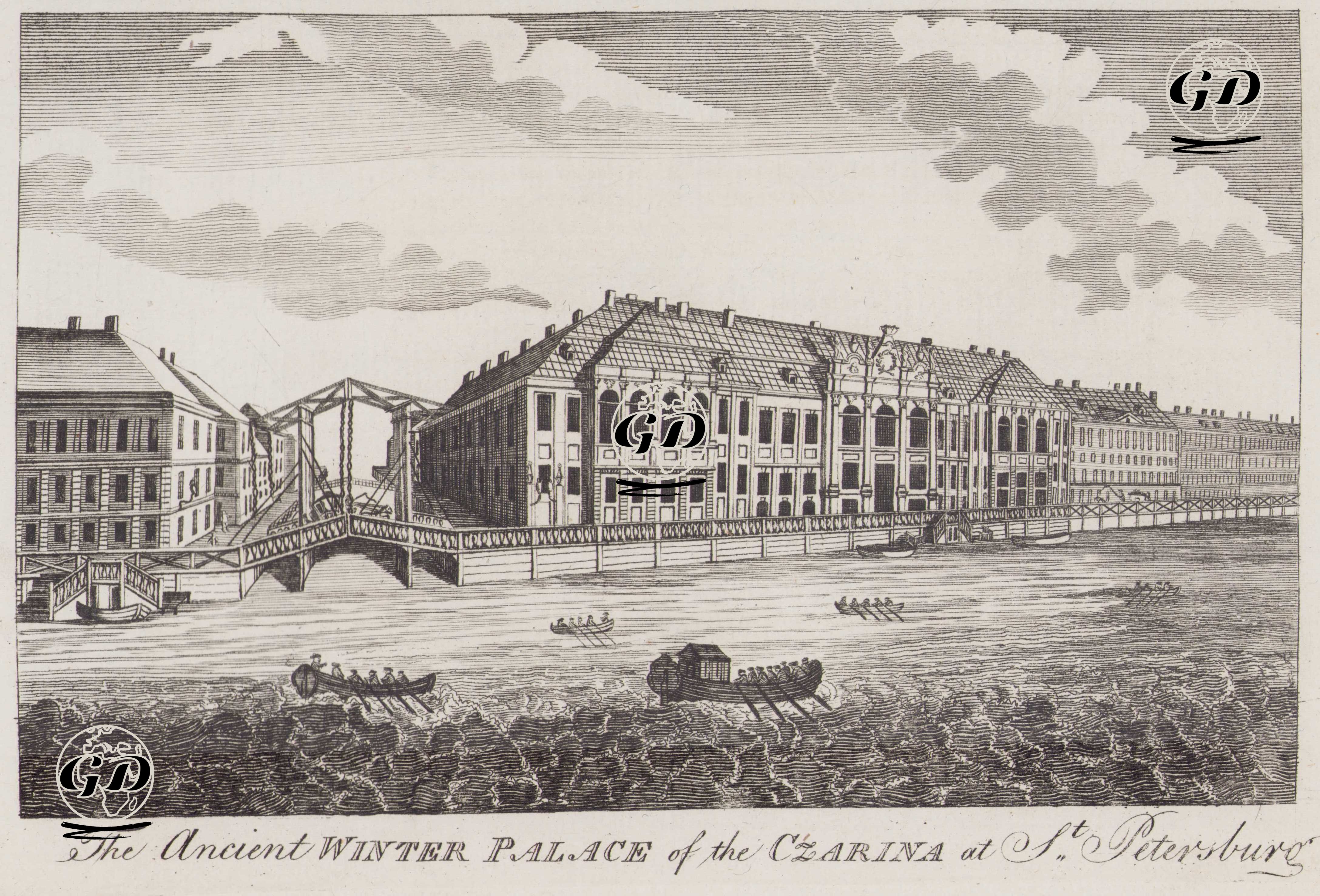
This engraving depicts the Tsarina's Old Winter Palace in St. Petersburg, the capital of the Russian Empire, in the late 18th century. The image depicts a palace with classical lines on the banks of the Neva River, with small boats and rowers moving on the river in the foreground. The engraving also depicts the water network, the bridge and canal system that led to St. Petersburg's reputation as the "Venice of the North." The Winter Palace (Zimniy Dvorets) is one of the structures that best reflects the splendor of Imperial Russia. Built between 1754 and 1762 by Italian architect Bartolomeo Rastrelli in the Elizabethan Baroque style for Tsarina Elizabeth, the palace served as the official winter residence of the Russian tsars until 1917. With its 215-meter-long façade, thousands of windows, and hundreds of rooms, it is one of the largest palace complexes in Europe. Its interior, with its gilded decorations, grand staircases, and magnificent halls, represents the pinnacle of Russian Baroque architecture. Rebuilt after the great fire of 1837, the building became the symbolic center of the Bolshevik conquest during the October Revolution of 1917. Today, the Winter Palace, the main building of the Hermitage Museum, is a key symbol not only of Tsarist-era splendor but also of Russia's artistic and historical memory.