GRAVÜR DÜNYASI
Digital Engraving Library
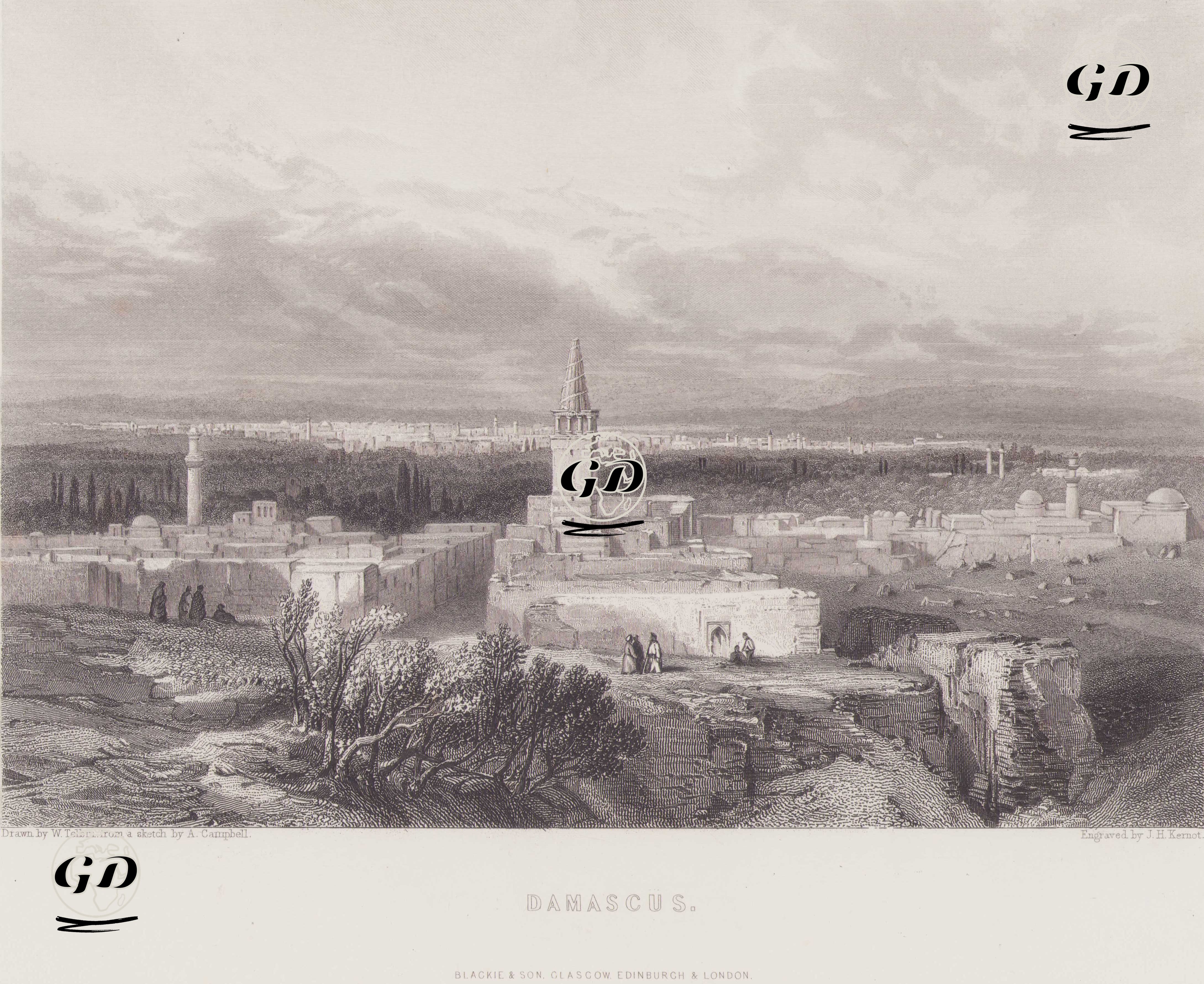
| Artist | W.Telbin (sketch fom A. Campbell) |
| Engraver | J.H. Kernot |
| Date | 1855 |
| Technique | Etching |
| Category | Uncategorized |
| Source | Blackie & Son, Glasgow, Edinburgh & London |
This engraving depicts a panoramic view of Damascus, the capital of Syria, in the mid-19th century. The composition, along with the minaret of the Umayyad Mosque (Great Mosque of Damascus) and the surrounding ancient urban fabric, highlights the city's historical and religious significance. The site of the Umayyad Mosque has been considered sacred throughout history. It served first as a temple dedicated to the Aramaic storm god Hadad, then as the Roman temple of Jupiter, and then as a basilica dedicated to John the Baptist during the Byzantine period. Transformed into a major Islamic temple by the Umayyad Caliph Walid I between 706 and 715, the mosque is a unique example of the fusion of early Islamic art with Byzantine and Roman heritage. Its spacious courtyard, three-nave prayer hall, marble paving, and glittering gold mosaics are notable for their mosaics, which depict images symbolizing the gardens of Paradise and the natural beauty of Damascus. Considered sacred to both Muslims and Christians, the structure houses the tomb of John the Baptist. Although damaged by fires and earthquakes over time, the Umayyad Mosque has been repaired numerous times. It remains open to worship today, representing the spirit of Damascus and its cultural continuity spanning thousands of years.