GRAVÜR DÜNYASI
Digital Engraving Library
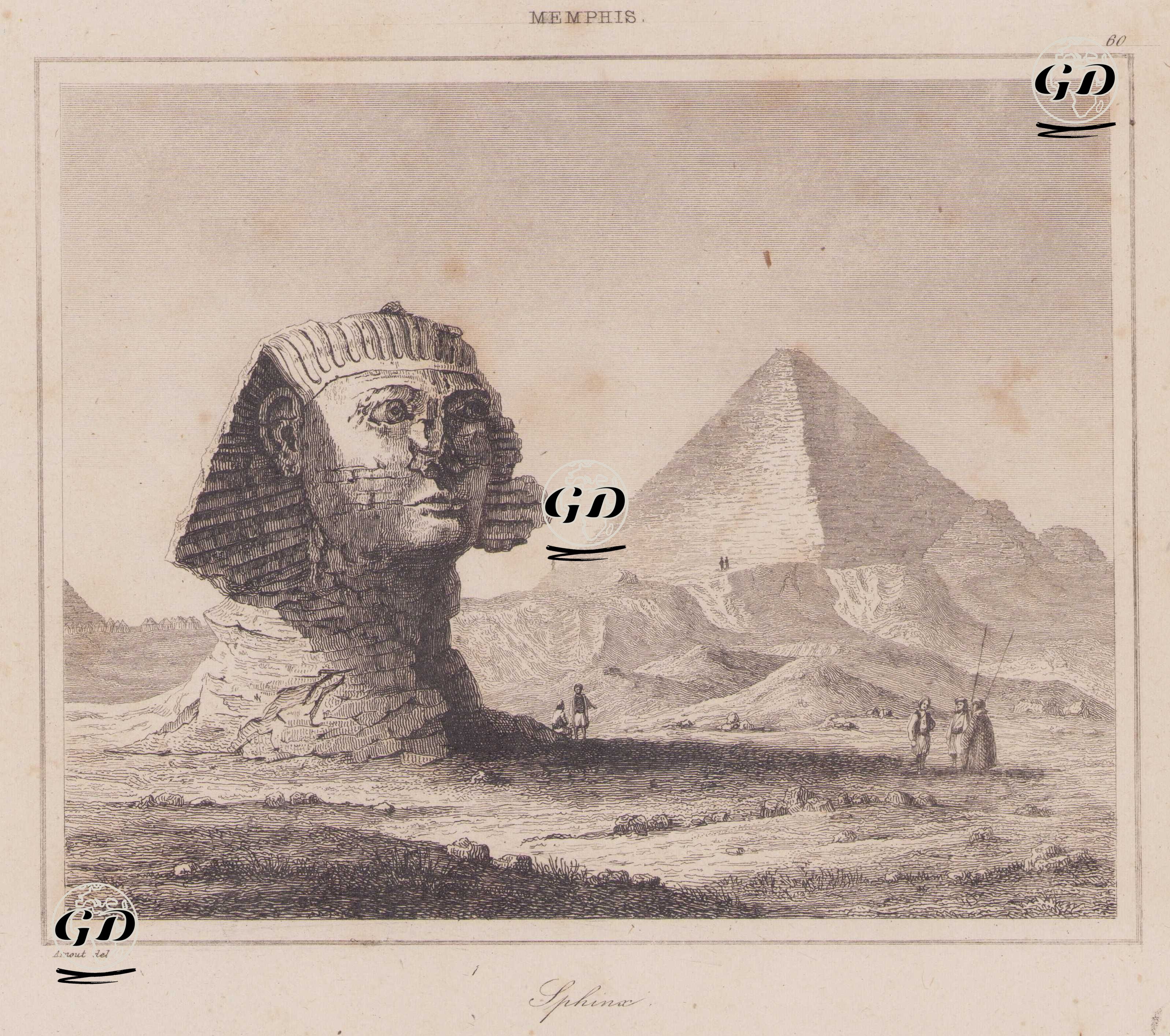
| Artist | Jean Baptiste Arnout (1788-1865) |
| Engraver | Augustin François Lemaitre (1797-1870) |
| Date | 1839 |
| Technique | Copper engraving |
| Category | Uncategorized |
| Source | L'Univers Pittoresque, Firmin Didot Freres, Editeurs, Paris |
The Great Sphinx of Giza is a colossal statue carved from a single piece of limestone, located in the Giza region of Egypt. It dates back to the reign of Pharaoh Khafre (2575 BC - 2465 BC) and is believed to depict Khafre himself. With the body of a reclining lion and the head of a human, this statue is one of Egypt's most famous symbols and the most renowned example of a sphinx in the world. The Pyramid of Khafre, located in the same area, is approximately 143.5 meters high and has a 53.2-degree incline. It is thought to have been built for Menkaure, the son of Pharaoh Khafre. Its most striking feature is that the protective capstones at its summit have survived intact to this day. The fact that the topmost stone weighs approximately 36 tons and how this massive stone was placed there remains a mystery makes the pyramid even more enigmatic.