GRAVÜR DÜNYASI
Digital Engraving Library
| Artist | Leon Gaucherel (1816-1886) |
| Engraver | Augustin Francois Lemaitre (1797-1870) |
| Date | 1845 |
| Technique | Copper Engraving |
| Category | Uncategorized |
| Source | Palestine, Description Geographique, Historique et Archeologique par S.Munk, Firmin Didot Freres, Editeurs, Paris |
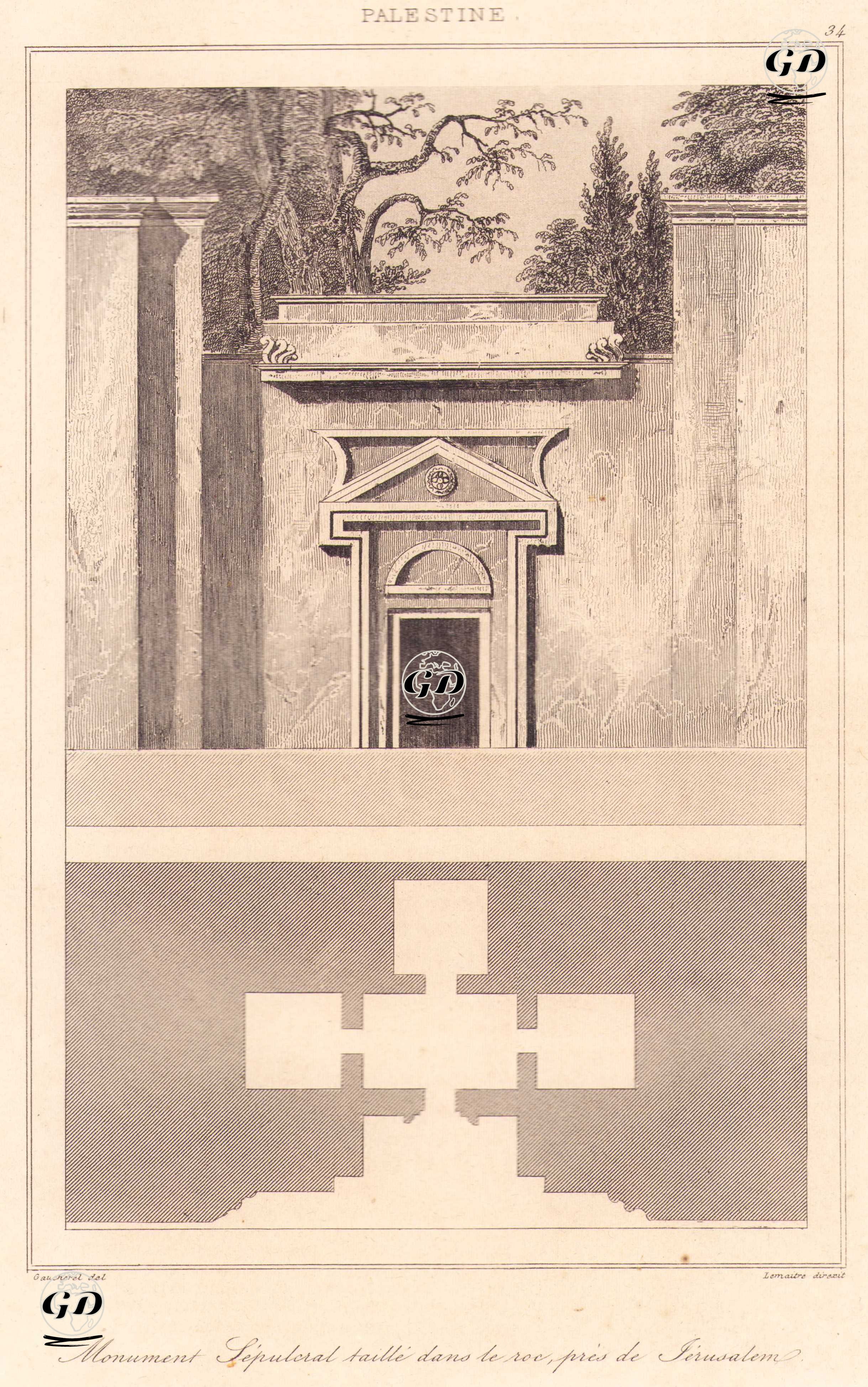
This engraving is a typical example of the rock-cut tomb architecture frequently encountered around Jerusalem. In antiquity, Jewish, Roman, and early Christian communities, in particular, used multi-chambered tomb structures carved into valley slopes or natural rock surfaces. The monument depicted in the engraving is an idealized representation of this tradition. The upper drawing shows the tomb's façade design. The entrance, rising from the center of the flat rock wall, features a simple rectangular doorway. Above the doorway is a small pediment, and within it is a circular rosette motif. Such arrangements are frequently seen in Jewish rock-cut tombs dating from the 1st century BC to the 2nd century AD, under Hellenistic-Roman influence. The façade is not as eroded and naturalistic as in real tombs. The engraver idealized the architecture to be orderly and symmetrical. The plan below shows the tomb's interior structure and room arrangement. The rooms, opening from the center in four directions, reflect the typical multi-chambered family tomb layout. The main central space is the central chamber used for burials. Smaller chambers, opening to the right, left, forward, and backward, are reserved for individual burials. This plan type is characteristic of tomb structures found in the Kidron Valley, Silvan, Talpiot, and Rephaim regions around Jerusalem.