GRAVÜR DÜNYASI
Digital Engraving Library
| Engraver | Augustin Francois Lemaitre (1797-1870) |
| Date | 1845 |
| Technique | Copper Engraving |
| Category | Uncategorized |
| Source | Palestine, Description Geographique, Historique et Archeologique par S.Munk, Firmin Didot Freres, Editeurs, Paris |
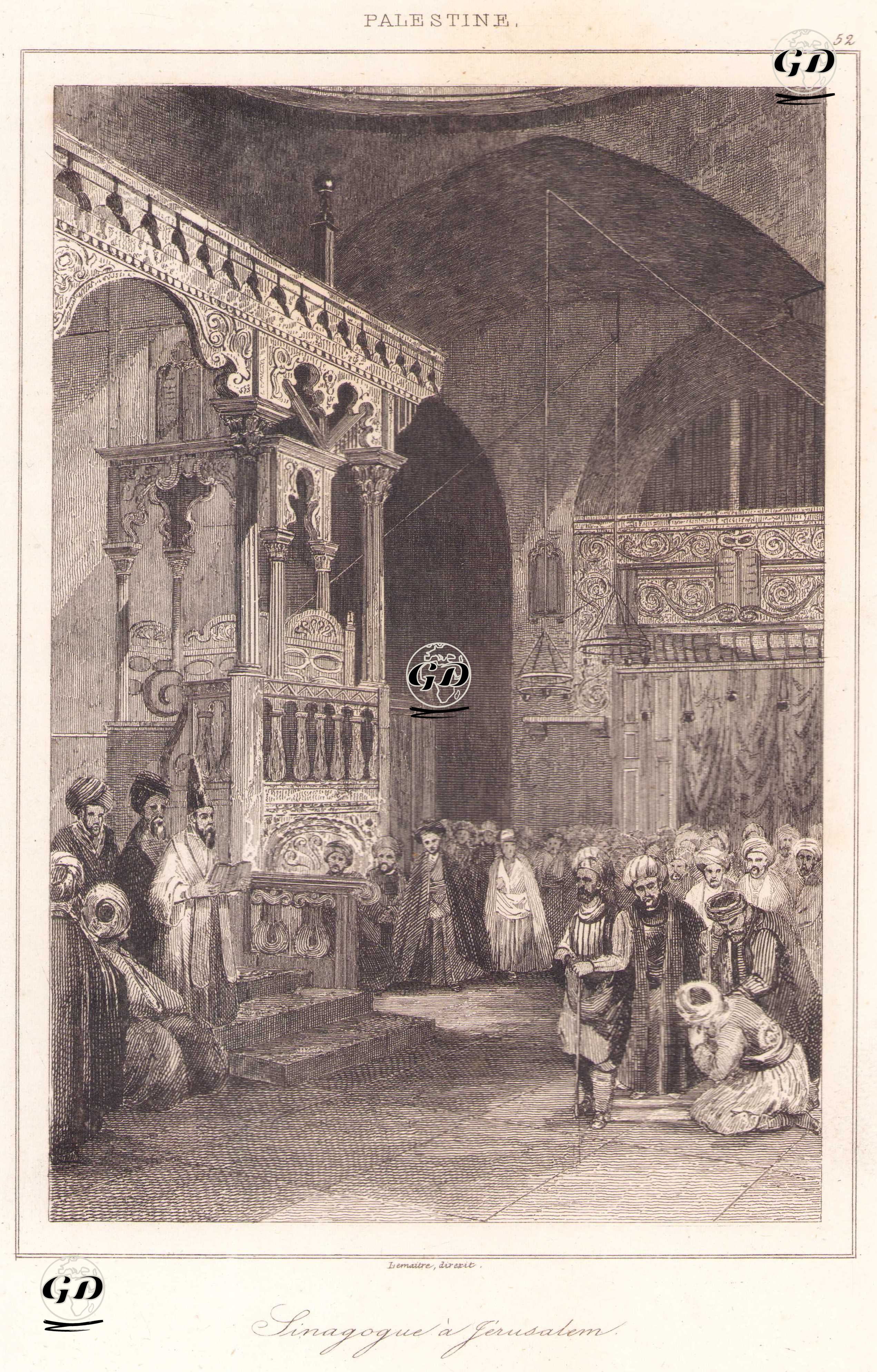
This engraving depicts in detail the interior of a Jewish synagogue in 19th-century Jerusalem. The scene in the drawing reflects in considerable detail the worship life, dress, and synagogue architecture of the Jewish community in Jerusalem during that period. The high, columned, and ornate platform seen in the center of the engraving, called the bimah, was used for reading the Torah. The wooden inlays on the platform demonstrate the rich decorative tradition seen in synagogues during the Ottoman period. The wooden gallery on the right is an architectural reflection of the ezrat nashim arrangement, where women prayed in a separate area. This arrangement became particularly common in Sephardic and Middle Eastern synagogues from the 16th century onward. The large congregation in the drawing is depicted during a Torah reading ceremony. The congregation stands to listen, pray, or bow in respect while the rabbi recites the Torah on the bimah. The clothing also reflects the diversity of Jerusalem's 19th-century Jewish community. The Sephardic turbans and caftans, the Ashkenazi long coats, and the traditional headdresses of some rabbis are all seen together in the painting. This demonstrates that Jerusalem was a cosmopolitan religious center at the time, encompassing both Sephardic and Ashkenazi communities.