GRAVÜR DÜNYASI
Digital Engraving Library
| Engraver | Augustin Francois Lemaitre (1797-1870) |
| Date | 1845 |
| Technique | Copper Engraving |
| Category | Uncategorized |
| Source | Palestine, Description Geographique, Historique et Archeologique par S.Munk, Firmin Didot Freres, Editeurs, Paris |
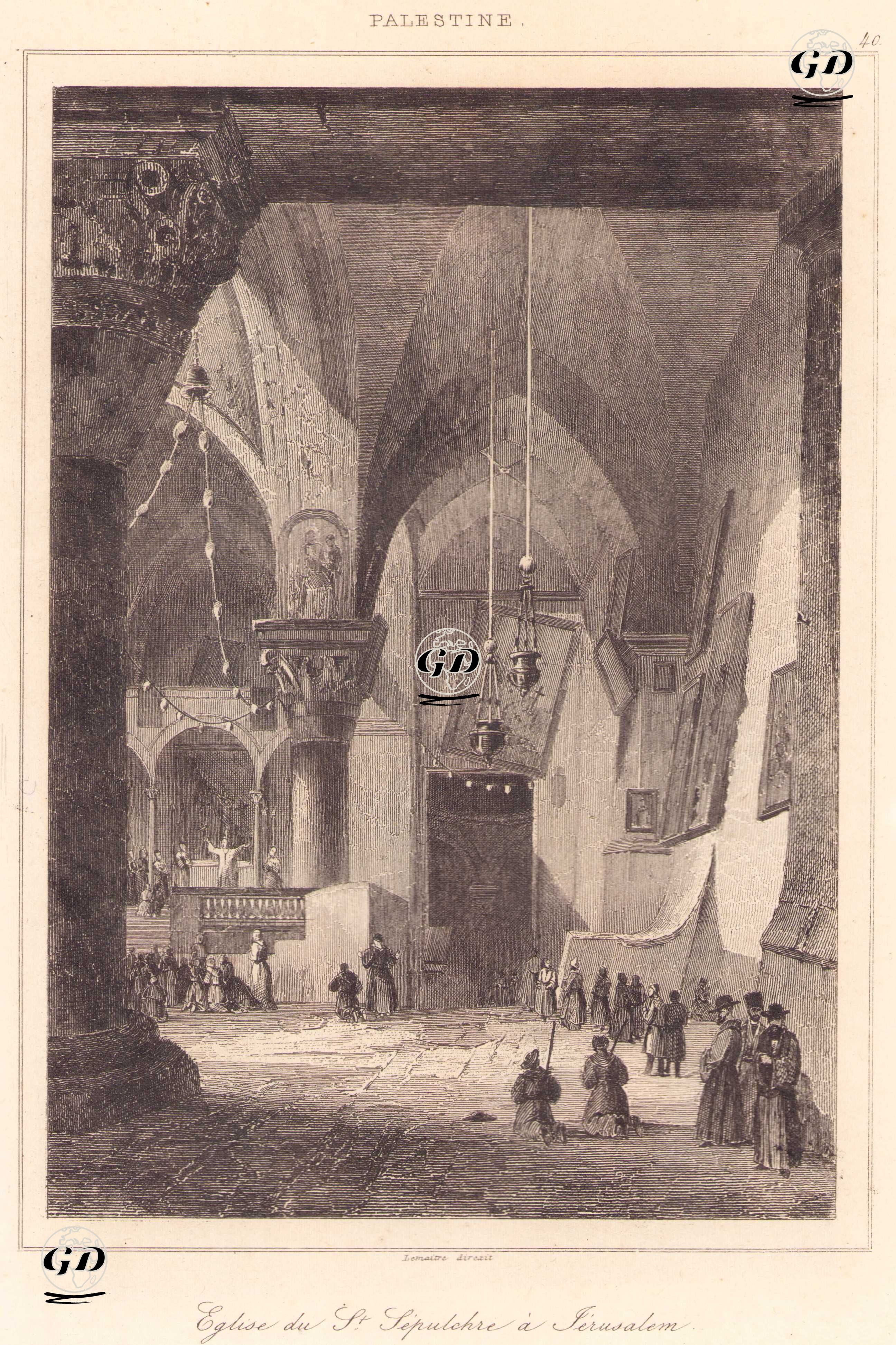
This engraving depicts the interior of the Church of the Holy Sepulchre, one of the holiest sites in the Christian world, alongside 19th-century pilgrimage practices and its multi-layered architectural texture. The focus of the engraving is on the paved courtyards and passages leading to the chapels near the site where Jesus is believed to have been buried after his crucifixion. The vaulted ceiling of the building reflects the architectural transformations the building has undergone over the centuries, reflecting Gothic and Crusader elements added at different periods. The groups of pilgrims seen on the right and left sides of the composition reflect the religious multiplicity of 19th-century Jerusalem and the simultaneous presence of different denominations within the church. This period, under Ottoman rule, saw clear delineation of which sections of the church would be used by which Christian communities. This arrangement was called the "status quo." There were fixed areas reserved for Greek Orthodox, Armenian Apostolics, Latin Catholics, Assyrians, Copts and Abyssinians, and everyone worshipped in these areas. The figures' attire and postures in the engraving illustrate the traditional ways pilgrims performed prayers, offerings, and rosary prayers. Hanging lamps, thick incense chains, and large religious images (icons) on the walls are significant architectural details that enhance the atmosphere of worship. The presence of both Orthodox icons and Catholic altar arrangements in the same space, particularly along with the dark stone walls of the large domed halls dating from the Crusader period, demonstrates the structure's multilayered history, both historically and religiously.