GRAVÜR DÜNYASI
Digital Engraving Library
| Artist | Cassas |
| Engraver | Augustin Francois Lemaitre (1797-1870) |
| Date | 1845 |
| Technique | Copper Engraving |
| Category | Uncategorized |
| Source | Palestine, Description Geographique, Historique et Archeologique par S.Munk, Firmin Didot Freres, Editeurs, Paris |
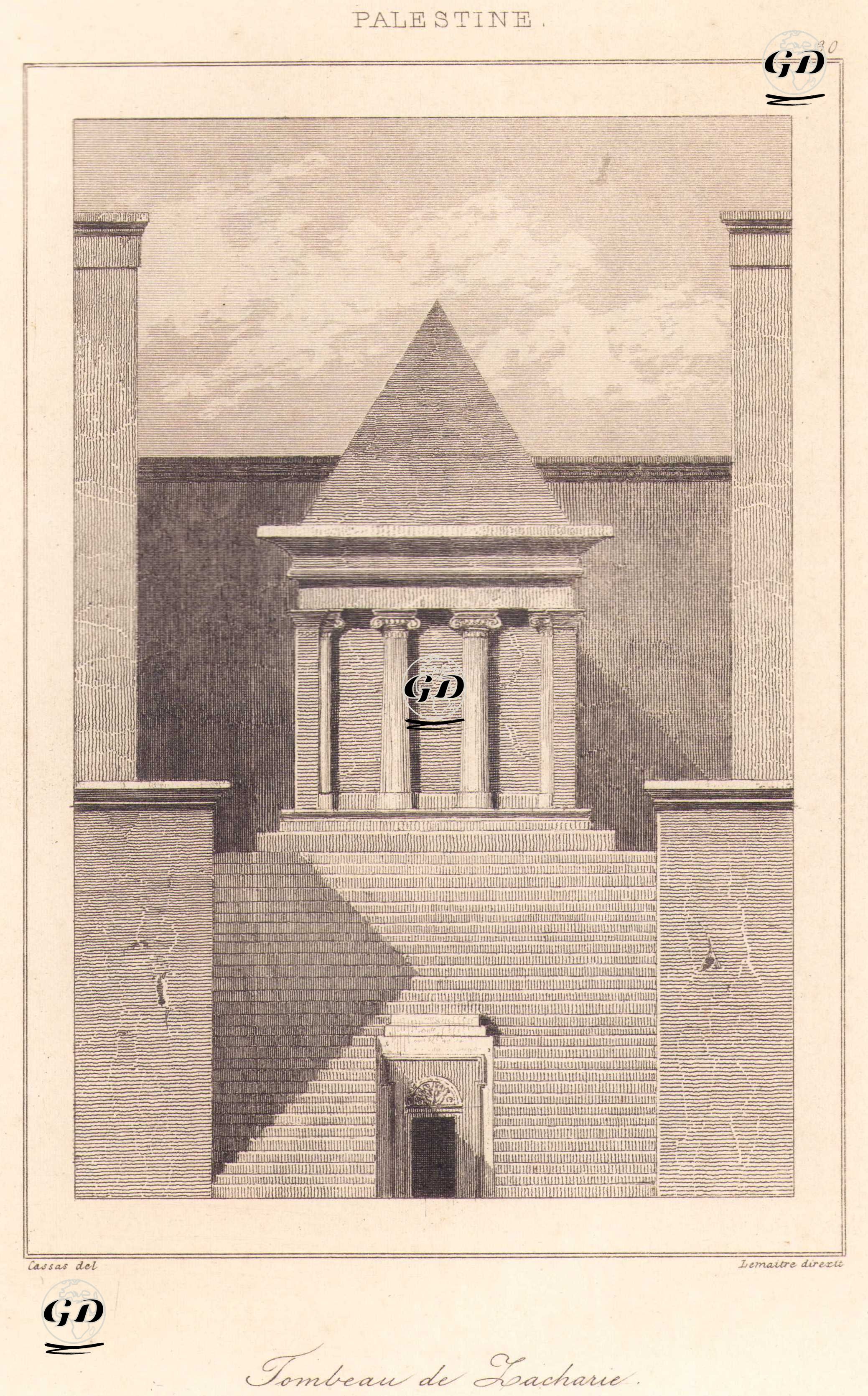
This engraving is an idealized depiction of the monumental tomb structure believed to belong to Zechariah, located in the Kidron Valley in Jerusalem. While the monument was actually carved from a single piece of rock, the engraving presents it as a more orderly, symmetrical, and monumental composition. The façade of this tomb combines architectural features from different cultures. At the top is a pyramid-like roof in Egyptian style. In the center is a columned entrance (portico) in Greek style. The entire structure is carved into the rock, typical of the Hellenistic period in the region. In reality, the façade of this tomb features four half-columns approximately 5 meters high. These columns have ornate capitals that combine both Attic (Athenian) and Ionic styles. The upper section is carved from the rock as a single piece, culminating in a conical peak. In the engraving, this upper section is idealized with a more geometric and symmetrical pyramidal shape. This tomb structure attributed to Prophet Zechariah does not have a direct historical connection with him. This name was established over time thanks to the habit of early Christian pilgrims associating the monumental tombs in the area with holy figures. The monument's typology is consistent with Jewish rock-cut tomb architecture dating from the 1st century BC to the 1st century AD, and it bears a particularly close architectural resemblance to the Absalom Monument in Jerusalem's Kidron Valley.