GRAVÜR DÜNYASI
Digital Engraving Library
| Engraver | Augustin Francois Lemaitre (1797-1870) |
| Date | 1848 |
| Technique | Copper Engraving |
| Category | Uncategorized |
| Source | Syrie Ancienne et Moderne par M.Jean Yanoski et par M.Jules David - L'Univers Pittoresque, Firmin Didot Freres, Editeurs, Paris |
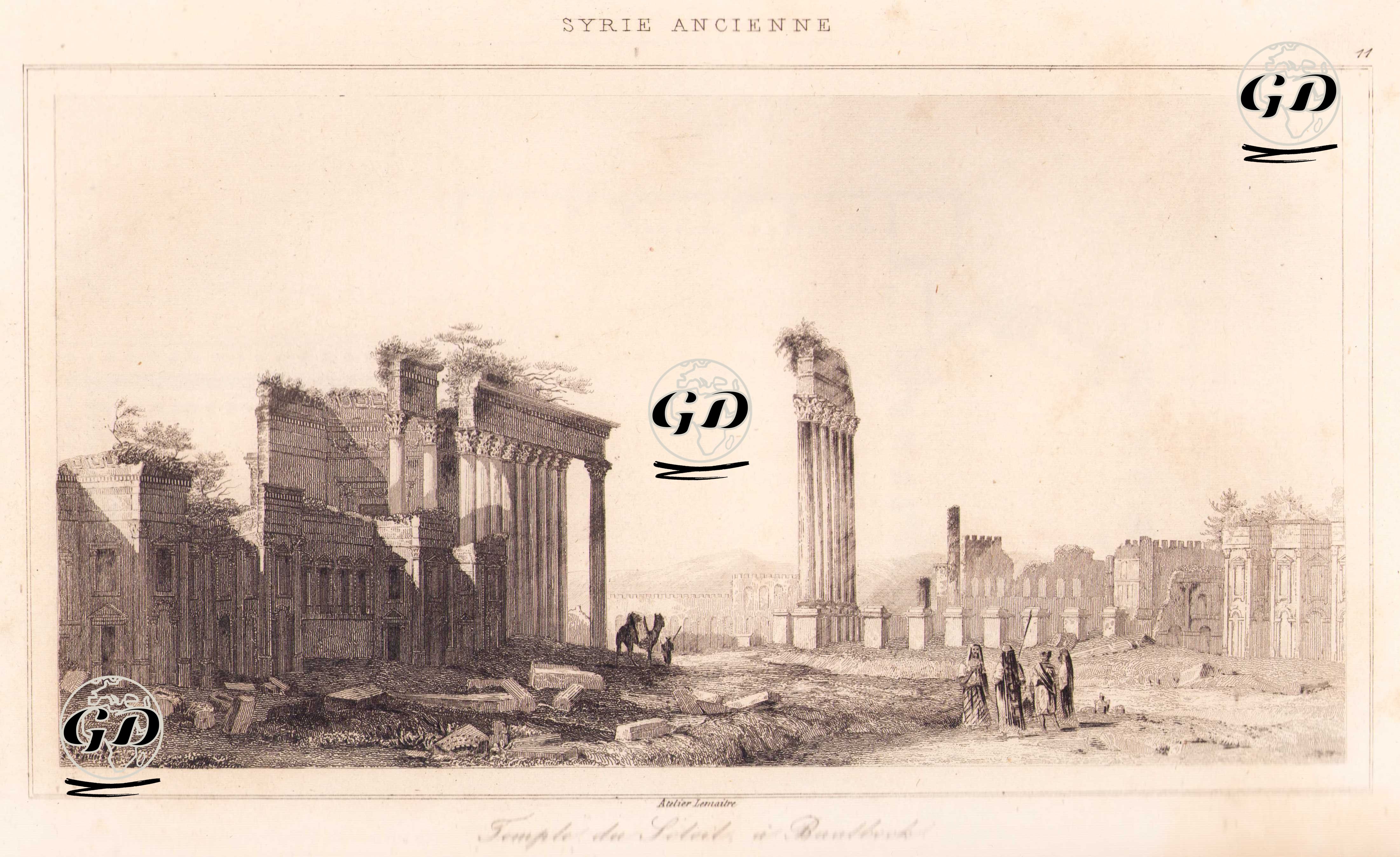
This engraving depicts the ruins of the Temple of the Sun (Temple of Jupiter Helipolitanus), one of the most monumental architectural remains from the Roman period at the ancient city of Baalbek, located in modern-day Lebanon. Known in antiquity as Heliopolis, Baalbek was one of the most magnificent sacred centers of the Roman Empire in the Eastern Mediterranean, a unique example of both culture and engineering. The Temple of the Sun/Jupiter at Baalbek was the centerpiece of a vast sacred complex that was expanded from the time of Roman Emperor Augustus onward. Construction of the temple took approximately two centuries and is considered the largest temple structure in the Eastern Roman provinces. Primarily dedicated to the cult of Jupiter Helipolitanus, this structure was a significant religious focal point where the local deities of the Eastern Mediterranean merged with the Roman pantheon. The engraving depicts in detail the temple's massive columns and partially collapsed façade blocks, which still stand today. In particular, the massive Corinthian columns stand out for their exaggerated proportions and magnificent capitals, characteristic of Baalbek architecture. These columns are among the largest monolithic columns in the ancient world. The ruined entablature (the horizontal architectural section supported by the columns) and frieze blocks demonstrate that the temple was a pinnacle example of Roman engineering. A singular group of columns on the right side forms part of the massive colonnade known today as the "Columns of the Temple of Jupiter," which has become the most iconographic part of Baalbek's skyline.