GRAVÜR DÜNYASI
Digital Engraving Library
| Artist | Vernier |
| Engraver | Augustin Francois Lemaitre (1797-1870) |
| Date | 1845 |
| Technique | Copper Engraving |
| Category | Uncategorized |
| Source | Palestine, Description Geographique, Historique et Archeologique par S.Munk, Firmin Didot Freres, Editeurs, Paris |
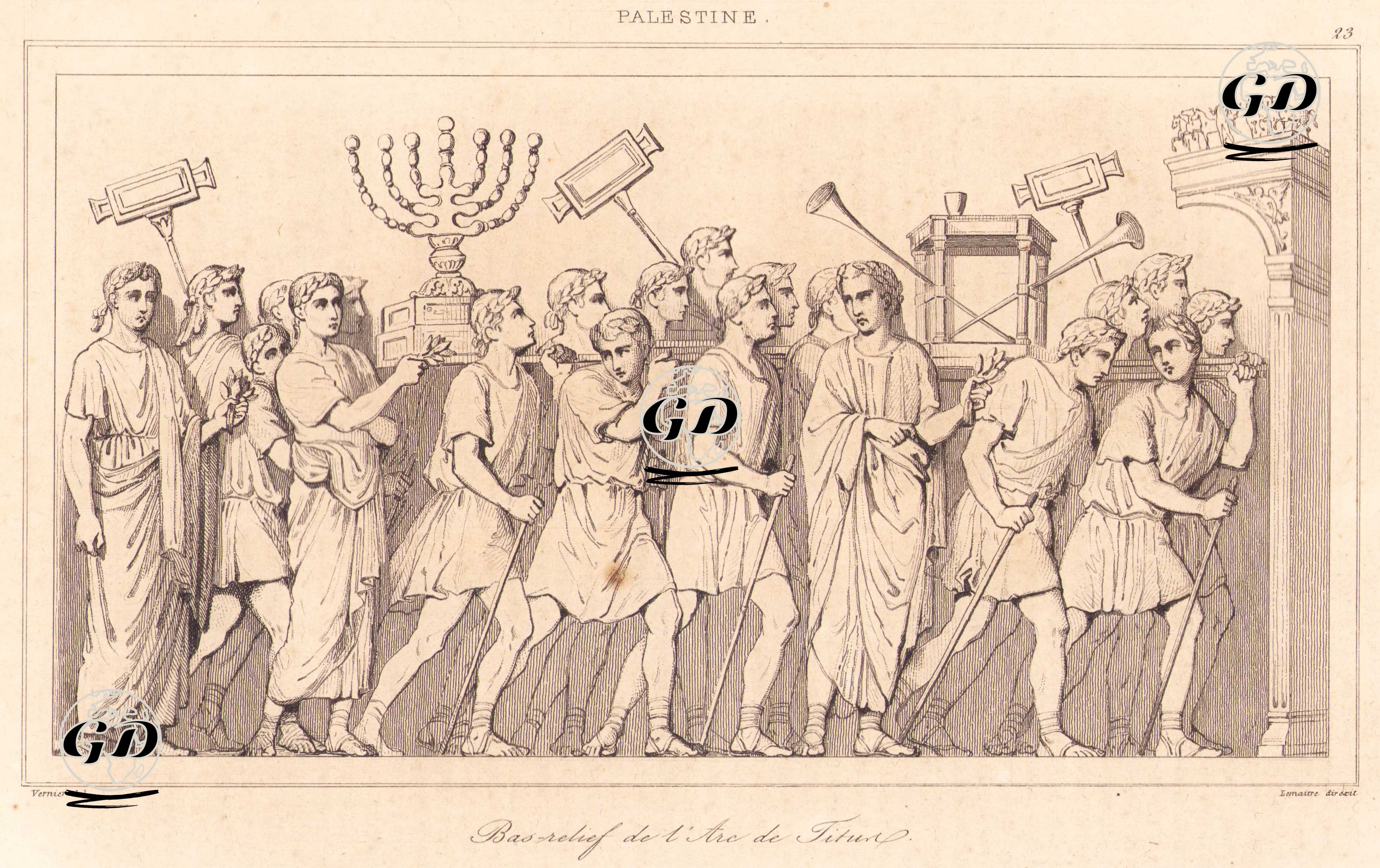
This engraving is a graphic reproduction of the relief on the Arch of Titus in Rome, depicting the triumphal procession following the Roman conquest of Jerusalem in 70 CE. This scene, symbolizing the Flavian dynasty's victory, reflects both the propagandistic power of Roman art and the monumental memory of one of the most devastating events in Jewish history. During the First Jewish-Roman War, which lasted from 66-73 CE, Titus, son of Emperor Vespasian, laid siege to Jerusalem and led a major military campaign that resulted in the destruction of the Second Temple. This victory was seen in Rome as both a show of political power and a sign of divine blessing, and a magnificent triumphal ceremony was held upon Titus's return. The Arch of Titus was also built in 81 CE to commemorate this victory. The engraving depicts Roman soldiers carrying sacred relics from the Temple in Jerusalem in a triumphal procession. This scene is both one of the most recognizable reliefs of the ancient world and a symbol of one of the most traumatic losses in Jewish history. The menorah (seven-branched candelabrum), one of the most important sacred relics taken from the destroyed Temple of Jerusalem, the silver trumpets (ḥaṣoṣrot), and the sacred table (the table of Showbread - Lehem ha-Panim) are prominent elements in the relief. These elements were propagandistic presentation elements integral to Roman triumphal ceremonies. This relief is a classic example of imperial sculpture, emphasizing Rome's military might and imperial ideology. The figures' rhythmic gait, the folds of their clothing, the bearers' stance, and the detailed rendering of the trophy objects artistically exalt Rome's triumphal ideology.