GRAVÜR DÜNYASI
Digital Engraving Library
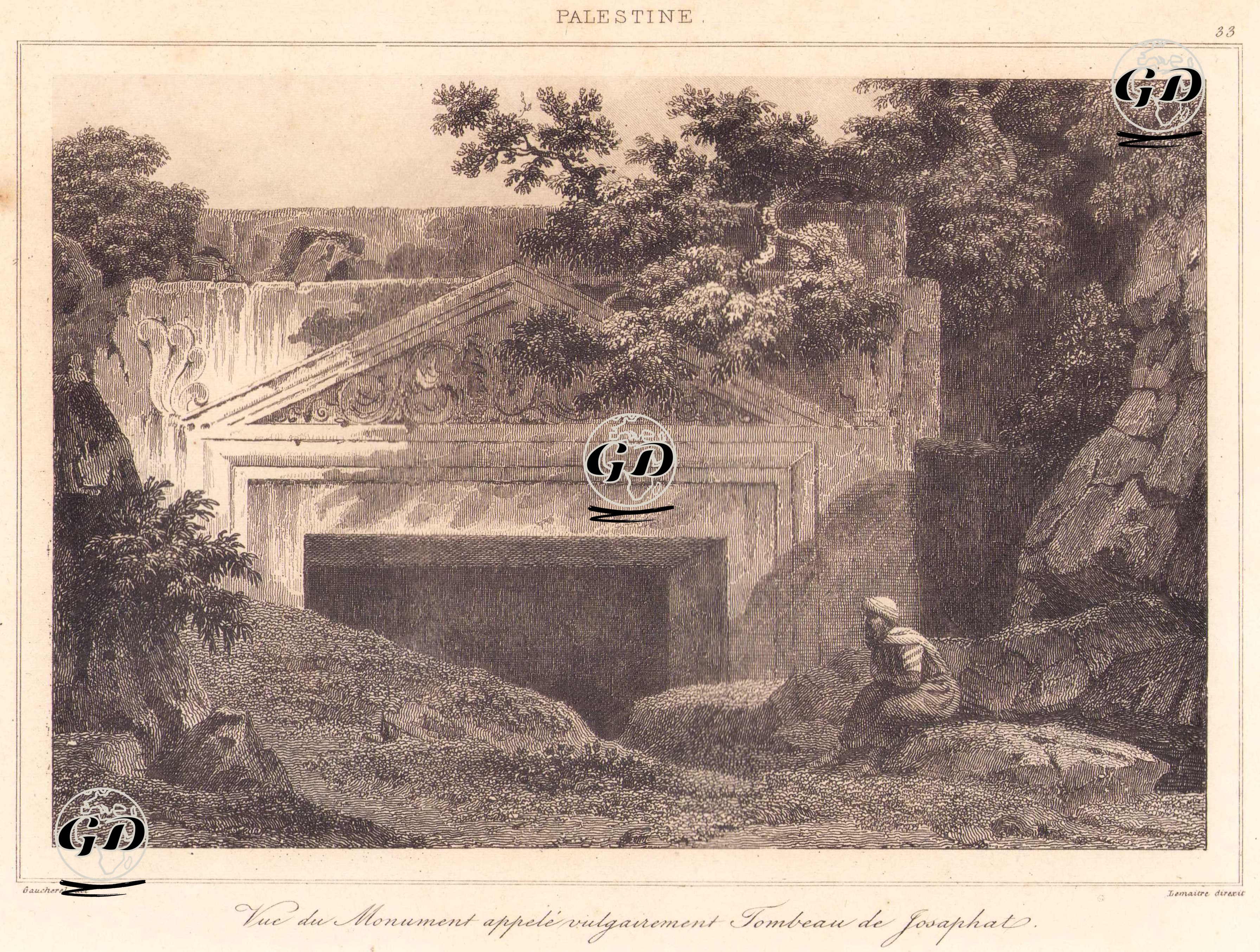
| Artist | Leon Gaucherel (1816-1886) |
| Engraver | Augustin Francois Lemaitre (1797-1870) |
| Date | 1845 |
| Technique | Copper Engraving |
| Category | Uncategorized |
| Source | Palestine, Description Geographique, Historique et Archeologique par S.Munk, Firmin Didot Freres, Editeurs, Paris |
This engraving depicts the mausoleum popularly known as the "Tomb of Jehoshaphat." However, this designation is historically inaccurate. King Jehoshaphat's burial place is unknown, and the designation is merely a conventional reference. The monument seen in the engraving is part of the ancient Jewish necropolis along the Kidron Valley, east of Jerusalem. This tomb, not constructed of reinforced concrete but carved directly into the bedrock, exhibits the characteristic features of Hellenistic-Heroid funerary architecture dating to the 1st century BC. The triangular pediment at the top, the frieze band with sinuous decoration, and the regular geometric lines reflect the typical decorative style seen in rock-cut tombs belonging to the Jerusalem aristocracy of the period. This blend of Roman and Hellenistic influences clearly demonstrates the elite burial tradition of the Second Temple period in Jerusalem. The monument, together with other rock tombs in its vicinity, especially the Absalom's Monument, the Zechariah's Tomb and the Bene Hezir Tombs, constitutes one of the most important ancient necropolis areas of Jerusalem.