GRAVÜR DÜNYASI
Digital Engraving Library
| Artist | Cassas |
| Engraver | Augustin Francois Lemaitre (1797-1870) |
| Date | 1845 |
| Technique | Copper Engraving |
| Category | Uncategorized |
| Source | Palestine, Description Geographique, Historique et Archeologique par S.Munk, Firmin Didot Freres, Editeurs, Paris |
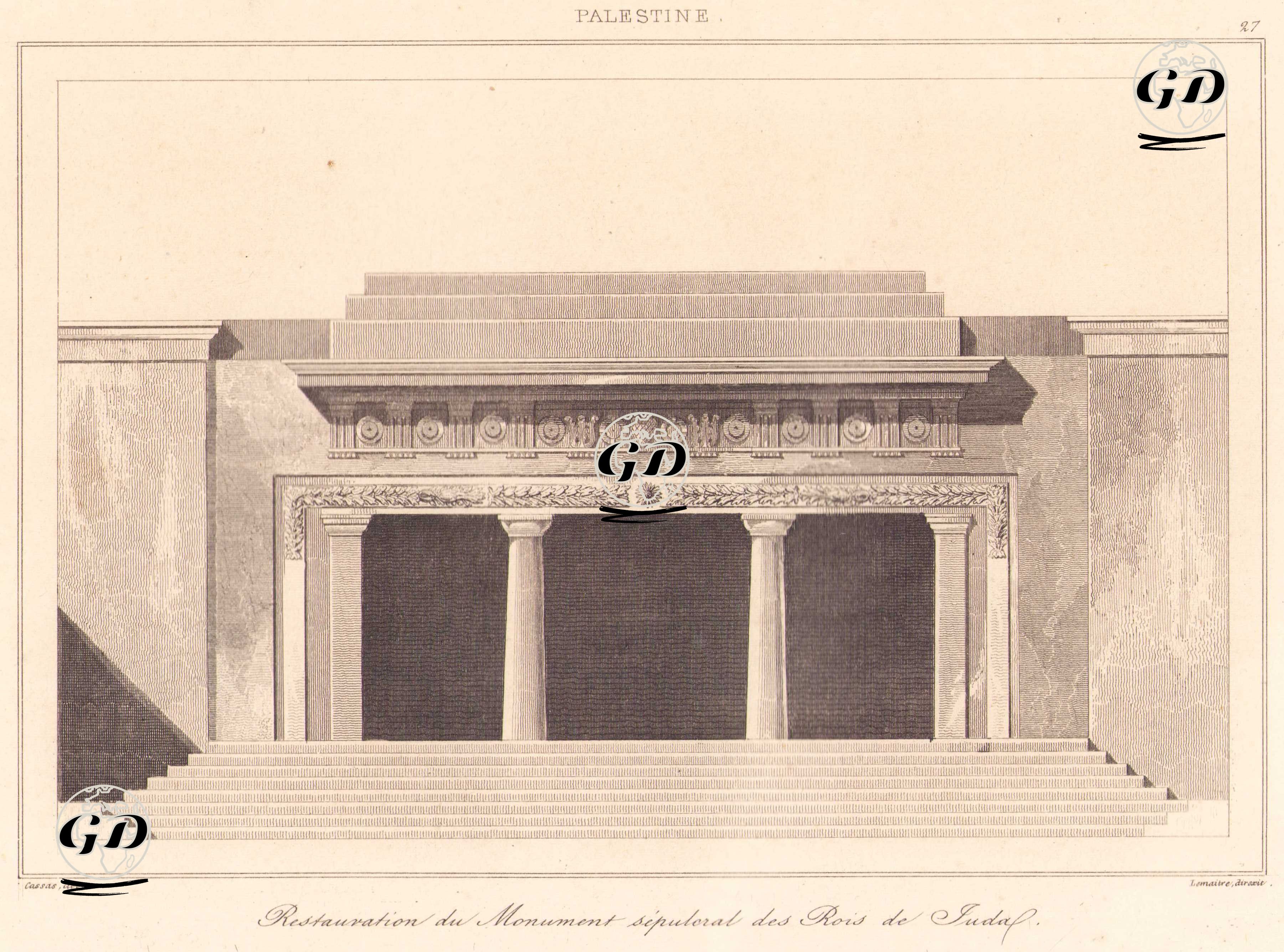
This engraving is an idealized reconstruction (restitution) depiction of the monumental rock-cut tomb popularly known as the "Tombs of the Kings of Judah." In reality, this necropolis in northwest Jerusalem is a richly decorated Jewish burial complex from the Second Temple period, known in modern literature as the "Tomb of the Kings - Kalfa Rock Tombs - Pəqei Ha'Melakhim." However, this structure never belonged to the kings of Judah. This naming is a traditional misnomer of 18th- and 19th-century European travelers. The monumental façade seen in the engraving is an attempt at a much more grandiose and orderly reconstruction, inspired by the decorative repertoire of the actual structure. The three-columned entrance, the frieze decorated with regular triglyphs and rosettes, the soffit decorations, and the broad step platform are all reinterpreted according to classical Greco-Roman architectural principles, drawing inspiration from the decorative elements of the actual tomb. The artist based his work on the partially preserved tomb decorations in the existing structure. He completed the lost or damaged sections according to historical and aesthetic intuition, creating a holistic, ideal architecture. The orderly series of steps, symmetrical columns, and architectural integrity of the engraving contrast with the partially destroyed and buried rock tomb's original form. Therefore, this drawing is an archaeological hypothesis rather than a historical reality.