GRAVÜR DÜNYASI
Digital Engraving Library
| Artist | Leon Gaucherel (1816-1886) |
| Engraver | Augustin Francois Lemaitre (1797-1870) |
| Date | 1845 |
| Technique | Copper Engraving |
| Category | Uncategorized |
| Source | Palestine, Description Geographique, Historique et Archeologique par S.Munk, Firmin Didot Freres, Editeurs, Paris |
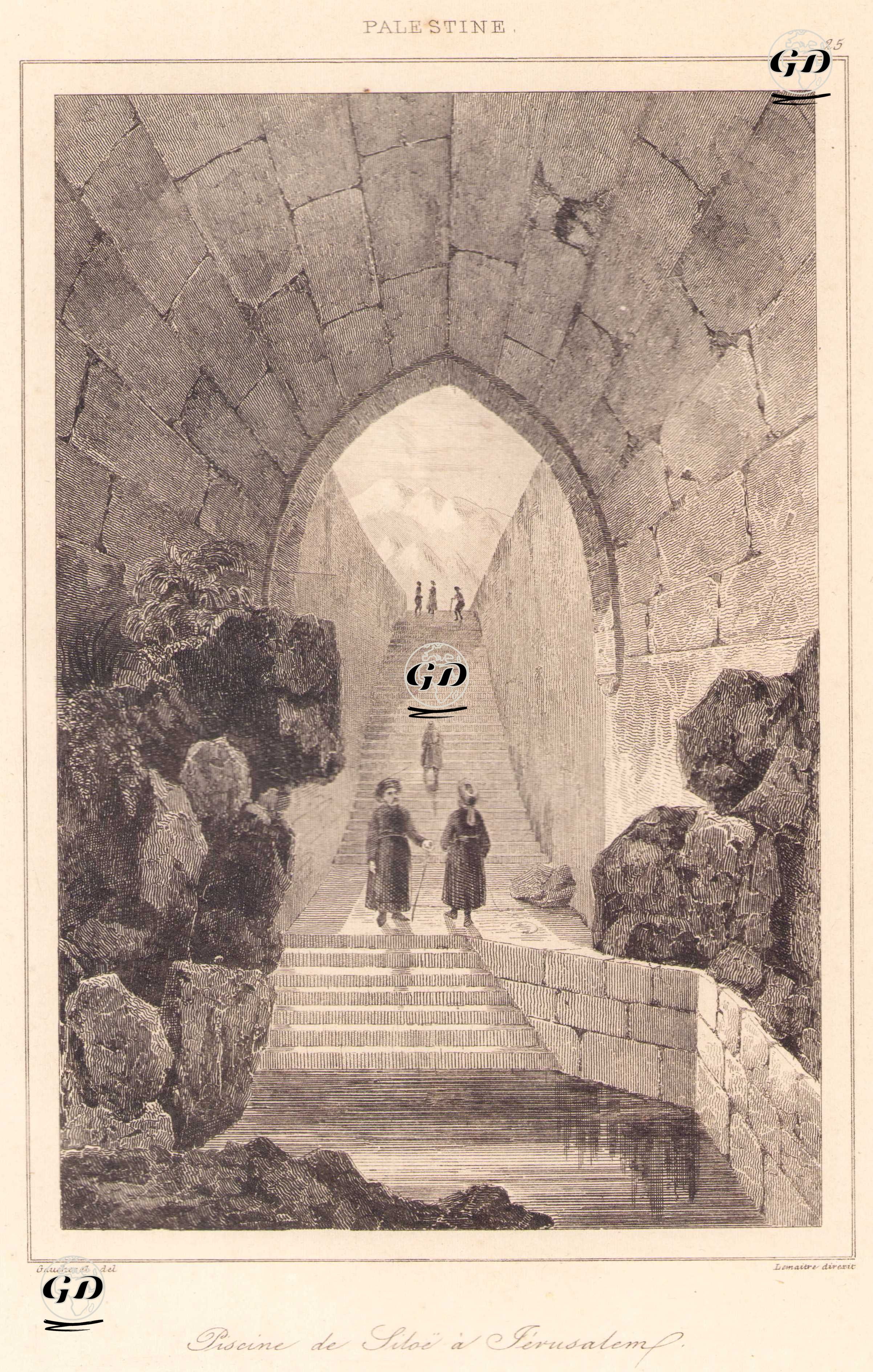
This engraving depicts the entrance stairs to the Pool of Siloam in Jerusalem and the ancient passageway connecting it. The Pool of Siloam is a series of rock-cut pools located on the southern slopes of Wadi Hilweh, southeast of Jerusalem, outside the Old City walls. It is an important religious site in both Jewish and Christian traditions. It holds a special place in Christian history due to the New Testament account (John 9:1-11) of Jesus healing a man born blind after bathing in the Pool of Siloam. The wide archway seen in the engraving is the outlet section of the ancient aqueduct known as Hezekiah's Tunnel. Built in the 8th century BC by King Hezekiah to ensure Jerusalem's access to water during periods of siege, the tunnel is an approximately 530-meter-long engineering marvel that diverted the waters of the Gihon Spring into the Pool of Siloam. The stairs in the engraving show stone steps leading down to the pool and a portion of the water level. The irregular rock blocks and natural rock texture on the left reflect the steep geographical structure of Jerusalem's oldest settlement, while the smooth cut stone walls on the right reveal traces of the ancient water architecture surrounding the tunnel and pool.