GRAVÜR DÜNYASI
Digital Engraving Library
| Engraver | Augustin Francois Lemaitre (1797-1870) |
| Date | 1845 |
| Technique | Copper Engraving |
| Category | Uncategorized |
| Source | Palestine, Description Geographique, Historique et Archeologique par S.Munk, Firmin Didot Freres, Editeurs, Paris |
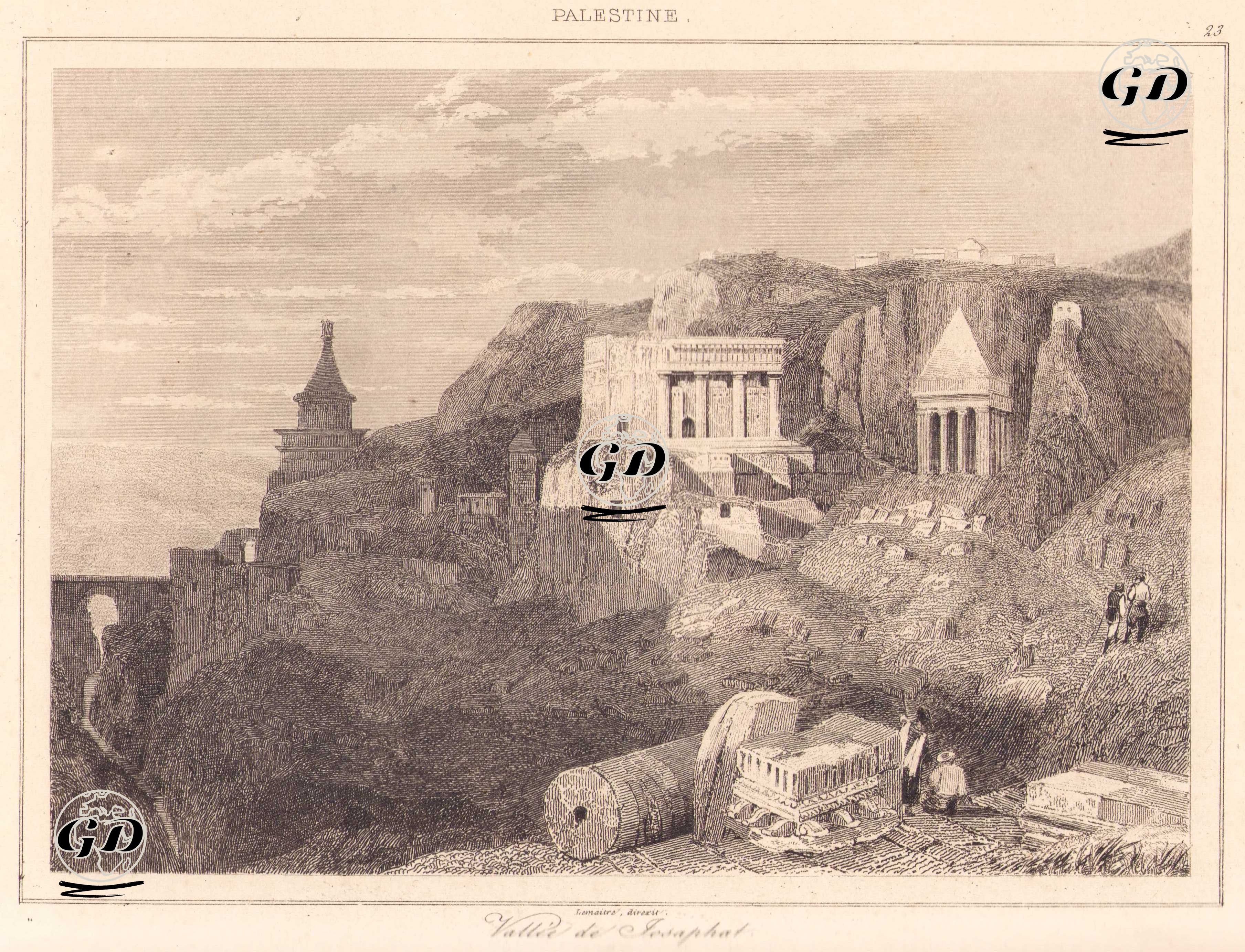
This engraving depicts monumental rock tombs in the Valley of Jehoshaphat, located in the Kidron Valley, which lies between the Old City and the Mount of Olives, east of Jerusalem. A sacred site associated with the Day of Judgment in Jewish, Christian, and Islamic traditions, this valley has been home to magnificent funerary monuments since antiquity. The pyramidal-roofed, four-columned monument seen on the right of the engraving is traditionally identified as the Tomb of Zechariah. Carved from a single block of rock, it is an outstanding example of funerary architecture from the 1st century BC and reflects the influence of the Hellenistic period. The large rock tomb immediately to the left, notable for its façade, is known as Absalom's Pillar or Absalom's Monument. This monument, frequently seen in engravings by 19th-century travelers, reflects the magnificent funerary tradition of the Jerusalem aristocracy during the Herodian era. The partially visible towered structure on the left side of the engraving is one of the medieval defensive structures known as the Karaite or Solomon Tower on the western slope of the Kidron Valley. Column drums, fallen stone blocks, and excavating figures dotted throughout the landscape reflect the archaeological investigations and traveler interest in Jerusalem's ancient necropolises in the 19th century. The vast rock faces and hollow entrances rising in the background highlight the region's concentration of family tombs dating to the Roman and Second Temple periods. The Kidron Valley's steep slopes both created a natural necropolis and facilitated the construction of ornate funerary monuments for Jerusalem's elite families. The transitions between light and shadow in the engraving reveal the layered structure of the rock surfaces, the architectural details of the tombs, and the rough texture of the slopes, creating a powerful atmosphere that reflects both the sacred and archaeological identity of the valley.