GRAVÜR DÜNYASI
Digital Engraving Library
| Date | 1845 |
| Technique | Copper Engraving |
| Category | Uncategorized |
| Source | Palestine, Description Geographique, Historique et Archeologique par S.Munk, Firmin Didot Freres, Editeurs, Paris |
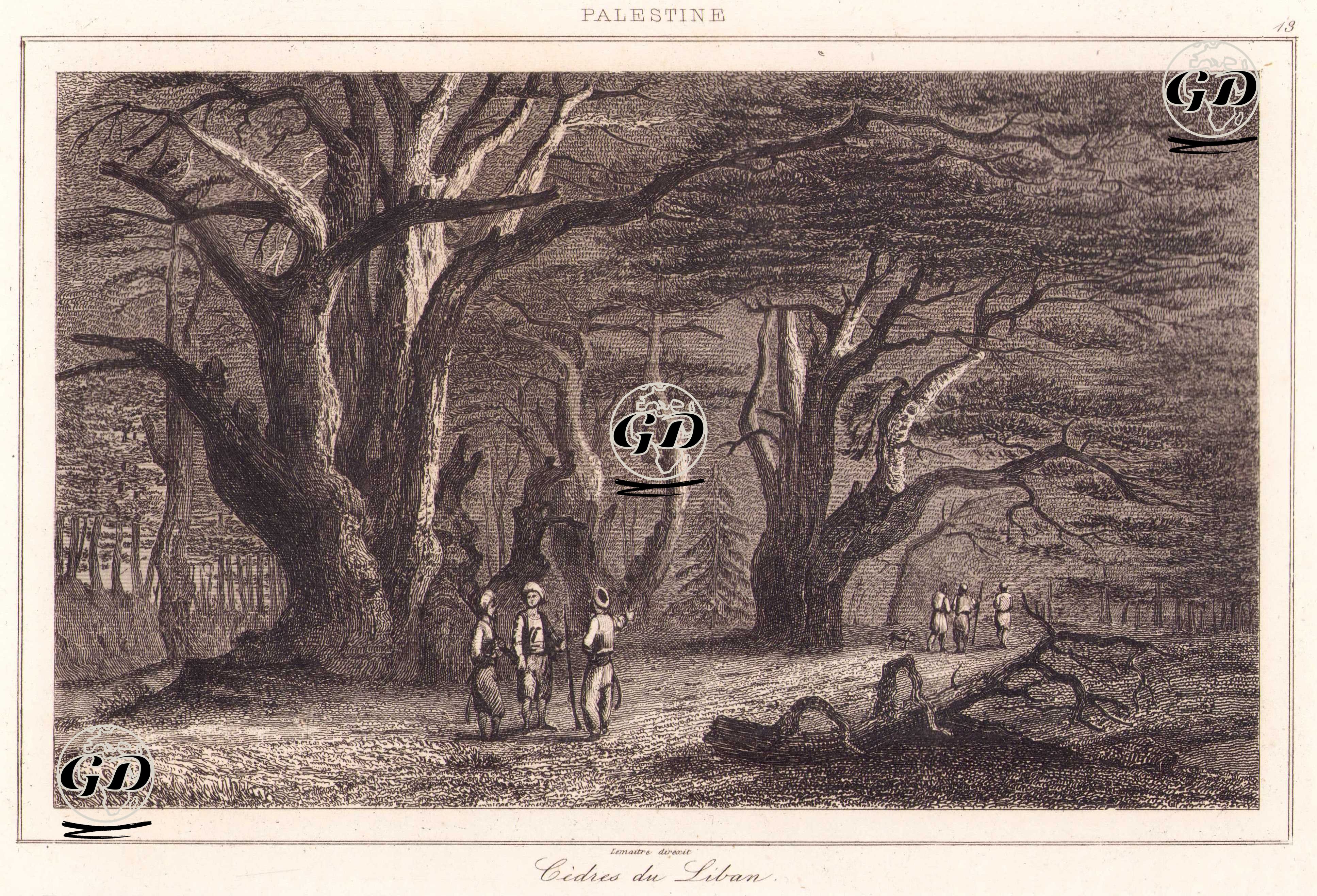
This engraving depicts a forest of Cedars of Lebanon. Cedars of Lebanon are one of the most powerful cultural symbols of the ancient Near East and are frequently mentioned in both the Old Testament and Mesopotamian inscriptions. Cedars were a valuable source of timber, used primarily for temple, palace, shipbuilding, and sacred architecture by the ancient Egyptian, Assyrian, Babylonian, Persian, and Roman empires, starting from the Phoenician coast. Therefore, the cedars of Lebanon have held both economic and religious significance throughout history. The massive, ancient cedars seen in the engraving are the famous "Cedars of God" grove, located high in the Lebanon Mountains in the Kadisha Valley region. Although this grove declined during the Middle Ages, it is the oldest surviving and sacred cedar community in the region. The composition carefully captures the cedar's powerful silhouette, the horizontal and wide spread of the branches, and the centuries-old texture of the trunk.