GRAVÜR DÜNYASI
Digital Engraving Library
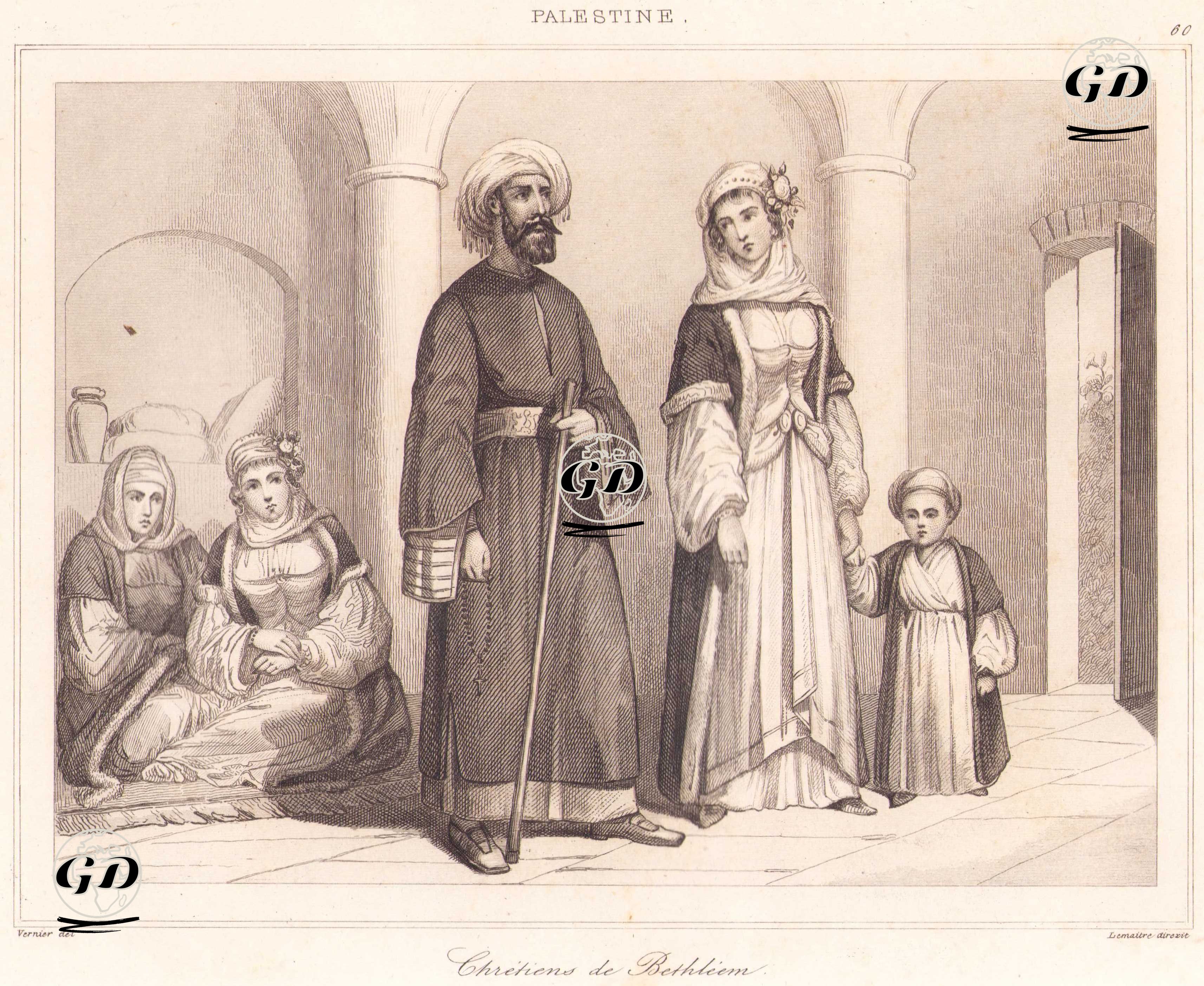
| Artist | Vernier |
| Engraver | Augustin Francois Lemaitre (1797-1870) |
| Date | 1845 |
| Technique | Copper Engraving |
| Category | Uncategorized |
| Source | Palestine, Description Geographique, Historique et Archeologique par S.Munk, Firmin Didot Freres, Editeurs, Paris |
This engraving depicts the everyday dress of local Christians in Bethlehem. Bethlehem, a city where Latin Catholic, Greek Orthodox, and Armenian Apostolic communities lived together, was one of the few settlements in the 18th and 19th centuries where the everyday dress codes of different denominational traditions could be observed side by side in the same city. The floral and embroidery details on the women's headdresses depicted in the engraving were frequently emphasized (by European travelers and engravers) as a "distinguishing motif" that distinguished local Christian women of Bethlehem from other Palestinian women. Similarly, the man's sash, long robe, and walking stick indicate a typical representation of middle-class Christian men in Bethlehem at the beginning of the 19th century. Such engravings were not merely "dress catalogs," but also served to demonstrate to European viewers the diverse social fabric of the Levant, encompassing sects, identities, and local practices.