GRAVÜR DÜNYASI
Digital Engraving Library
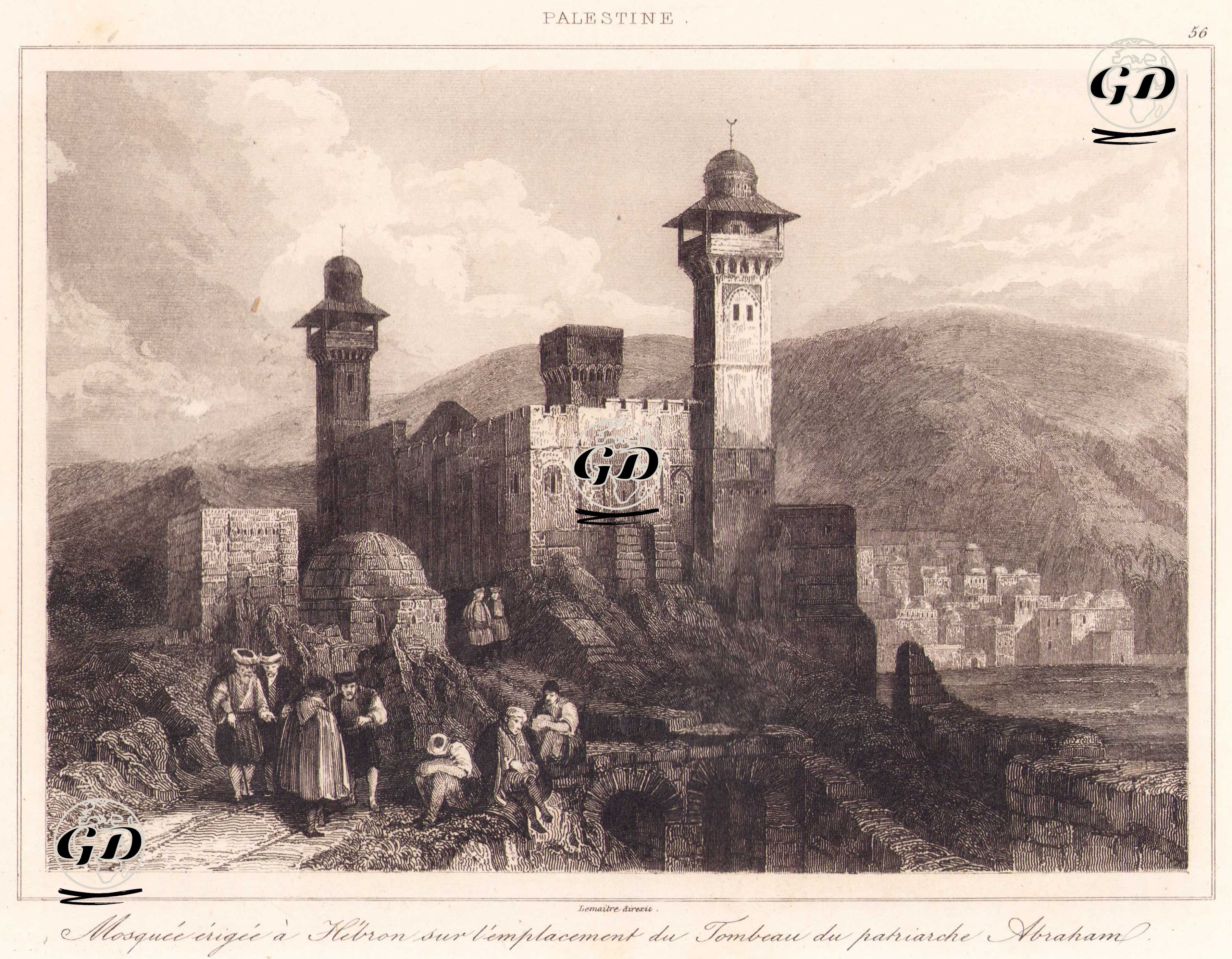
| Engraver | Augustin Francois Lemaitre (1797-1870) |
| Date | 1845 |
| Technique | Copper Engraving |
| Category | Uncategorized |
| Source | Palestine, Description Geographique, Historique et Archeologique par S.Munk, Firmin Didot Freres, Editeurs, Paris |
This engraving depicts the "Makpelah Cave" (also known as the Cave of the Double Tombs, the Cave of the Patriarchs, or Me'arat al-Makhpela) and the Haram al-Khalil Mosque (Al-Khalil Mosque) in the city of Hebron, located in the modern-day West Bank. This sacred site is believed to depict the cave where Abraham, Isaac, Jacob, and their wives are believed to be buried. This building complex is known for its massive stone-block walls dating from the reign of Herod the Great (1st century BC) and is unique in architectural history for its translation of ancient city wall architecture into the typology of sacred spaces. The present form of the superstructure and domes was shaped by interventions in the Umayyad, Abbasid, Crusader, and Mamluk periods. During the Ottoman period (especially after Suleiman the Magnificent), the interior functions and maintenance of the sacred cells were reorganized. Thus, the area offers a multi-layered memory of Abrahamic religions.