GRAVÜR DÜNYASI
Digital Engraving Library
| Artist | Vernier |
| Engraver | Augustin Francois Lemaitre (1797-1870) |
| Date | 1845 |
| Technique | Copper Engraving |
| Category | Uncategorized |
| Source | Palestine, Description Geographique, Historique et Archeologique par S.Munk, Firmin Didot Freres, Editeurs, Paris |
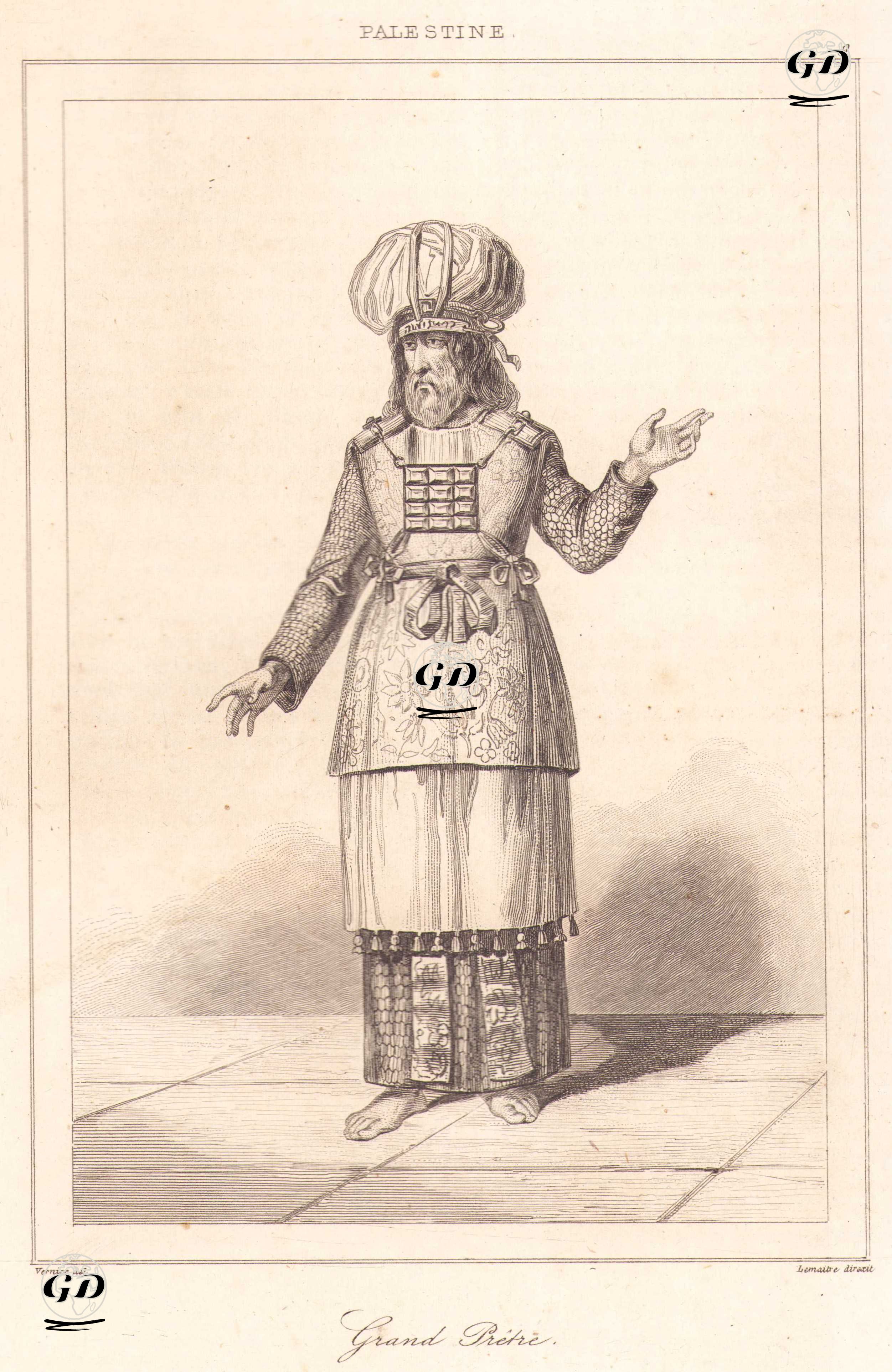
This engraving reimagines the figure of the "Jewish High Priest" who officiated in the Temple of Jerusalem in Hebrew tradition within the aesthetics of a 19th-century French sacred history atlas. The costume depicted is an idealized vision of "high priestly" garb, constructed according to textual reference, particularly based on Exodus 28 and Leviticus 8. The square "breastplate" (hoshen) and the twelve stones on it represent the twelve tribes of Israel according to the Torah. The title plate is interpreted as an expression of holiness in the name of God. Engravings of this type were an important part of the Western efforts to "visualize Sacred History" in the 18th and 19th centuries. Ancient Israel's religious rituals, priestly order, and temple rites were reconstructed as pictorial "archaeological scenes" based on philological and theological studies of the sacred texts. Therefore, rather than being a modern recreation of archaeological costume, this engraving serves as an important iconographic document demonstrating how the Old Testament was visualized in 19th-century European minds. This approach is considered an early stage of visualization that paved the way for the later development of scientific costume archaeology.