GRAVÜR DÜNYASI
Digital Engraving Library
| Engraver | Augustin Francois Lemaitre (1797-1870) |
| Date | 1845 |
| Technique | Copper Engraving |
| Category | Uncategorized |
| Source | Palestine, Description Geographique, Historique et Archeologique par S.Munk, Firmin Didot Freres, Editeurs, Paris |
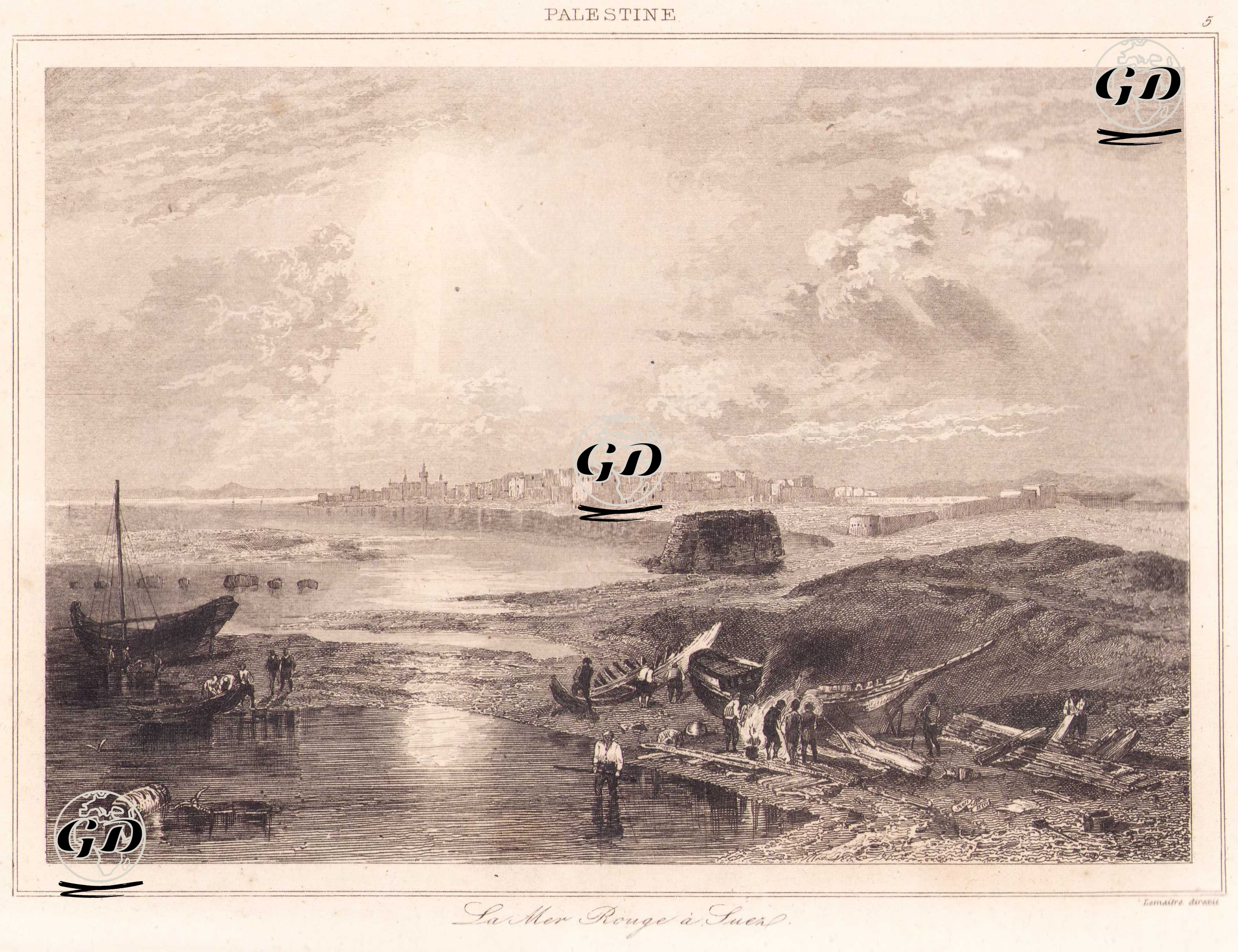
This engraving depicts Suez (Suez) on the Red Sea coast. In the first half of the 19th century, Suez was described as both a strategic port city for the Ottoman Empire's connection between the Red Sea and the Mediterranean and an indispensable crossroads for European travelers on the Egypt-Hejaz pilgrimage and trade routes. The engraving shows boats moored or being dismantled, and local people working near the water. Because this scene dates from a period before the Suez Canal opened (before 1869), it documents a historical period when Egypt maintained its role as a land corridor between Asia and Africa, and when the transfer of goods from sea to land and from land to sea still operated according to the logic of "transshipment." The city walls, seen in silhouette in the distance, allude to the frequently recurring image of Suez as a "walled city on the coastline" in 18th-19th-century engraving iconography.