GRAVÜR DÜNYASI
Digital Engraving Library
| Date | 1845 |
| Technique | Copper Engraving |
| Category | Uncategorized |
| Source | Palestine, Description Geographique, Historique et Archeologique par S.Munk, Firmin Didot Freres, Editeurs, Paris |
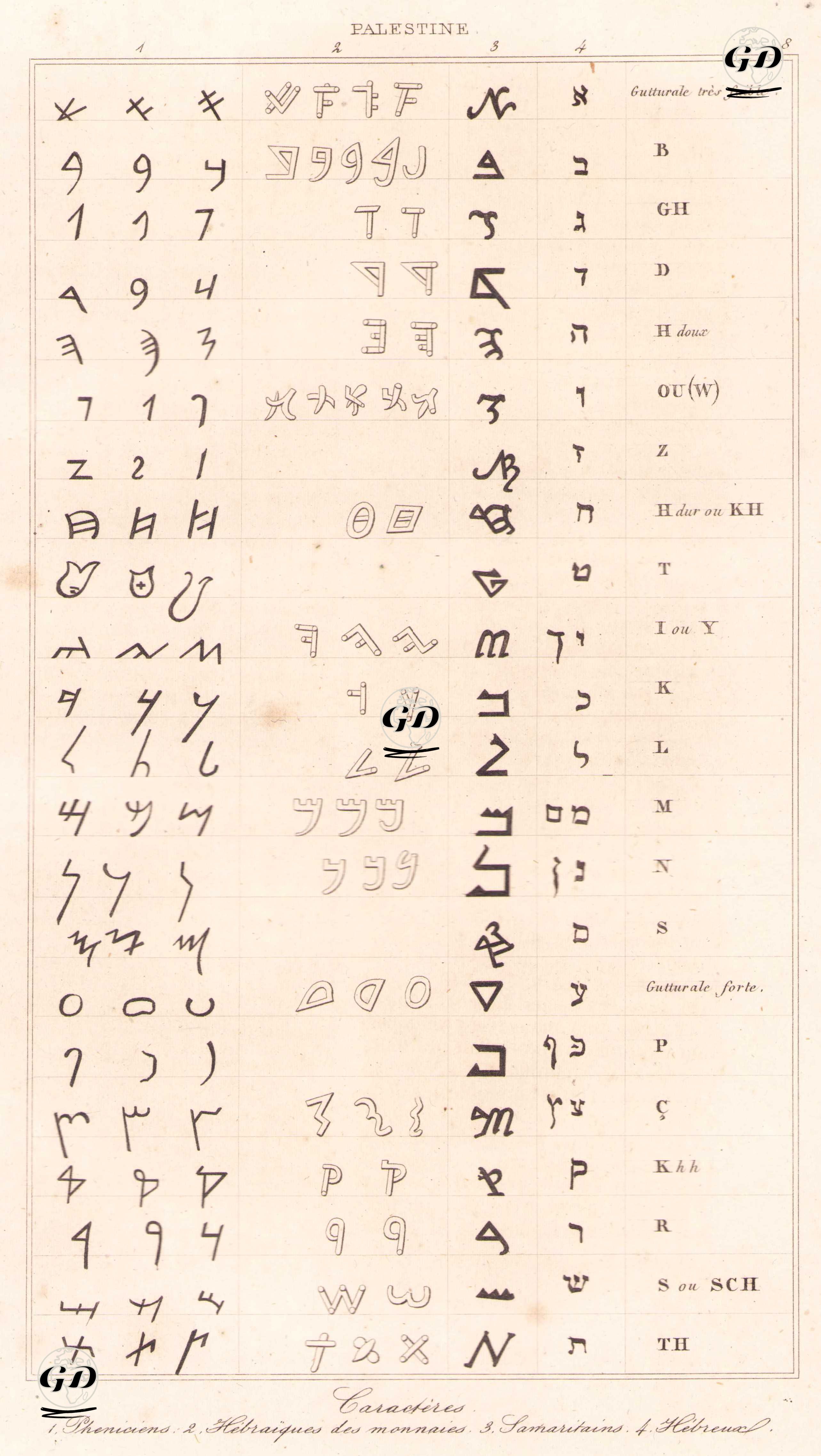
This engraving is one of the most characteristic visual examples of philological orientalism in 19th-century scholarship. The table was designed to typologically compare the different alphabet forms of ancient Palestine. The engraving brings together Old Phoenician script, Hebrew characters found on ancient coins, Samaritan script, and Classical Hebrew script in four main columns. The final column provides their approximate phonetic equivalents in Latin letters. Such schematic comparison tables were frequently used in 19th-century historiography and archaeological philology, particularly to establish the "continuity" between sacred texts and archaeological finds. This table also relates to the efforts within the Eurocentric scientific environment of the 19th century to demonstrate the processes of common origin, transformation, and divergence of the "Semitic alphabets." The graphic comparisons here constituted one of the fundamental pedagogical tools in deciphering the epigraphic heritage of the ancient Near East, especially in philologically redefining the relationships between Phoenician, early Hebrew and Samaritan traditions.