GRAVÜR DÜNYASI
Digital Engraving Library
| Artist | Radel (active 1751-1767) |
| Engraver | Jacques Renaud Benard (1731-1794) |
| Date | 1760`s |
| Technique | Copper Engraving |
| Category | Uncategorized |
| Source | Encyclopédie Diderot d’Alembert |
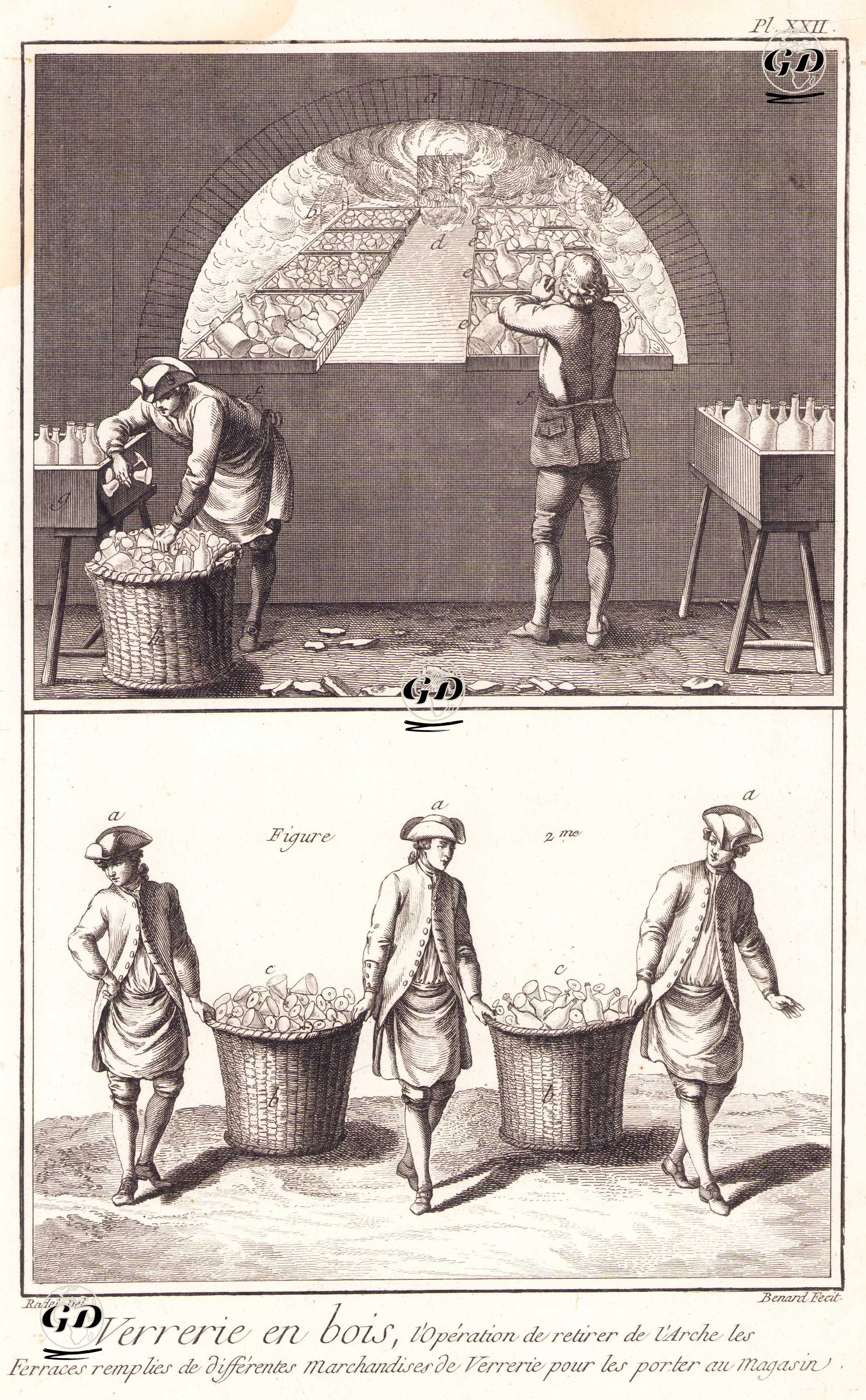
This engraving depicts post-production processes in a glassworks (wood-fired glass furnace). The engraving depicts the process of glass containers, fired and left to cool in the furnace, being removed from the furnace belt, placed in baskets, and transported to storage. This stage represents a crucial process in 18th-century glass production, particularly for workshops with high mass production capacity. Separating broken or defective glass products from intact commercial products by removing them from the furnace was a critical component of production during this period. The large baskets seen in the engraving were used in glassworks to transport hundreds of small bottles, vials, and container samples simultaneously. This system clearly demonstrates that glass was still a highly labor-intensive industry at the time, a production logic that predated the advent of mechanical belt production systems by approximately 120-140 years. The upper half-dome of the furnace's interior and the internal shelving arrangement demonstrate the firing of glass vessels by staggering them according to temperature. This method was the primary method for achieving the desired glass hardness and gloss using heat differentials in the early pre-industrial era.