GRAVÜR DÜNYASI
Digital Engraving Library
| Artist | Guido Reni (1575-1642) |
| Engraver | Friedrich John (1769-1843) |
| Date | 1827 |
| Technique | Mezzotint-Steel Engraving |
| Category | Uncategorized |
| Source | Published in the pocket book “Aglaja” by J. B. Wallishausser |
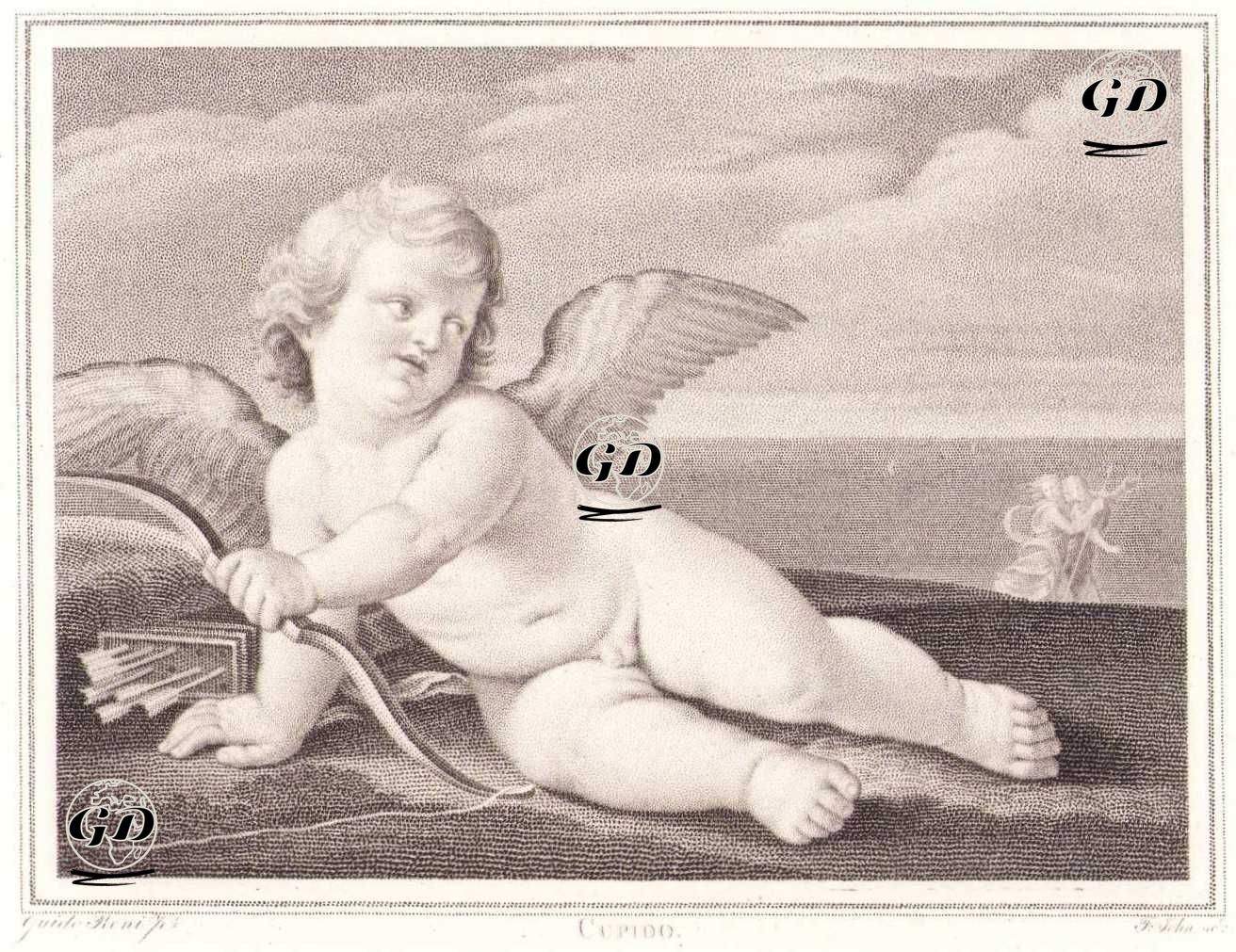
This elegant engraving is adapted from "Cupid" by Guido Reni and engraved on steel by calligrapher Friedrich John. At the center of the composition is the figure of a winged child (i.e., Cupid/Eros) reclining on the ground. In his left hand is a bow, and on his other side is a quiver full of love arrows. A distant couple is seen on the horizon, where the sky meets the sea. This is a subtle allusion to the power of Eros's arrows to cause people to fall in love. Guido Reni's style is clearly evident here. The child figure conveys an idealized elegance and a serene emotional expression. Eros was a symbol of innocence and divine love in antiquity. Although Reni was influenced by the dramatic lighting effects of Caravaggio in Rome at the beginning of the 17th century, he later turned to the "moderation of divine beauty" within the classical balance of the Bolognese School. His cupid (amor) figures combine the elegance of Raphael with the powerful anatomy of Michelangelo. In this engraving, the perfect proportions of the child's body, the soft gradations of light, and the celestial serenity are indicative of this classical idealism. Friedrich John succeeded in transferring the bright colors and brush strokes of Reni's painting to the metal surface with subtle tonal variations. Thanks to the dotting technique, Cupid's skin acquires an almost palpable softness. The finely drawn rendering of the figures in the sky and horizon enhances both spatial depth and the dreamlike atmosphere.