GRAVÜR DÜNYASI
Digital Engraving Library
| Artist | Carlo Cignani (1628-1719) |
| Engraver | Friedrich John (1769-1843) |
| Date | 1827 |
| Technique | Mezzotint-Steel Engraving |
| Category | Uncategorized |
| Source | Published in the pocket book “Aglaja” by J. B. Wallishausser |
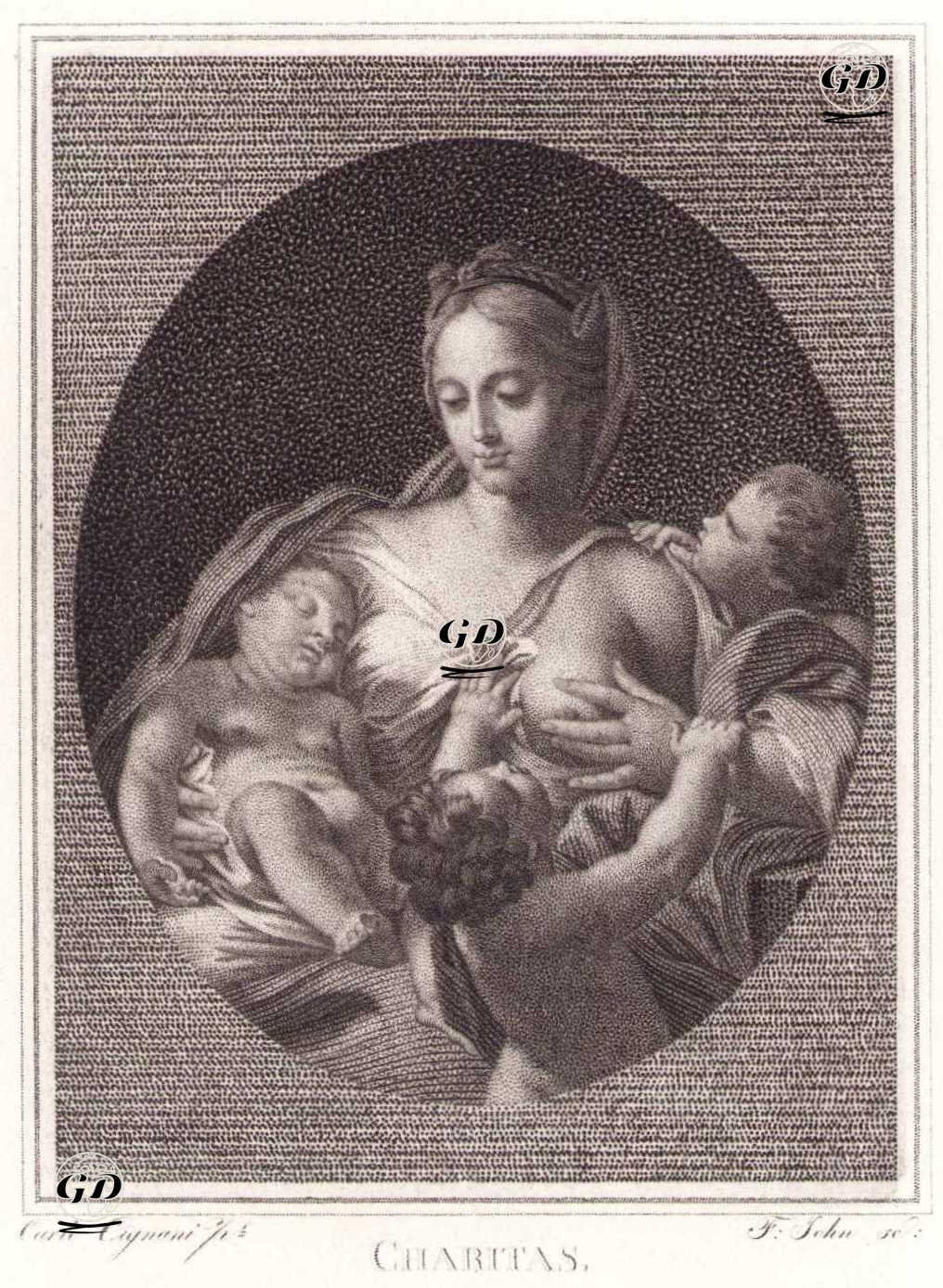
This engraving is adapted from Carlo Cignani's "Caritas (Allegory of Charity/Mercy)" and engraved on steel by Friedrich John. The engraving masterfully reflects the sweet idealism developed by Cignani in the late Baroque period, his depiction of divine love through the mother figure, and the Raphaelesque elegance. At the center of the composition is a mother figure. Holding a baby in her arms, she leans affectionately over another child. This scene personifies the virtue of "Caritas," mercy and selfless love, in classical iconography. The female figure embodies the ideal of "divine motherhood," representing God's love for humanity. A striking feature of Cignani's work is the way emotional intensity is balanced by a serene elegance. The tender yet dignified expression on the mother's face, combined with the peaceful posture of the children, becomes a universal symbol of human love and the instinct to protect. The woman's bare breast is a symbol not only of nurturing motherhood but also of divine generosity and giving nature. This theme, derived from the tradition of Caritas Romana (the virtue of compassion), became one of the most influential ways of depicting the concepts of "motherhood, charity, and the love of God" in European art from the 17th century onward. Here, Cignani combines the serene balance of Raphael's "Madonna" compositions with the sublime sensuality of Guido Reni. Friedrich John's engraving, on the other hand, perfectly captures the soft transitions of Cignani's brushwork with a fine stipple technique. The stipple technique in the engraving allows for both the texture of the fabric and the light of the skin to be subtly perceived. The distribution of light within the circular composition creates both a celestial aura and a human warmth.