GRAVÜR DÜNYASI
Digital Engraving Library
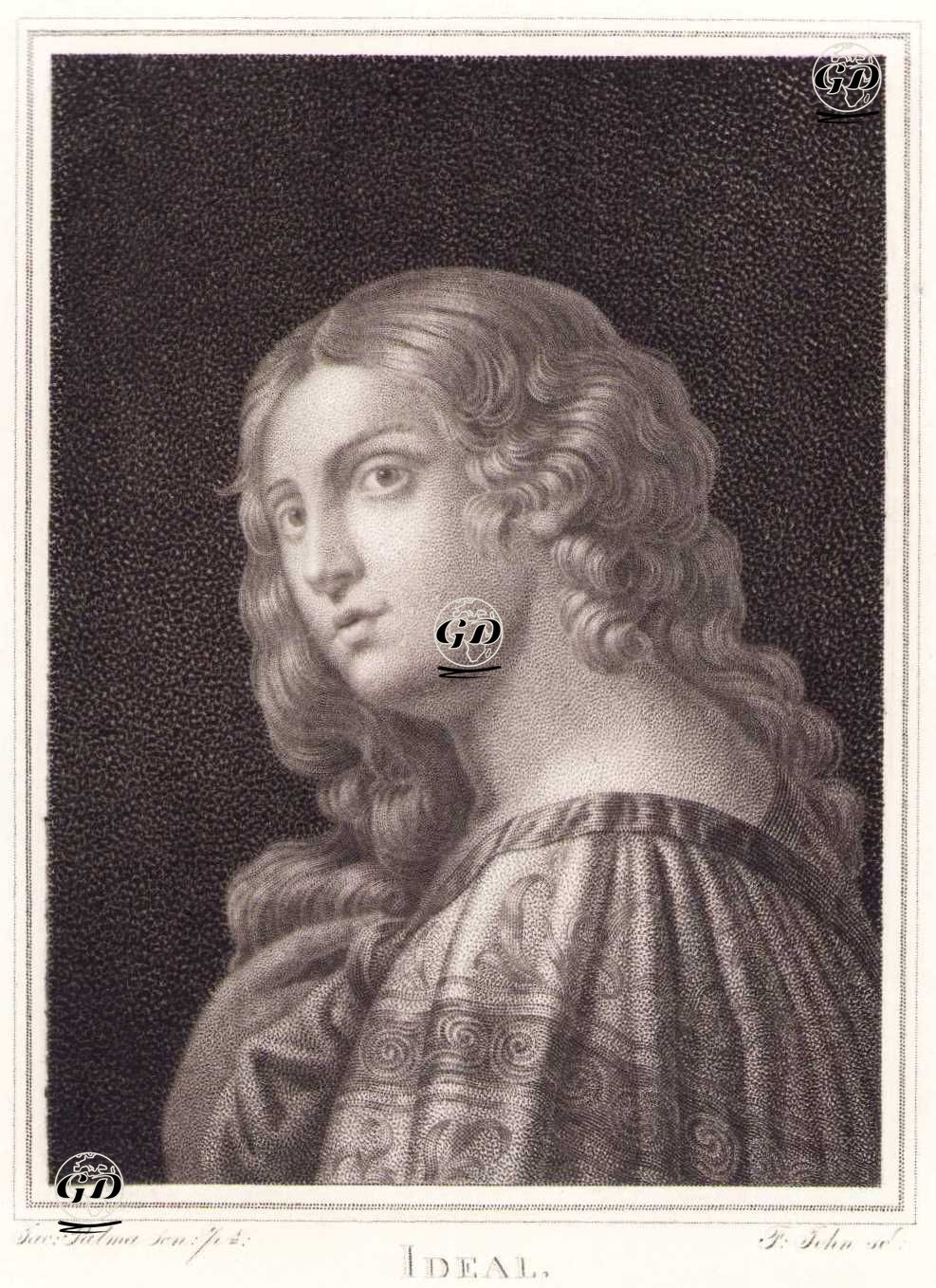
| Artist | Jacobo Palma (Palma Vecchio) (1480-1528) |
| Engraver | Friedrich John (1769-1843) |
| Date | 1827 |
| Technique | Mezzotint-Steel Engraving |
| Category | Uncategorized |
| Source | Published in the pocket book “Aglaja” by J. B. Wallishausser |
This engraving is based on a portrait painted by the Venetian Renaissance painter Jacopo Palma il Vecchio (1480-1528) in the first half of the 16th century. The engraving was created in the early 19th century by Friedrich John (1769-1843) using the mezzotint technique under the title "Ideal." The engraving represents the Venetian Renaissance aesthetic, which idealized female beauty. Jacopo Palma lived during the same period as masters such as Giorgione and Titian, and under their influence, he emphasized color, light, and elegance. His portraits of women often reflect the "ideal of beauty" in both sensual and spiritual aspects. The young woman in the engraving is also a typical example of this tradition. Her long, flowing hair, melancholic, deep gaze, graceful neck, and slightly half-turned posture convey a sense of both worldly charm and spiritual purity to the viewer.