GRAVÜR DÜNYASI
Digital Engraving Library
| Artist | Antonio Allegri da Correggio (1489-1534) |
| Engraver | Friedrich John (1769-1843) |
| Date | 1827 |
| Technique | Mezzotint-Steel Engraving |
| Category | Uncategorized |
| Source | Published in the pocket book “Aglaja” by J. B. Wallishausser |
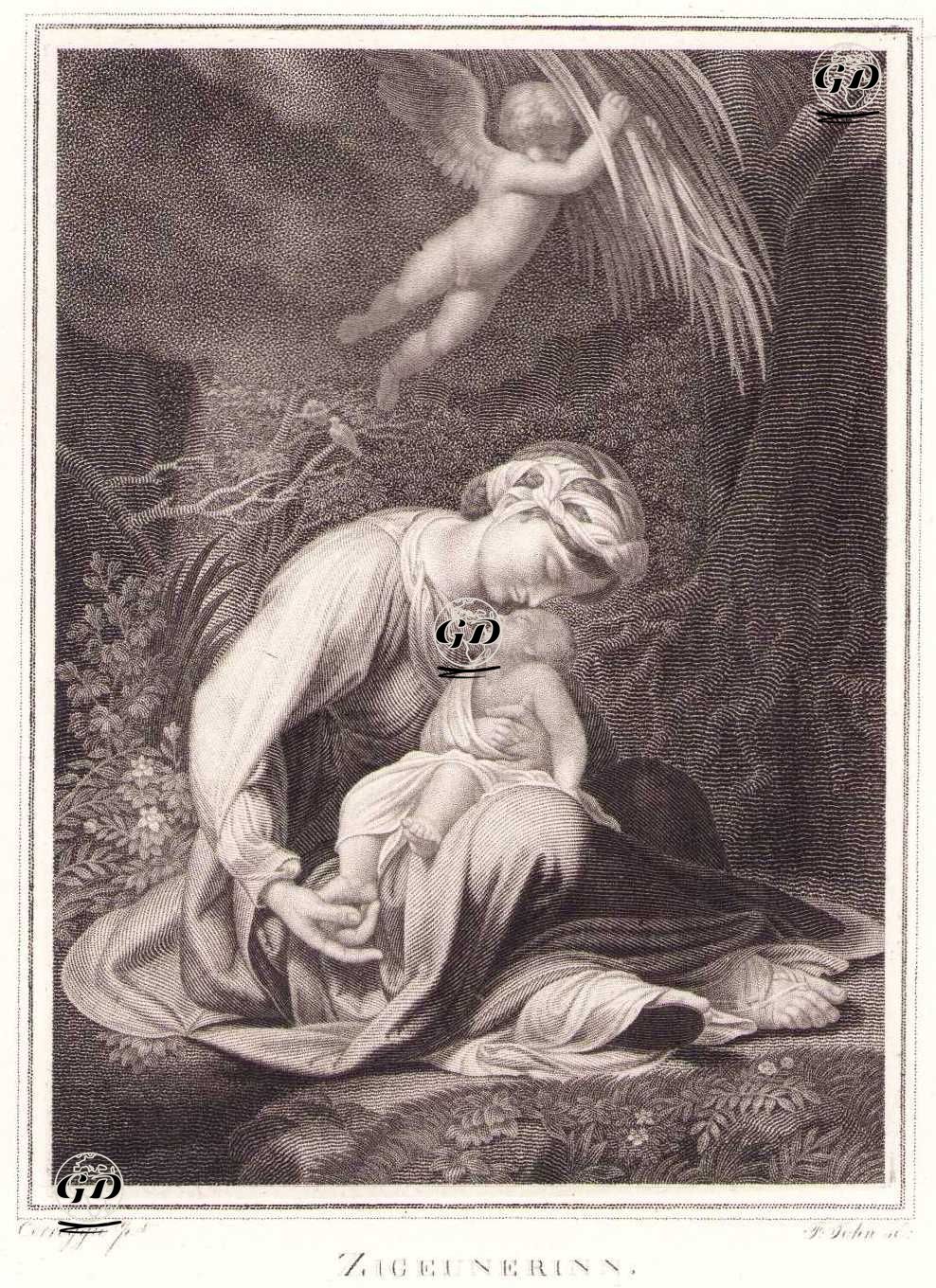
This engraving is based on a composition by Antonio Allegri da Correggio (1489-1534), one of the leading masters of the Italian Renaissance. It was reproduced in mezzotint by the renowned 19th-century German engraver Friedrich John (1769-1843). The figure, superficially labeled a "gypsy woman," is actually a secularized, pastoral variation on the theme of the Madonna and Child in Christian iconography. Such scenes, particularly with the popularization of the "Rest on the Flight into Egypt" narrative in the 16th century, began to be interpreted as a simple moment of respite for the Holy Family in nature. In the composition, a kneeling young woman tenderly cradles a sleeping child in her arms. The winged angel looming in the background clearly indicates that this scene is not an ordinary mother-child scene, but a sacred narrative embodying the theme of divine protection. The woman's headscarf, modest clothing, and serene stance within nature make her both a representative of the poor, as a gypsy woman, and a possible interpretation as the earthly manifestation of the Virgin Mary. This symbolic double meaning reflects Renaissance humanism's idea of the intertwining of the divine and the human. As in Correggio's original work, the natural scene here is interwoven with themes of peace, protection, and love. The angel's bowing from above suggests divine grace directed towards the mother-child duo, while the mother's kneeling embrace symbolizes both the biological and spiritual protectiveness of motherhood. The transitions between light and shadow in the engraving are masterfully rendered using Friedrich John's mezzotint-steel printing technique, and the softness of sfumato, prominent in Correggio's paintings, is successfully conveyed in the woodcut language.