GRAVÜR DÜNYASI
Digital Engraving Library
| Artist | Antonio Allegri da Correggio (1489-1534) |
| Engraver | Friedrich John (1769-1843) |
| Date | 1827 |
| Technique | Mezzotint-Steel Engraving |
| Category | Uncategorized |
| Source | Published in the pocket book “Aglaja” by J. B. Wallishausser |
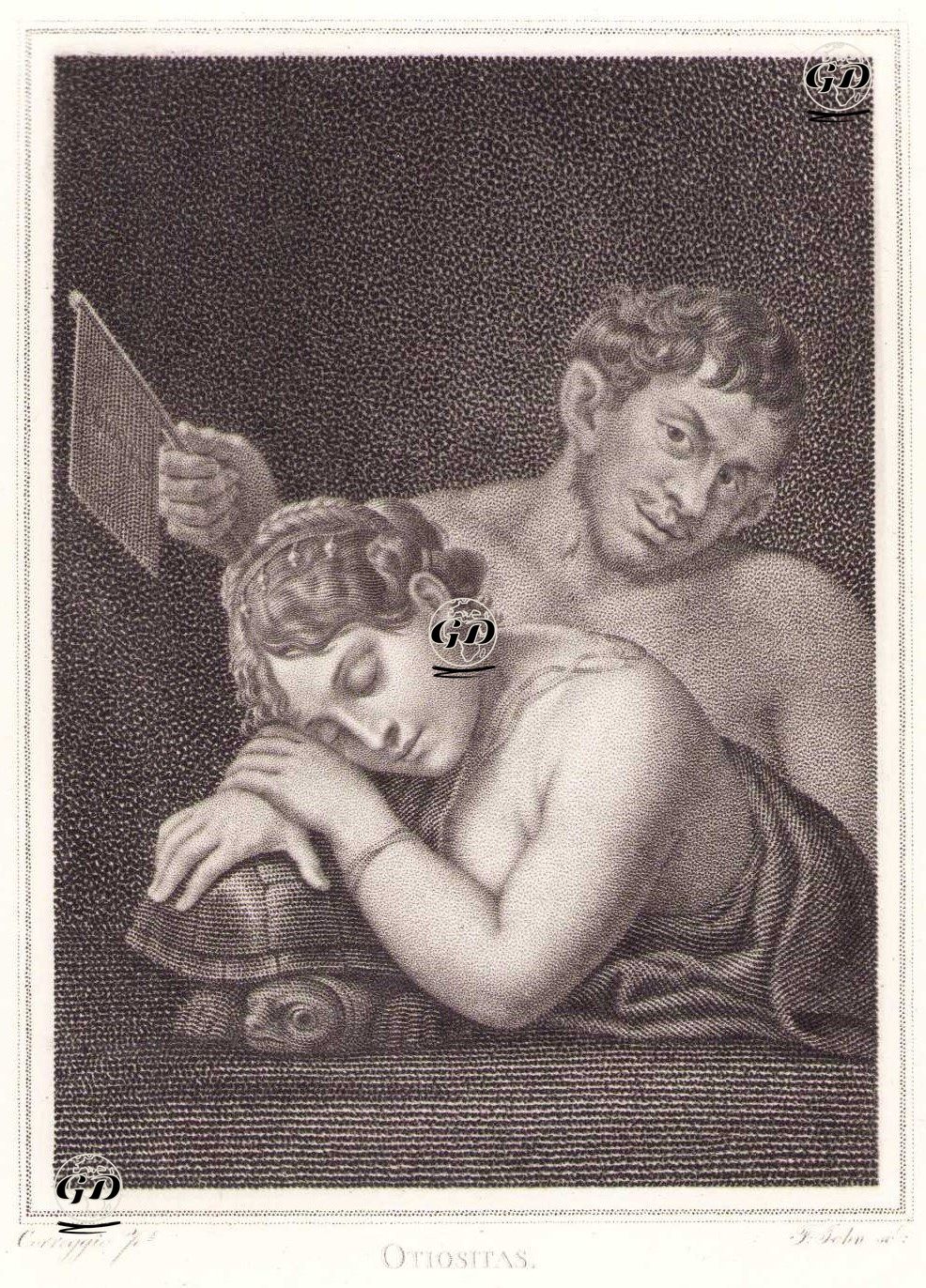
This engraving is based on a composition by Antonio Allegri da Correggio (1489–1534), one of the leading masters of the Italian Renaissance. It was reproduced in mezzotint and steel engraving by the renowned 19th-century German engraver Friedrich John (1769–1843). Allegorically, this scene is an artistic expression of the opposition "otium vs. negotium" (leisure and work), a concept frequently explored in Renaissance thought. "Otiositas" is here interpreted not as laziness, but as a wise introspection, a representation of serenity of the soul, inner peace, and artistic sensitivity. In the engraving, a young woman, asleep in the foreground, is depicted resting her head on a turtle's shell. This detail deepens the scene's symbolic meaning. In ancient and Renaissance iconography, the turtle has been considered a symbol of slowness, patience, tranquility, and wisdom. The woman's leaning her body against this creature is not a sign of laziness, but of serenity and spiritual peace in harmony with nature. Because the turtle carries its home on its back, it also symbolizes feminine virtues such as "withdrawal into the inner world," "domesticity," and "sheltered living." The young male figure behind the woman, holding a fan, represents the "active mind," bearing witness to or protecting this serenity. This contrast between the woman's sleepy body and the man's attentive gaze symbolizes the duality in human nature between action and stasis, consciousness and dream. Friedrich John's woodcut adaptation combines Correggio's elegant understanding of the figure with the technical finesse of the 19th century. The artist's stippling technique creates soft transitions and delicate shadows, particularly on the skin. The fine stippled texture in the background successfully reproduces the "sfumato" effect seen in Correggio's paintings on the woodcut surface.