GRAVÜR DÜNYASI
Digital Engraving Library
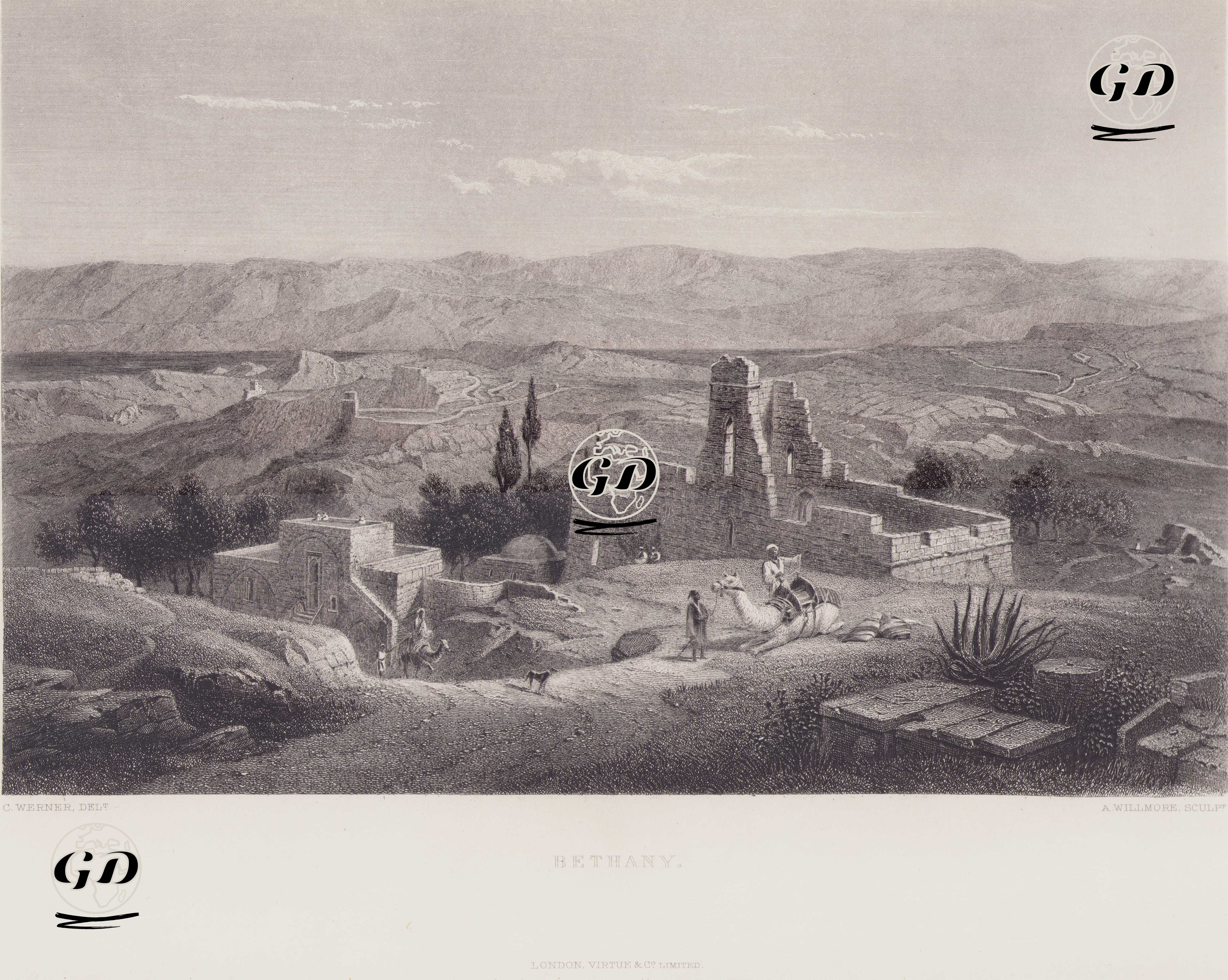
| Artist | C. Werner |
| Engraver | A. Willmore |
| Date | 1850`s |
| Technique | Steel Engraving |
| Category | Uncategorized |
| Source | London: Virtue & Co. Limited |
This engraving depicts the ancient village of Bethany (now known as al-Eizariyya), located on the eastern slope of the Mount of Olives, approximately 3 kilometers east of Jerusalem, and the area surrounding the Tomb of Lazarus, which is believed to be located there. The composition presents both the sacred site where the miraculous event described in the Bible took place and the austere atmosphere of 19th-century rural Palestine. The ruined stone walls and the half-standing tower-like ruin at the center of the engraving represent the Byzantine Church of St. Lazarus and the Tomb of Lazarus beneath it. This structure is considered the place where Jesus raised his friend Lazarus from the dead, as described in the New Testament (John 11:1–44). This event has become a symbol of the resurrection from the dead and belief in eternal life in Christian history. Bethany, also known as Jesus' last stop before entering Jerusalem, is an early Christian pilgrimage. has great importance in tradition. This settlement, referred to as Bethania in ancient sources, means "house of bitter herbs" in Aramaic, and some theologians believe the name also means "house of the poor." A basilica-style Church of Lazarus was built here during the Roman and Byzantine periods, and was later rebuilt during the Crusader period. The camel caravans, villagers, and modest stone houses in the foreground reflect both the daily life of the period and the theme of the continuity of life in the Holy Land. The mountain ranges and winding roads in the background evoke the serenity of the landscape stretching from the Mount of Olives to the Jordan Valley.