GRAVÜR DÜNYASI
Digital Engraving Library
| Artist | H.Bibby |
| Engraver | Albert Henry Payne (1812-1902) |
| Date | 1840`s |
| Technique | Steel Engraving |
| Category | Uncategorized |
| Source | London: Brain & Payne, Paternoster Row |
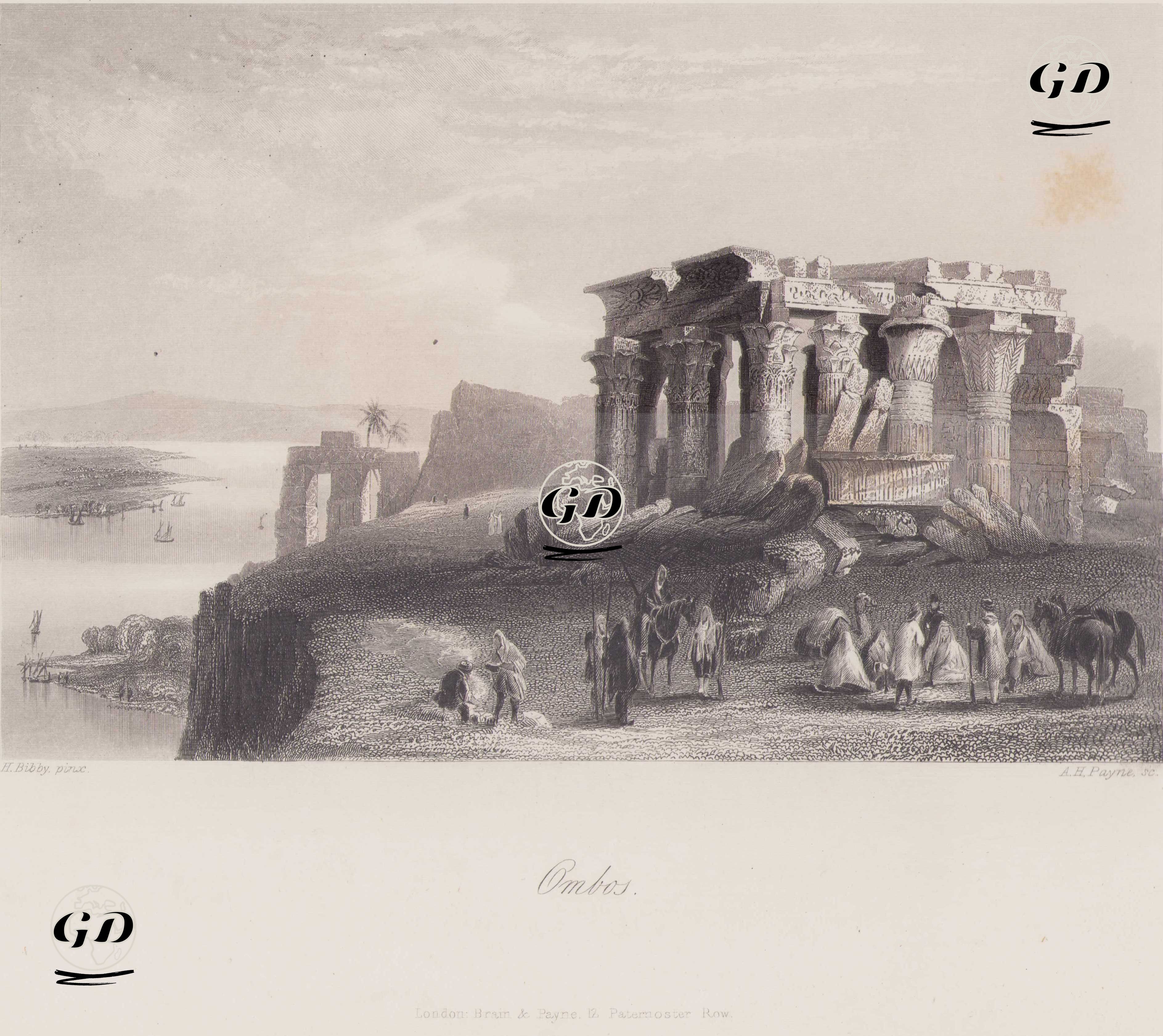
This engraving depicts the Temple of Kom Ombo, located on the banks of the Nile River in the Aswan region of Egypt. Dating to the Ptolemaic Dynasty of ancient Egypt (180-47 BC), this monumental structure, with its dual-theological temple plan, constitutes a unique example of Egyptian architecture. The temple was dedicated to two gods: Haroeris (Horus the Elder), a form of Horus, representing the power of the sun and the sky, and Sobek, the crocodile-headed god, a symbol of fertility and protective power. This dual sacred order symbolized both the abundance of life in Egyptian belief and the protective nature of the Nile. The engraving depicts the partially collapsed columns of the temple, surrounded by camel caravans, local people, and figures of travelers. This scene serves as both an archaeological observation and an artistic reflection of the 19th-century Orientalist travel tradition. The composition emphasizes the grandeur of the temple with dramatic light and shadow plays on the banks of the Nile, and the boats on the river and distant hills in the background deepen the mystical atmosphere of ancient Egypt. The Temple of Kom Ombo is unique in Egyptian architecture thanks to its symmetrical plan. It features two separate sacred corridors for two deities, two sacred chambers, and two entrance gates. Furthermore, the Temple of Kom Ombo was a center for both religious rituals and medical practices. The temple contains reliefs depicting surgical instruments, birthing scenes, and references to Imhotep, the god of medicine. These reliefs are of great importance not only for their religious significance but also as early documents of Egyptian medicine. Located strategically on the Nile, this temple also served as a Nubian border post and river control point. Today, Kom Ombo stands as a rare example that combines the symmetrical structure of Hellenistic architecture with the richness of Egyptian religious iconography. The Sacred Crocodile Museum, located near the temple, houses a unique collection of real mummified crocodiles found there.