GRAVÜR DÜNYASI
Digital Engraving Library
| Date | 1878 |
| Technique | Wood Engraving |
| Category | Uncategorized |
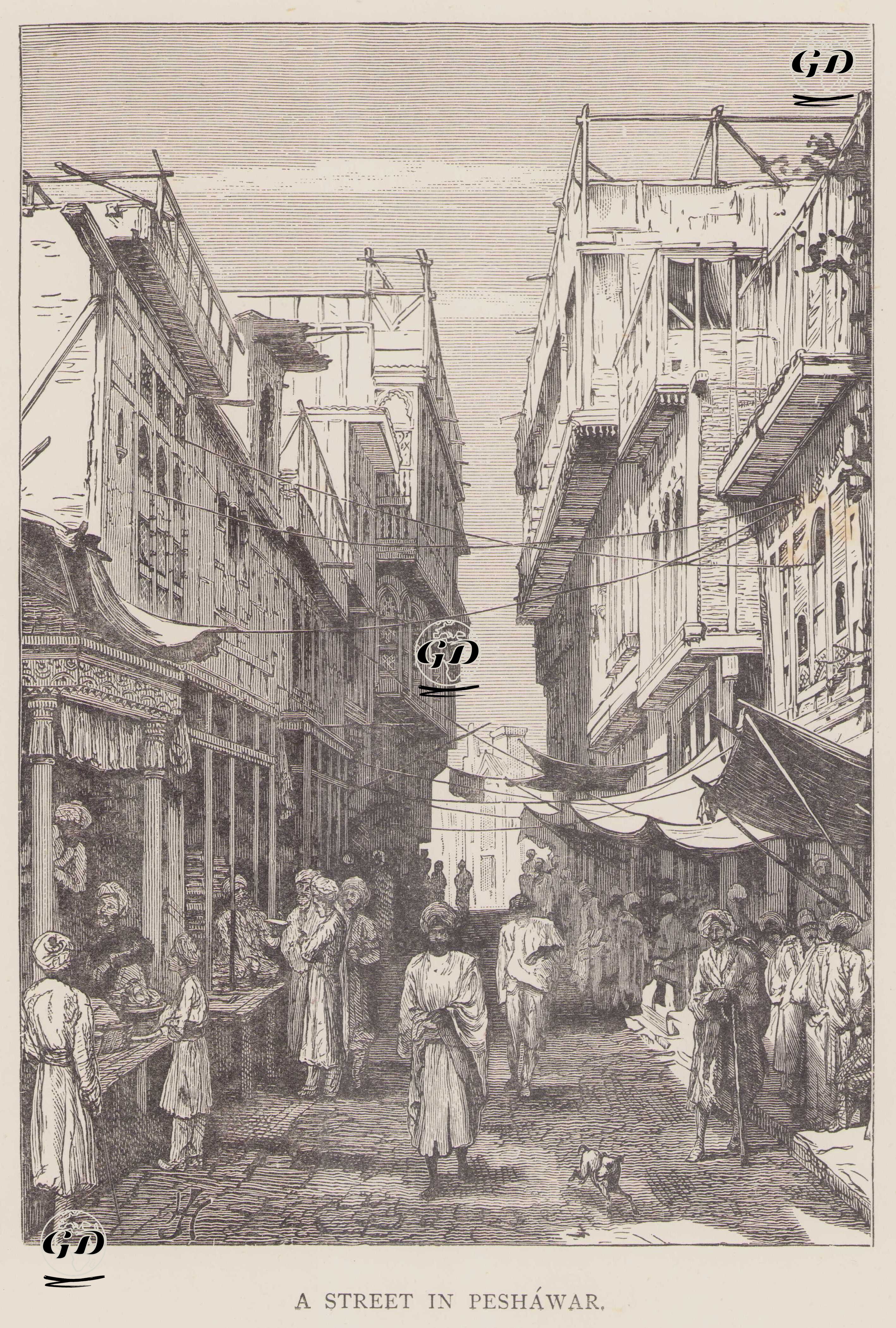
This engraving is a 19th-century Orientalist observation documenting daily life in Peshawar, within the borders of present-day Pakistan, during the British colonial era. The engraving provides a visual resource for the South Asian urban aesthetic of the period, detailing both the architectural texture and social activity. The engraving depicts traditional Peshawari houses lined up along a narrow street. The upper floors of these houses feature wooden latticework projections and balconies, while the lower floors feature shaded shops, fabric-draped market stalls, and local residents shopping or engaging in trade. Peshawar's narrow streets and bustling bazaars demonstrate the fusion of Islamic, Persian, Indian, and Central Asian architectural traditions throughout history. The clothing, headgear, and postures of the male figures in the engraving reflect the Pashtun culture of the period and the ethnic diversity of the region. Peshawar, the capital of Khyber Pakhtunkhwa Province in present-day northwestern Pakistan, is one of the oldest settlements in South Asia. Dating back to the 2nd millennium BC, the city, formerly known as Purushapura, became an important center of Buddhist culture and trade during the Kushan Empire (especially during the reign of King Kanishka in the 2nd century AD). Its strategic location on the Silk Road made Peshawar a gateway between India, Central Asia, and Iran. Known as the heart of the Gandhara civilization in the Middle Ages, the city later came under the rule of the Ghaznavids, Delhi Sultanates, Mughals, and Afghan Durrani dynasties. In the 19th century, it was used as a strategic border fortress by the British Indian Empire.