GRAVÜR DÜNYASI
Digital Engraving Library
| Engraver | W. Warwick |
| Date | 1860`s |
| Technique | Steel Engraving |
| Category | Uncategorized |
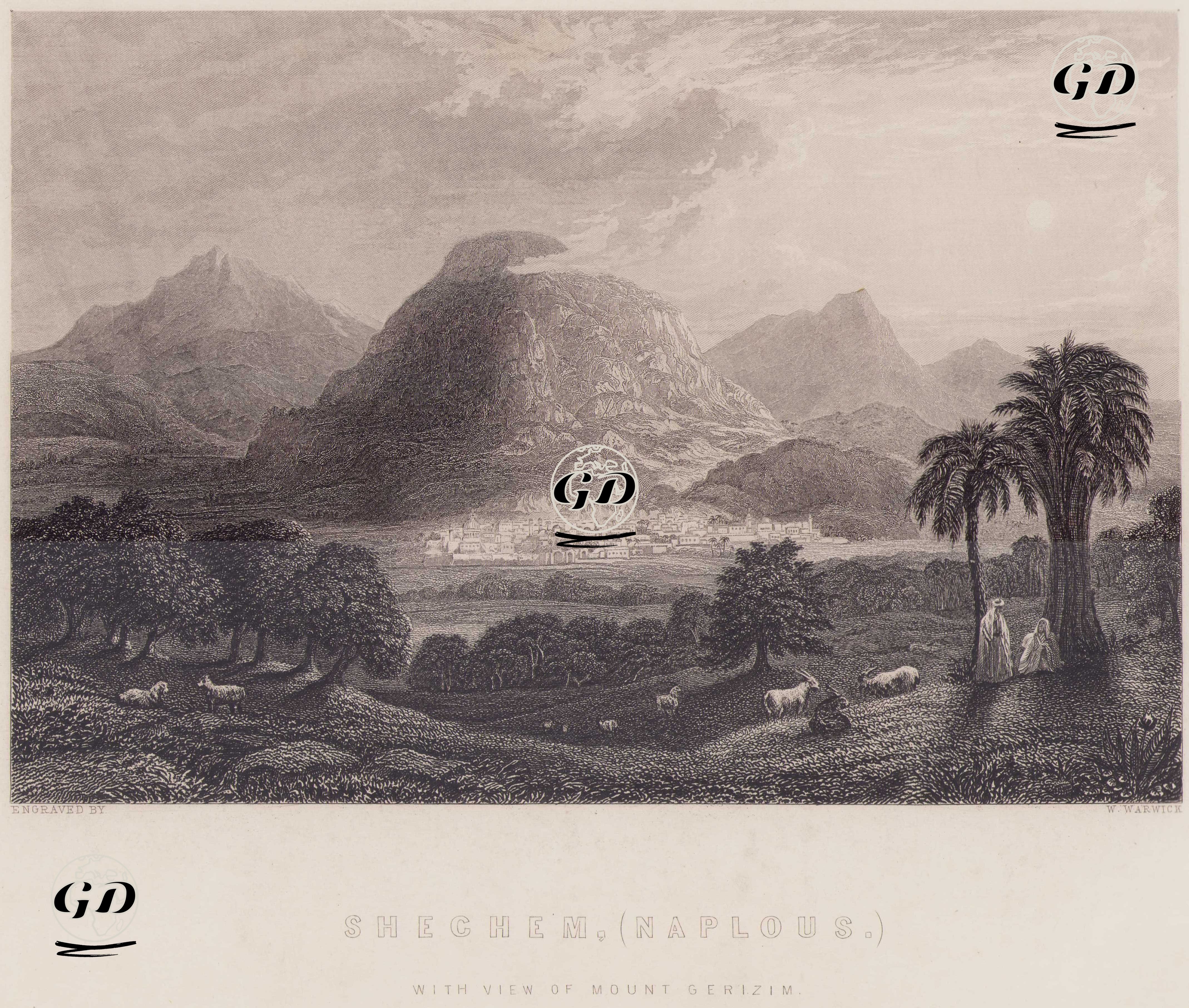
This engraving depicts the city of Nablus (formerly Shechem) in present-day Palestine, with Mount Gerizim rising above it. Located between Mounts Ebal and Gerizim in northern Palestine, Nablus is one of the region's oldest and most continuously inhabited settlements. Archaeological findings indicate that the city's history dates back to the 3rd millennium BC. Shechem, a major Canaanite center in ancient times, later became a sacred city for the Israelites. The Bible describes Abraham building an altar and Jacob's land as being found there (Genesis 12:6; 33:18–20). It is also believed that Joseph's tomb is located in this area. During the Roman period, the city was rebuilt as Flavia Neapolis, a name that eventually passed into Arabic as Nablus. Known for its trade and olive oil production throughout the Middle Ages, the city also served as a major religious center for the Samaritan community. It remained a vibrant commercial and craft center during the Ottoman period. Today, Nablus is one of the cultural and economic centers of Palestine, maintaining its historical significance as a transit point between Damascus, Jerusalem, and Cairo, with its religious and ethnographic diversity. The valley depicted in the engraving offers a microclimate surrounded by fertile agricultural lands. Mount Gerizim rises to the south, and Mount Ebal to the north. These two mountains define the Shechem Valley, both climatically and symbolically. The pastoral scene in the foreground, surrounded by date palms and olive trees, emphasizes the region's fertility and its agricultural continuity throughout history. Shepherds grazing sheep and figures in traditional clothing allude to 19th-century Ottoman provincial life.